

What Happens When an RV Smart Lock Battery Dies?
Picture this: you return to your rig after a long day of hiking, arms full of groceries, only to find your keyless entry keypad completely unresponsive. The keypad is dead. That sinking feeling hits you: the RV smart lock battery died. But don't panic.
The good news? It’s a common scenario, and manufacturers have designed several clever ways to ensure you’re never truly locked out. A dead battery doesn't mean you have to call a locksmith or break a window. From simple mechanical keys to modern emergency power options, getting back inside is easier than you think. This guide will walk you through your immediate options and how to prevent it from happening again.
Your Immediate Game Plan: Getting Inside When Your RV Lock Battery is Dead
When you're standing outside with a dead RV lock, you need a solution, and you need it now. Here are your options, starting with the most reliable and moving to your last resorts. These methods are designed to get you back inside safely and without damaging your lock or your RV.
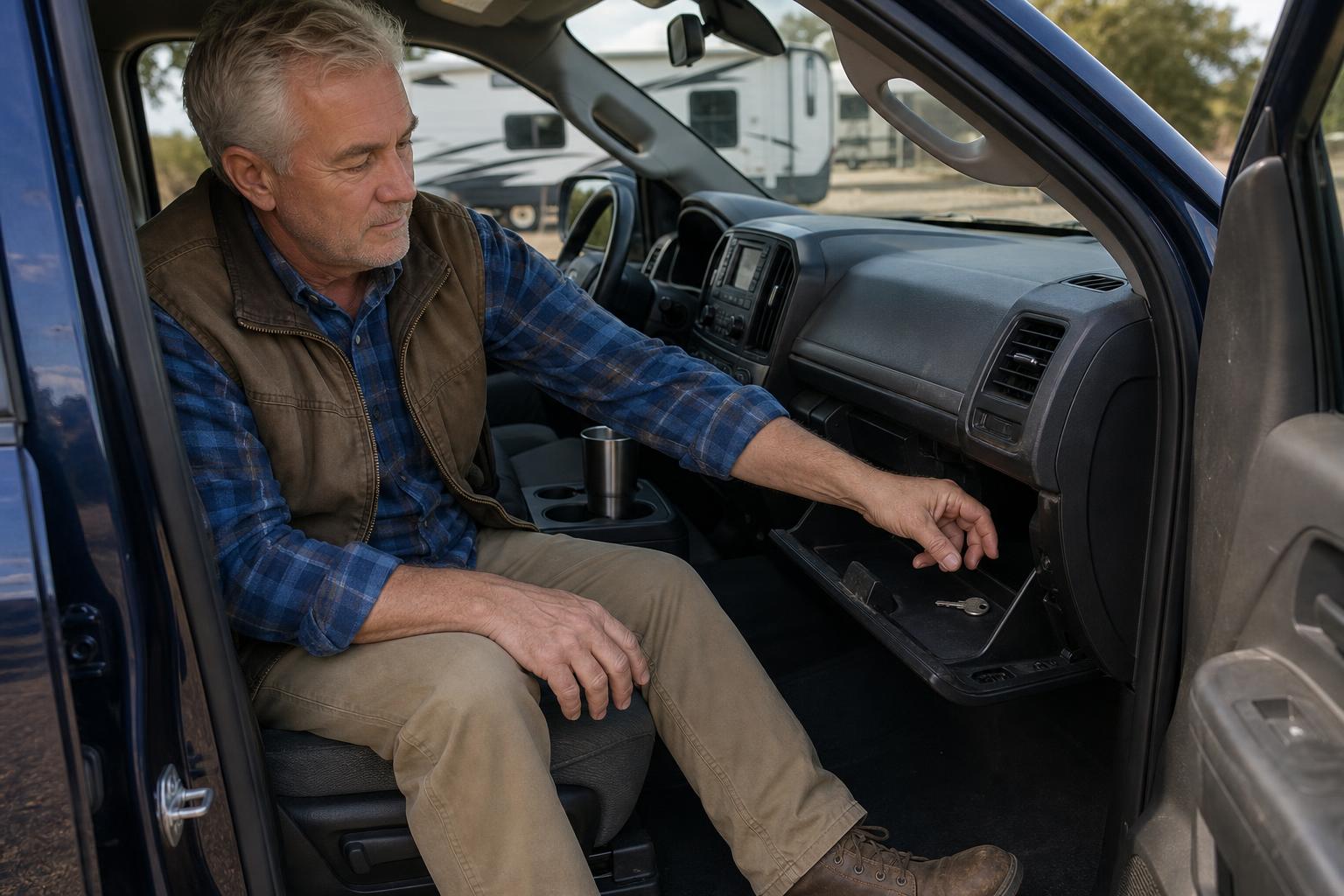
The Fail-Safe Method: Using Your Mechanical Backup Key
Nearly every RV smart lock, regardless of brand, comes with a physical key. This is your ultimate fail-safe. Since it's a purely mechanical override, it works every single time, whether the lock has power or not. This is why it's a best practice to keep a spare key somewhere safe outside your RV.
Consider stashing a key in your tow vehicle's glove compartment or using a small magnetic lockbox hidden on the RV's frame. That way, a dead battery is just a minor inconvenience, not a trip-ending emergency.
Emergency Power to the Rescue: Reviving Your Lock Temporarily
If you can't find your backup key, don't worry. Most smart locks have a way to receive temporary external power. The most common methods are a 9-volt battery or a USB power bank. These options provide just enough juice to wake the lock and let you enter your code.
Many traditional locks have two small metal contacts at the bottom of the unit. Holding a standard 9V battery against these terminals will temporarily power the keypad. Newer models, including the SAWHERO R8 Smart RV Lock, offer a more modern solution: a Type-C emergency power port. You can simply connect a standard power bank—the same one you use for your phone—to revive the lock and get inside.
Last Resort Options When You Have No Key and No Power
Okay, what if you've misplaced your key and don't have a power bank or 9V battery? Before calling for help, take a calm walk around your rig. Is there a storage bay pass-through or a window you may have left unlocked? This is a long shot, but it's worth checking.
If all other options fail, your final step is to call a professional locksmith. They have the tools and expertise to open your door without causing damage, but it's the most time-consuming and expensive solution.
How Different RV Smart Locks Handle a Dead Battery
Not all smart locks are created equal when it comes to battery failure. Low-battery warnings and emergency access features can vary significantly between brands. Understanding these differences can help you troubleshoot your current lock or choose a more reliable one for the future.
Feature Comparison: RVLock vs. Bauer vs. Lippert vs. SAWHERO
Here’s a breakdown of how popular RV smart lock brands handle low and dead battery situations. Notice the differences in warning systems and the type of emergency power access they provide.
| Brand | Battery Type & Life | Low Battery Warning | Dead Battery Procedure |
|---|---|---|---|
| RVLock | 4xAA (6-8 months) or USB-C Rechargeable | Repeated beeps or voice announcement | Physical key; external power if accessible |
| Bauer | 4xAA | Audible feedback; allows ~10 more cycles | Physical key; deadbolt remains in last state |
| Lippert | 4xAA (Handle) / CR2032 (Keypad) | Fast beeps before actuation | Physical key; deadbolt remains in its last state |
| SAWHERO R8 | 4xAA (Up to 6 months) | Audible beeps & Smart Life App notifications | Physical key + External Type-C power port |
This focus on reliable backups reflects a growing market. The global smart lock market is expanding rapidly, a trend driven by consumer demand for both convenience and enhanced security, as noted in reports by Grand View Research.
Proactive Power Management: Never Get Locked Out Again
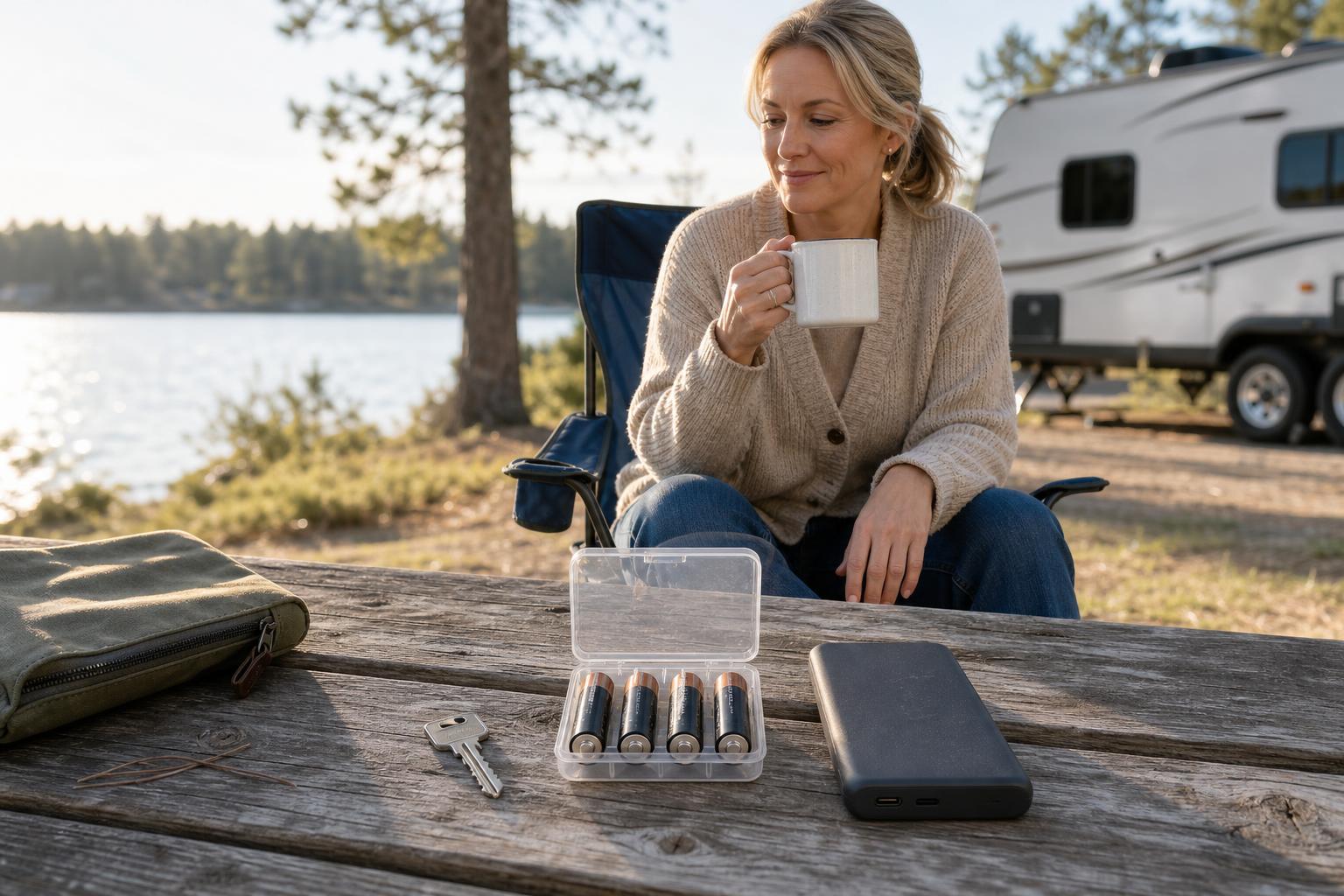
The best way to deal with a dead RV smart lock battery is to prevent it from happening in the first place. A little proactive maintenance goes a long way and gives you one less thing to worry about on your travels. Here’s how to stay ahead of the game.
Establishing a Battery Replacement Routine
Don't wait for the low-battery warning to sound. Many experienced RV owners recommend changing the batteries on a set schedule. A good rule of thumb is to replace them every 6 to 12 months or as part of your prep before any major trip.
Always use new, high-quality alkaline batteries. As many RVers on forums like Reddit's r/GoRVing will attest, they provide a more stable and consistent power supply, reducing the chances of unexpected failure. One RVer even shared a story of their lock having just enough power to lock but not enough to unlock minutes later—a situation a fresh set of batteries could have prevented.
Inspecting and Cleaning the Battery Compartment
When you swap the batteries, take an extra minute to inspect the compartment. Look for any signs of corrosion, which often appears as a white, crusty powder on the metal contacts. If you see any, gently clean it off with a cotton swab and a bit of vinegar or lemon juice to ensure a solid connection.
The battery compartment is almost always on the interior side of the lock and typically requires a small Phillips screwdriver to open. Just be sure to install the new batteries with the correct polarity (+ and -) as indicated inside.
Beyond the Main Lock: Don't Forget Your Key Fob Battery
If your smart lock system includes a remote key fob, remember that it has its own battery, too. These are usually small coin-cell batteries like a CR2032 that also need to be replaced periodically. Keeping that fob powered is another layer in your backup plan.
A truly reliable system gives you multiple ways to get in. The SAWHERO R8, for example, offers four access methods: the keypad, the Smart Life App on your phone, a dedicated remote fob, and the mechanical key. This ecosystem of options ensures a dead battery in one component won't leave you stranded.
Real-World Scenarios: When Your RV Smart Lock Battery Died
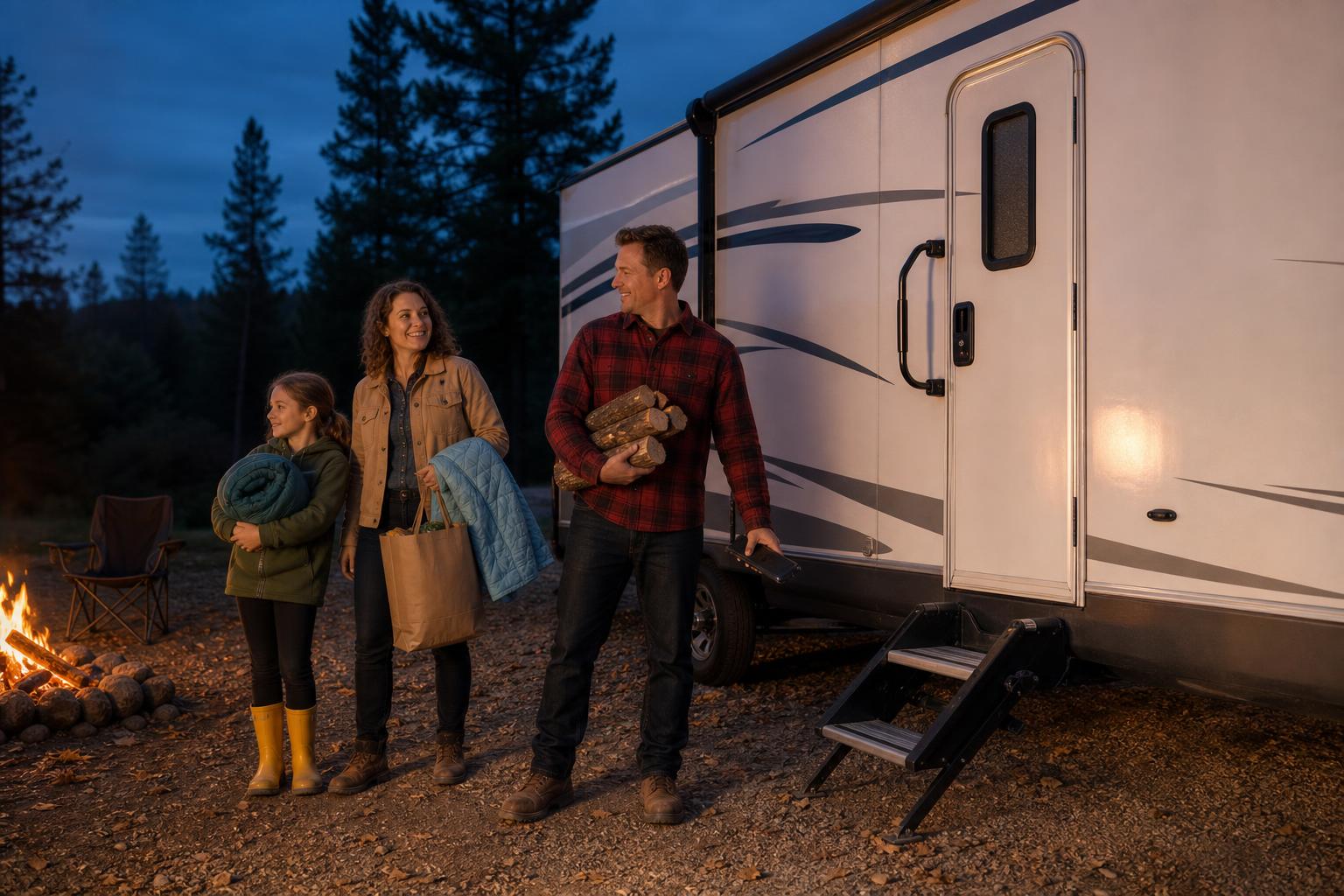
Sometimes, the value of a feature isn't clear until you see it in action. Here are a few real-world examples of how different backup systems can save the day when an RV smart lock battery dies.
Case 1: The Family at the Campsite. A family pulls into their campsite after dark, their arms full of firewood and groceries. The keypad is dead. Instead of fumbling for keys in the dark, the dad pulls out the power bank he uses for his phone, plugs it into the lock's Type-C port, and the keypad lights up instantly. They enter the code and are inside in seconds, turning a potential hassle into a non-event.
Case 2: The Solo Traveler Off-Grid. A solo RVer is camped in a remote national forest, miles from the nearest town. She forgot to change her lock's batteries before the trip, and they finally gave out. Thankfully, she followed the advice to hide a spare key in a magnetic box on her trailer's frame. She retrieves it, unlocks the door, and enjoys a quiet night with her peace of mind intact.
Case 3: The RV Rental Handover. A renter is about to return an RV but finds the smart lock battery has died, and they can't lock the door to complete the handover. The owner, miles away, calmly guides them over the phone: "No problem, there's a power bank in the console. Just plug it into the port at the bottom of the lock." The renter powers it up, locks the door, and the handover is completed smoothly, avoiding any delays or disputes.
Frequently Asked Questions About RV Smart Lock Batteries
What do I do if my RV smart lock battery died and I have no key?
Your first step should be to try the emergency power option. If your lock has external terminals, a 9V battery will work. If you have a modern lock like the SAWHERO R8 with a Type-C port, any standard power bank will do the trick. If that's not an option, check for an unlocked window before calling a locksmith.
How can I tell if my RV smart lock battery is low?
Most locks provide an audible warning, like a series of beeps, when the battery is low. Some may also have a flashing light indicator. More advanced models, including the SAWHERO R8, will also send a low-battery notification directly to the companion app on your smartphone, giving you plenty of advance warning.
Can I use rechargeable batteries in my RV smart lock?
It's best to consult your lock's user manual. Generally, high-quality, single-use alkaline batteries are recommended because they provide a steady voltage. Some specific models are designed with built-in rechargeable packs, but for those that take standard AAs, stick with what the manufacturer suggests for the most reliable performance.
How often should I really change the batteries in my keyless RV lock?
To be safe, a conservative approach is best. Plan to replace the batteries every 6 to 12 months, or at the minimum, before the start of each camping season. For full-time RVers, changing them every six months is a wise habit that minimizes the chance of getting locked out.
Where is the emergency power port on most RV smart locks?
The location can vary. For locks that use a 9V battery, the positive and negative contacts are typically exposed on the bottom edge of the exterior keypad. For newer models with a Micro-USB or Type-C port, you'll usually find it in the same area, sometimes protected by a small rubber cover. If you're unsure, check your product manual or visit our Help Center for more guidance.
The Bottom Line: Choosing a Lock That Keeps You in Control

An RV smart lock battery dying is an inevitable event, but it doesn't have to be a crisis. By understanding your backup options, practicing proactive battery maintenance, and most importantly, choosing a lock designed with these situations in mind, you can ensure you always have access to your home-on-wheels.
When the unexpected happens, a well-designed lock is your best defense. The SAWHERO R8's combination of app-based low-battery alerts, a convenient Type-C emergency power port, and a reliable mechanical key override provides a complete safety net. It's a system built to solve the "RV smart lock battery died" problem before it even begins, giving you total peace of mind on the road. Explore SAWHERO's commitment to reliability today.


