Biometric Door Lock Pros and Cons: Is Fingerprint Tech Right for You?
Love the idea of ditching your keys forever? Just one touch and you're in. But there's that nagging thought: what if the tech fails and you're locked out? That's the core question for anyone considering a fingerprint lock.
This guide cuts through the hype. We'll dive deep into the real-world pros and cons of fingerprint entry, going beyond a simple feature list. By the end, you'll know if this technology truly fits your lifestyle, and you might be surprised by how modern options like the SAWHERO Sentrikey Smart Fingerprint Door Lock address those common fears.
The Upside: Why Homeowners Are Switching to Fingerprint Locks
The biggest draw of a fingerprint-enabled lock is pure convenience. It’s about more than just speed; it’s about removing a daily point of friction and gaining a level of control that traditional locks simply can't offer.
Unmatched Convenience: Say Goodbye to Fumbling for Keys
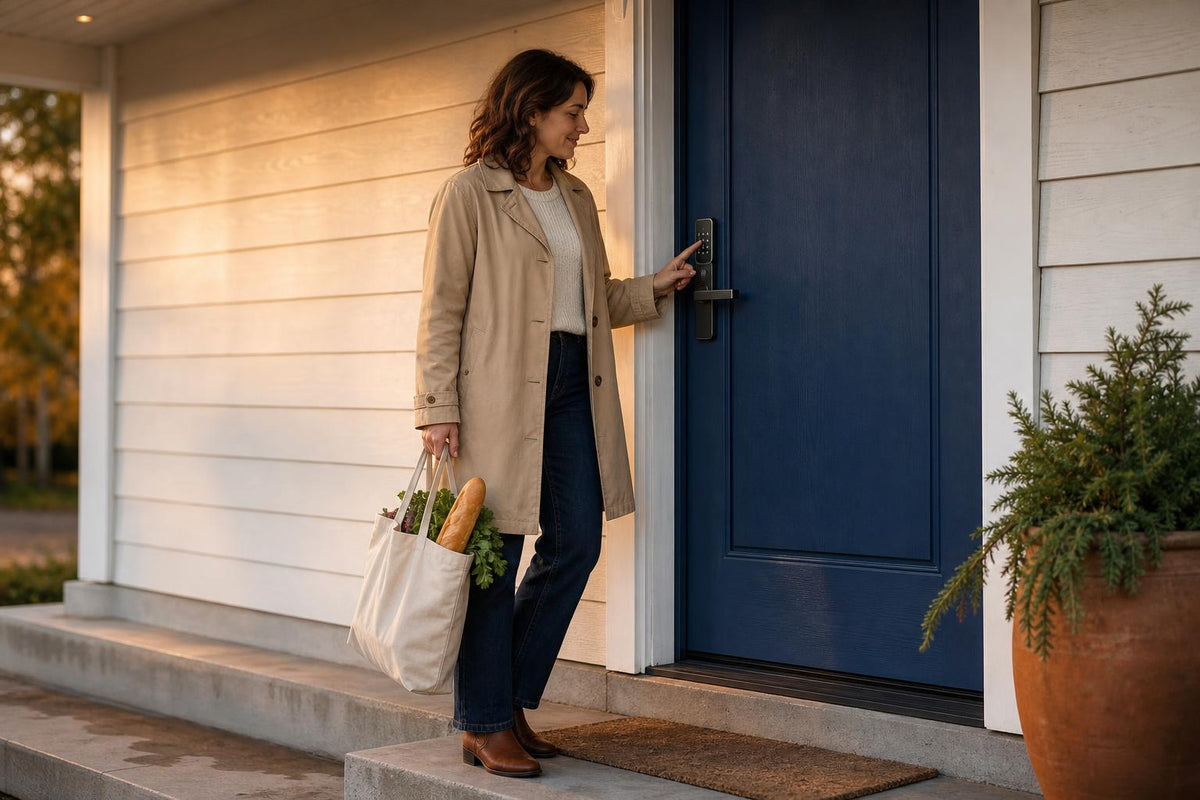
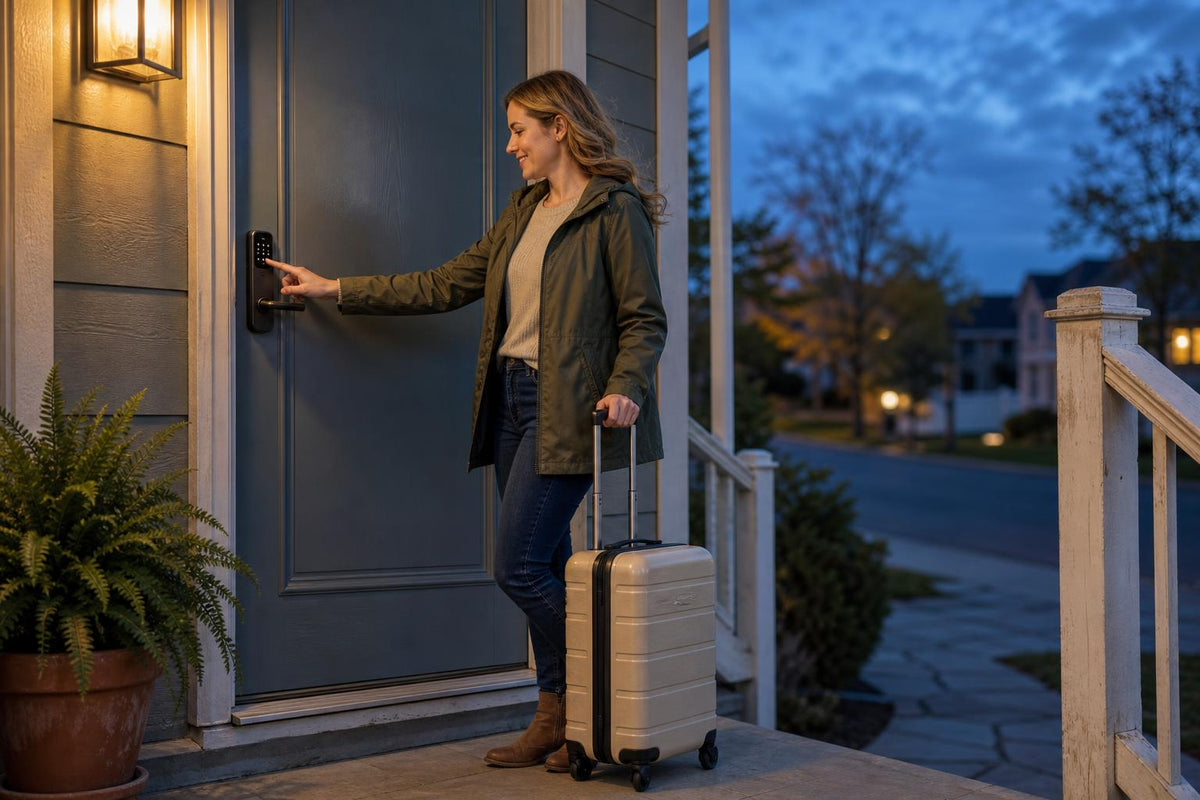
Imagine coming home with your arms full of groceries, a child on your hip, or just trying to find your keys in the dark. A fingerprint lock eliminates that scramble. Many modern sensors recognize your print and unlock the door in under a second, turning a fumbling moment into a smooth, effortless entry.
This seamless experience doesn’t mean sacrificing peace of mind. Most high-quality keyless entry systems provide multiple backup entry methods, including PIN codes, app access like in this keypad vs. fingerprint guide, and even traditional mechanical keys, so you always have a way in.
Granular Access Control for Family and Guests
A smart lock with fingerprint access puts you in complete command of who enters your home and when. Through a simple mobile app, you can grant temporary access to a dog walker, create a one-time code for a visiting relative, or set a recurring schedule for a house cleaner. You get a detailed log of every entry, so you always know who has come and gone.
This is a game-changer for landlords and small businesses. The SAWHERO lock, for example, supports up to 200 different fingerprints and codes, making it perfect for managing access for multiple users without any hassle.
The Downsides: Addressing the Real Concerns of Biometric Locks
It's natural to have concerns about new technology, especially when it comes to your home's security. Let's tackle the three biggest worries people have about fingerprint locks: sensor failure, dead batteries, and the risk of being hacked.
The "It Didn't Recognize Me" Problem: Sensor Reliability
Let's be real: one of the most common complaints about older fingerprint scanners was sensor reliability. Factors like wet, dirty, or scarred fingers could sometimes lead to a False Rejection Rate (FRR), where the lock fails to recognize an authorized user. While extremely rare, the opposite, a False Acceptance Rate (FAR), is also a theoretical concern.
However, technology has improved dramatically. To combat these issues, advanced systems like the SAWHERO lock use a multi-angle fingerprint recording process. By capturing your fingerprint from five different angles during setup, the sensor creates a much more detailed and robust profile, significantly boosting recognition success even when your finger isn't perfectly clean or dry.
Power Dependence: What Happens When the Battery Dies?
The fear of being locked out by a dead battery is completely valid. Unlike traditional locks, these devices need power. The good news is that manufacturers have built in multiple safeguards to prevent this from ever being a real problem, a point often highlighted in reviews by tech sites like Tom's Guide.
Most models provide low-battery warnings well in advance. But even if you miss them, you're not stranded. SAWHERO provides two foolproof backup options: an external Type-C port for emergency power via any power bank, and a set of 5 traditional mechanical keys, ensuring you can always get inside.
Digital Risks: Hacking Vulnerabilities and Data Privacy
In a connected world, digital security is a top priority. While any Wi-Fi or Bluetooth device carries a theoretical risk, reputable smart locks are designed with robust protections. According to analysis from security experts at PCMag, a primary concern is the wireless connection itself, which is why strong encryption is crucial. Your fingerprint data is typically encrypted and stored locally on the device itself, not in the cloud, minimizing exposure.
But what about physical threats? This is where cutting-edge biometric safety features come in. The SAWHERO lock includes a unique duress alert function. You can designate a specific finger or code as a silent alarm. If forced to unlock the door, using that credential will open the lock normally while discreetly sending an emergency notification to a trusted contact. For more on this, check our guide on securing your smart home.
Finding the Perfect Fit: Is a Biometric Lock Right for Your Lifestyle?
A fingerprint lock isn't just about the tech; it's about how that tech solves real-world problems. By looking at specific scenarios, you can see if the benefits align with your daily life.
For the Busy Family
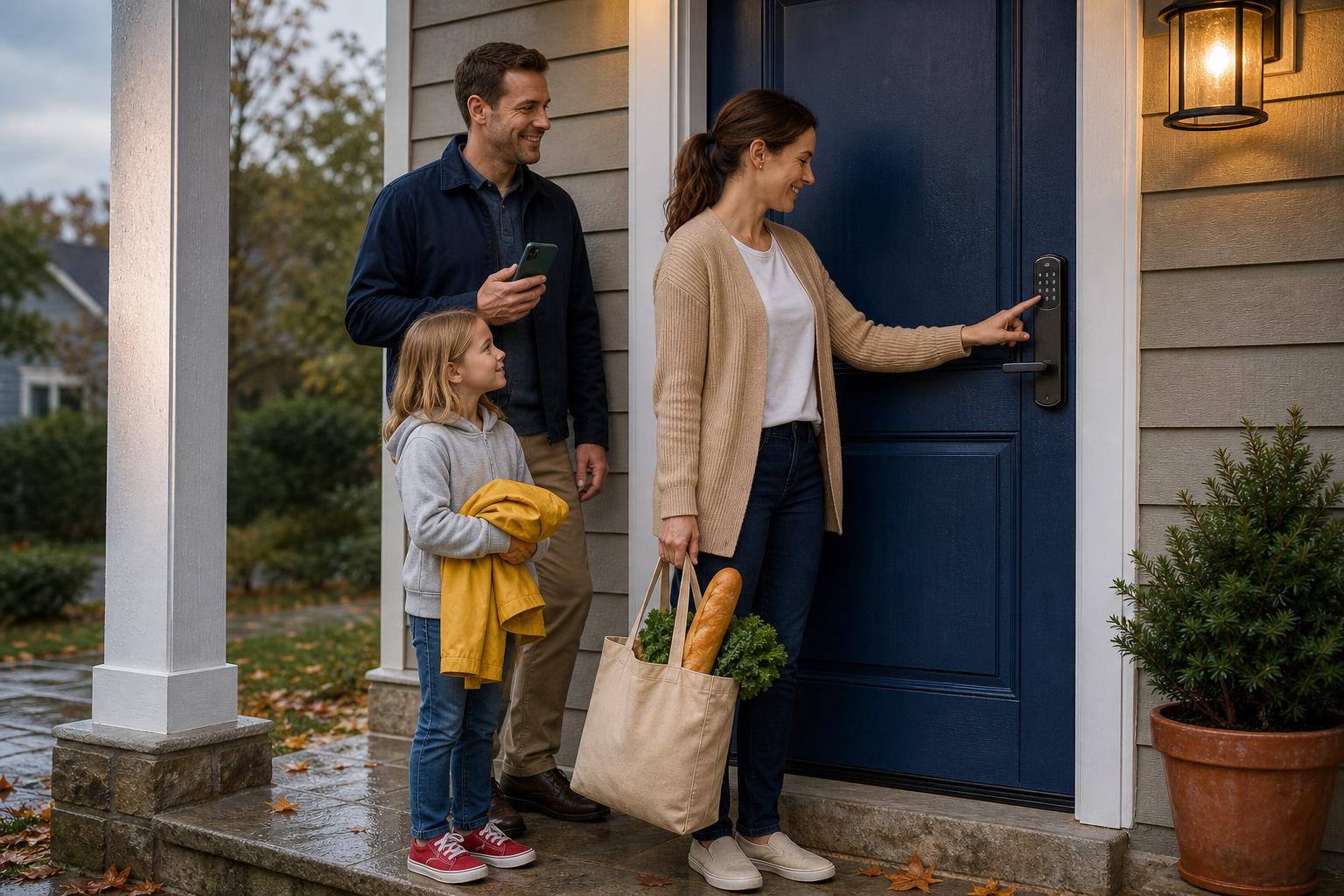
Consider a household with kids who are prone to losing keys. A fingerprint lock means they can always get in safely after school without needing a physical key. You can receive a notification on your phone the moment they arrive home, adding a layer of peace of mind to your busy workday.
For the Rental Property Manager
If you're an Airbnb host or landlord, managing keys can be a logistical nightmare. A smart lock allows you to remotely grant access to new tenants or guests for the exact duration of their stay. When they check out, you can revoke access instantly without needing to meet in person or rekey the lock, a huge benefit discussed in our article for rental hosts.
For the Tech-Savvy Homeowner
Juggling groceries, a briefcase, and a pet on a leash? A simple touch to unlock the door is a small luxury that makes a big difference. You can also provide temporary access for service professionals, like a house cleaner or contractor, without handing out a spare key or changing your schedule. It’s about streamlining access and maintaining security.
Feature Showdown: Biometric vs. Keypad vs. Traditional Key
So, how does a fingerprint lock stack up against other options? Seeing the features side-by-side can help clarify which type of lock best suits your priorities, from pure convenience to access management.
| Feature | Biometric (Fingerprint) | Digital Keypad (Code) | Traditional Key |
|---|---|---|---|
| Speed & Ease | Excellent (Under 1 sec) | Good (A few seconds) | Fair (Requires fumbling) |
| Security Level | High (Unique biological trait) | Medium (Can be shared/seen) | Low (Can be lost/copied) |
| Guest Access | Excellent (Remote & temporary) | Excellent (Temporary codes) | Poor (Requires physical key) |
| Reliability | Good (Can fail with wet hands) | Excellent (Works in all conditions) | Excellent (Purely mechanical) |
| Cost | High | Medium to High | Low |
How Modern Locks Like SAWHERO Solve the Biggest "Cons"
After weighing the pros and cons, it's clear that the ideal lock is one that maximizes the benefits while solving the core drawbacks. Here’s how modern design addresses those common fears.
Deciphering Security Ratings: Why ANSI/BHMA Grade Matters
Don't just look at the tech features; the physical strength of the lock is critical. The American National Standards Institute (ANSI) provides a grading system certified by the BHMA. For residential doors, you should look for a lock with at least a Grade 2 rating, which, as explained by industry experts, ensures it can withstand significant force and tampering attempts.
Installation & Compatibility: Avoiding Hidden Costs
A major hidden cost of many smart locks is professional installation. To avoid this, look for models designed for easy do-it-yourself installation. The SAWHERO lock is engineered to fit standard US doors and can be installed in about 10 minutes with just a Phillips screwdriver. This DIY-friendly approach avoids the often significant cost of a professional installer. For more details, consult our Smart Lock Installation Guide or the Help Center.
Connectivity Simplified: No Hubs or Gateways Needed
Many smart locks require you to purchase a separate Wi-Fi gateway to enable remote features. This adds extra cost and another device to set up. A more elegant solution is a lock with built-in Wi-Fi, like SAWHERO. It connects directly to your home network, making setup simpler and more affordable.
Frequently Asked Questions about Biometric Door Locks
-
Are fingerprint door locks truly secure?
Reputable models offer multi-layered security. Physically, they are certified with ANSI/BHMA grades for durability. Digitally, they use local encryption for your data and often include advanced features like duress alerts for added protection.
-
What happens if the power goes out?
These locks run on batteries, so a power outage won't affect them. If the batteries themselves run out, you have backups like a mechanical key or an emergency USB-C power port to ensure you're never locked out.
-
Do fingerprint scanners work well for kids or the elderly?
While some older sensors struggled with the finer fingerprints of children or the worn prints of the elderly, modern technology has largely solved this. Models with multi-angle scanning technology, like SAWHERO, have a much higher success rate across all age groups.
-
Can my fingerprint be "stolen" from the lock?
Leading brands prioritize your privacy by encrypting and storing your fingerprint data directly on the lock's local hardware. This data never gets uploaded to the cloud, which drastically reduces the risk of it being compromised in a data breach.
-
Is a keyless entry lock worth the extra cost?
If you place a high value on keyless convenience, the ability to manage access for guests remotely, and a detailed log of who enters your home, then the investment in a quality fingerprint lock is often well worth it.
-
Can I install this type of lock myself?
Absolutely. Many models are now specifically designed for DIY installation. If you choose a lock like SAWHERO, all you need is a screwdriver and about 10 minutes to get it set up, saving you significant installation fees.
The Verdict: Is a Fingerprint Lock a Smart Investment?
The core trade-off in the fingerprint lock pros and cons discussion is clear: it's about balancing unparalleled convenience against a reliance on technology. For many, the benefits of never carrying a key again, combined with powerful access control, far outweigh any potential downsides.
If you're a busy parent, a landlord managing properties, or simply someone tired of fumbling for keys, a reliable fingerprint lock is a smart investment. The right model eliminates the common fears around reliability and security, leaving you with pure, streamlined access.
Ultimately, the best lock is one that fits your needs. If this blend of convenience and control sounds right for you, see how the SAWHERO smart lock could upgrade your home's security.