Why "Local-First" is the Only Way for a Truly Smart Lock
When you're building a smart home centered around Home Assistant, the goals are control, privacy, and rock-solid reliability. For a device as critical as your front door lock, a "local-first" approach isn't just a preference—it's a necessity. This means your lock's brain lives inside your home, not on a corporate server miles away.
This philosophy is a world apart from cloud-dependent locks that introduce delays, privacy concerns, and potential points of failure. A truly smart lock shouldn't stop working because your internet is down or a company changes its terms of service. By prioritizing local control, you ensure your home's primary security point is fast, private, and always under your command.
Privacy, Reliability, Speed: The Local Control Advantage
The benefits of a local-first setup are tangible. First, your data stays home. Information about who is coming and going is never uploaded to a third-party cloud, giving you complete ownership of your privacy. Second, it's incredibly reliable. An internet outage won't affect your ability to lock, unlock, or run automations, because everything happens on your local network.
Finally, there's speed. When you trigger an automation—like having your hallway lights turn on the moment you unlock the door—it happens instantly. There's no round-trip to a cloud server, just a direct, millisecond-fast command from your lock to your lights. This is the responsive smart home experience you've been aiming for.
The Pitfalls of Cloud-Dependent Smart Locks
Cloud-based locks often create more problems than they solve for a Home Assistant user. For example, some Wi-Fi locks like the Schlage Encode Plus, when using their standard integration, rely on cloud polling. This means Home Assistant has to constantly ask the cloud "Is the lock still locked?" which causes noticeable delays and can drain the lock's batteries much faster. (Source: reviewed.com, home-assistant.io community)
This reliance also introduces a single point of failure. If the manufacturer's servers go down or they end support for a product, your "smart" lock could become surprisingly dumb. A local-first model avoids these pitfalls, ensuring your lock remains a dependable part of your smart home for years to come.
The Core Decision: Choosing Your Local Protocol (Z-Wave vs. Zigbee vs. Matter)
Before you pick a brand, you need to pick a team: the wireless protocol that will power your lock. This is the most crucial decision you'll make. Your choice between Z-Wave, Zigbee, and the newer Matter standard will define your lock's performance, setup process, and overall reliability within Home Assistant.
Z-Wave: The Gold Standard for Stability and Security
Z-Wave has long been the top choice for security devices in the smart home world, and for good reason. It operates on a separate frequency from Wi-Fi, meaning less interference, and its mesh network is renowned for being robust and reliable, easily penetrating walls. Products like the Yale Assure series and Kwikset Home Connect are prime examples of solid, purely local Z-Wave locks. (Source: Home Assistant Community)
To use a Z-Wave lock, you'll need a Z-Wave USB controller (like an Aeotec Z-Stick) plugged into your Home Assistant server. Once paired, you get a direct, secure line of communication that just works, making it a favorite for users who prioritize stability above all else.
Zigbee: Powerful, But Watch Out for Proprietary Ecosystems
Zigbee is another powerful mesh protocol known for its speed and flexibility. However, the landscape can be tricky. While it's an open standard, some manufacturers create devices that work best within their own walled garden. The Aqara U100 is a perfect case study of this.
The U100 is a feature-packed Zigbee lock, but to unlock its full potential and integrate it smoothly with Home Assistant, you typically need an Aqara-branded hub. (Source: aqara.com) This "ecosystem lock-in" is a critical trade-off to consider. While powerful, you might be buying into more hardware than you initially planned.
Matter over Thread: The Future-Proof, Hub-Optional Choice
Matter is the new universal language for smart home devices, promising to break down the walls between ecosystems. When run over a Thread mesh network, it offers a secure, reliable, and entirely local communication path. This is the future, and some brands are already there.
The Nuki Smart Lock 4.0 Pro is the hero product in this category. As a "Works with Home Assistant" certified device, it supports Matter over Thread natively. (Source: home-assistant.io) This means you can connect it directly to Home Assistant's Matter integration without needing a brand-specific bridge or hub, offering the simplest and most future-proof setup.
2026's Top Home Assistant Compatible Smart Locks: A Showdown
Now that you understand the protocols, let's look at the top contenders. Each of these locks has its own strengths and is built for different types of users and homes. We've broken them down to help you find the perfect match for your local-first smart home.
Smart Lock Comparison Matrix for Home Assistant Users
| Feature | Nuki Smart Lock 4.0 Pro | Yale Assure Lock 2 | Aqara U100 | Schlage Encode Plus | Kwikset Home Connect 620 |
|---|---|---|---|---|---|
| Primary Protocol | Matter over Thread / WiFi | Z-Wave / Matter (via Module) | Zigbee / Matter (via Hub) | Wi-Fi / HomeKit | Z-Wave |
| Local Control Quality | ⭐⭐⭐⭐⭐ (Excellent) | ⭐⭐⭐⭐⭐ (Excellent) | ⭐⭐⭐ (Hub Required) | ⭐⭐ (Workaround Needed) | ⭐⭐⭐⭐⭐ (Excellent) |
| Hub Required? | No (for Matter) | No (with Z-Wave Stick) | Yes (Aqara Hub) | No | No (with Z-Wave Stick) |
| Apple Home Key | No | No | Yes | Yes | No |
| Best For | EU Doors, Retrofit | Modularity, Reliability | Fingerprint & Home Key | Apple Fans (with caveats) | Budget-Friendly Z-Wave |
In-Depth Look at the Top Contenders
The Nuki Smart Lock 4.0 Pro is a top pick, especially for European doors, thanks to its easy retrofit installation and certified native Matter support for seamless local control. The Yale Assure Lock 2 series shines with its modular design; simply add a Z-Wave or Matter module for bulletproof reliability and direct Home Assistant integration. (Source: shopyalehome.com)
Aqara's U100 is tempting with its fingerprint reader and Apple Home Key support, but remember that true integration requires the Aqara hub. The Schlage Encode Plus is the go-to for Apple Home Key enthusiasts, but achieving local control in Home Assistant demands a specific HomeKit workaround to avoid cloud dependency. For a no-frills, budget-friendly, and highly reliable Z-Wave option, the Kwikset Home Connect 620 is a workhorse that integrates perfectly for core smart lock functions. For a more feature-rich experience with easy DIY installation, check out the SAWHERO SentriKey Smart Lock.
Solving Common Integration Headaches and Pro Tips
Choosing a lock is only half the battle. Integrating it smoothly into Home Assistant can sometimes present unique challenges. Here's how to tackle some of the most common headaches you might encounter with popular models, turning potential frustration into a seamless experience.
The Aqara Hub Dilemma: When Is It Worth the Hassle?
So you love the Aqara U100's features, but you're hesitant about needing its hub. The trade-off is simple: if you are already invested in the Aqara ecosystem or if the fingerprint reader and Apple Home Key are non-negotiable features, then getting the hub is a worthwhile path. You can expose the lock to Home Assistant via the Matter protocol through the hub, which still provides reliable local control. (Source: chrishansen.tech)
The Schlage Encode Plus & HomeKit Trick for True Local Push
The official Schlage integration for the Encode Plus is cloud-based, which is a dealbreaker for many. The community-approved solution is to bypass it entirely. Instead of using the Schlage integration, you pair the lock to Home Assistant using the HomeKit Controller integration. (Source: home-assistant.io community)
This brilliant workaround forces the lock to communicate locally with Home Assistant. The result is instant "push" updates for lock status changes, lightning-fast response times, and significantly better battery life, all while retaining Apple Home Key functionality on your iPhone.
Pairing Tips: Overcoming Kwikset's "Whisper Pairing"
A specific quirk that often trips up new owners of Kwikset Z-Wave locks is the "whisper pairing" process. If you're trying to pair your lock from across the room and it's not working, this is likely why. The lock's security protocol requires the Z-Wave controller to be physically very close—just a few inches away—during the initial pairing. (Source: Home Assistant Community)
Don't get frustrated. Simply bring your Z-Wave USB stick (and the device it's plugged into, like a laptop) right next to the lock's interior housing before starting the pairing process in Home Assistant. Once paired, the lock will work perfectly from anywhere in its mesh network range.
Real-World Automations: Unleash Your Smart Lock's Potential
Integrating a smart lock is just the beginning. The real magic happens when you use Home Assistant to make your lock an active participant in your daily routines. These automations go beyond simple remote unlocking, adding a layer of convenience and security to your home.
For Family & Peace of Mind: Welcome Home Scenes & Auto-Locking
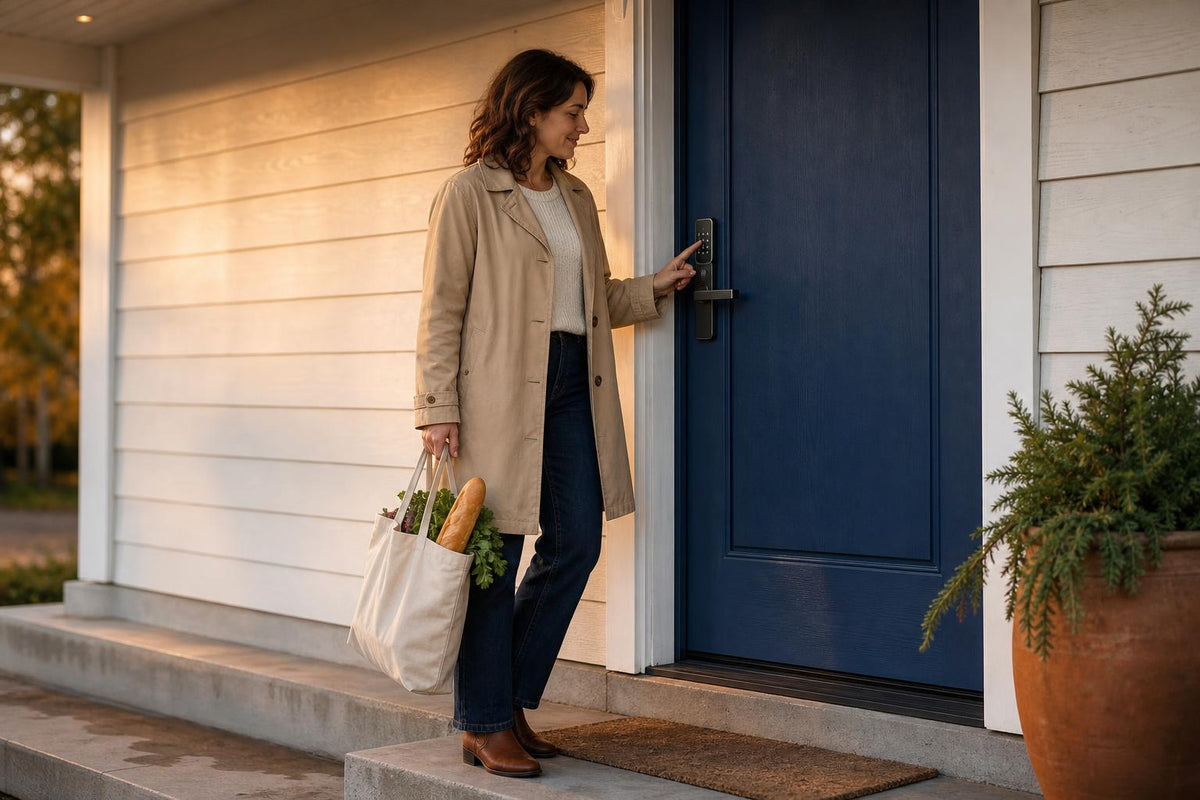
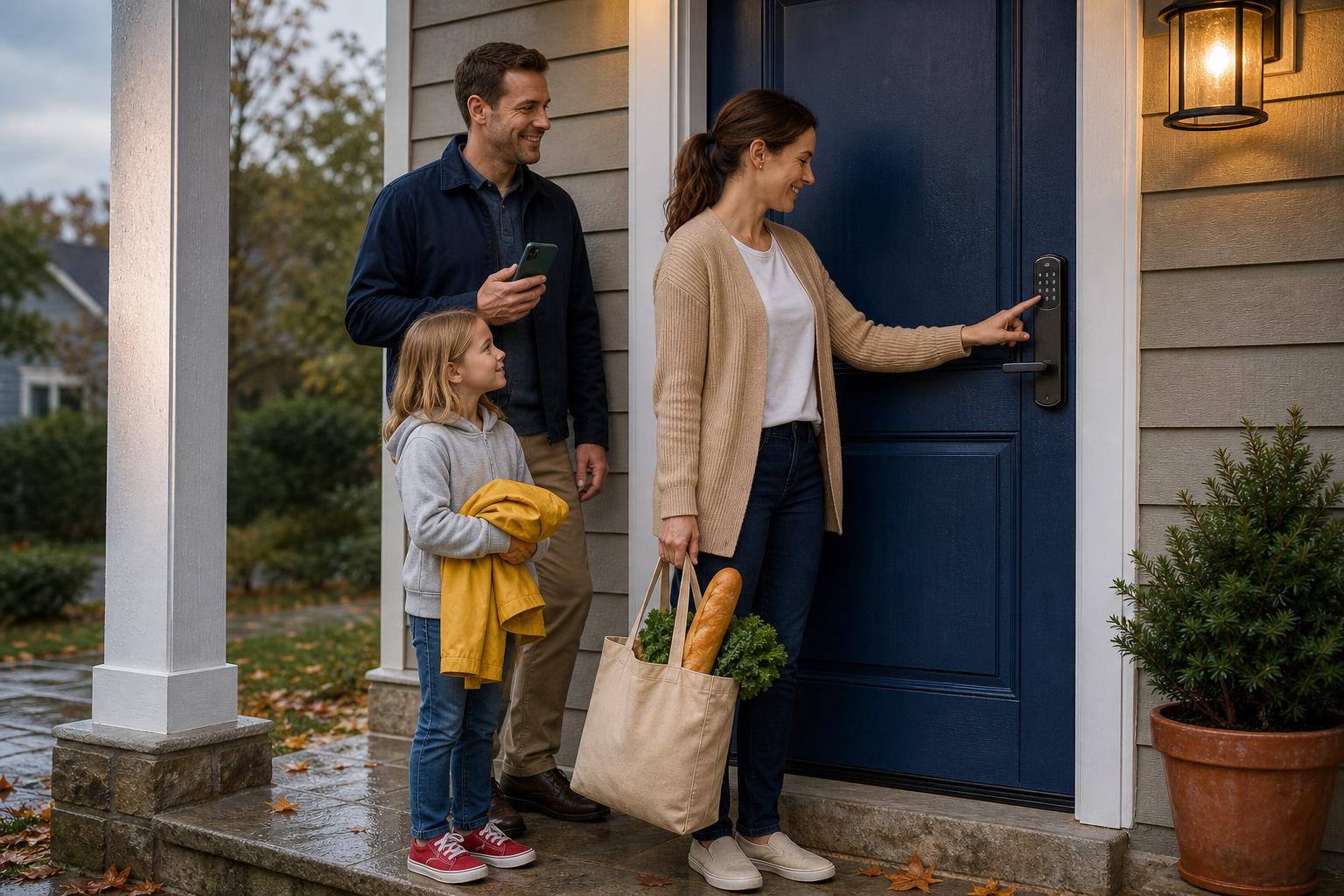
Imagine coming home with your hands full of groceries. You unlock the door with your unique code, and Home Assistant instantly triggers a "Welcome Home" scene. The entryway lights fade on, your favorite playlist starts on a smart speaker, and the thermostat adjusts to your preferred temperature. You can create a different scene for each family member based on their code.
You can also eliminate that nagging feeling of "Did I forget to lock the door?" Set up an automation that checks if the door is unlocked at 10 PM every night and locks it if needed. Or, have it automatically lock 5 minutes after you've left the house. It's a simple way to gain significant peace of mind.
For Guests & Rentals: Managing Access Codes with Keymaster
If you have house guests, a dog walker, or an Airbnb rental, managing keys is a pain. This is where the powerful `Keymaster` integration for Home Assistant comes in. It provides a simple interface to manage access codes for Z-Wave and Zigbee locks directly within Home Assistant.
You can generate a code for your cleaner that only works on Tuesdays from 10 AM to 2 PM. Or create a one-time use code for a delivery. When the code is used, you can get a notification. When your Airbnb guest checks out, their code is automatically deactivated. It's powerful, secure access management, all handled locally. For more help with advanced features, check out our Help Center.
Frequently Asked Questions (FAQ)
Navigating the world of Home Assistant compatible smart locks can bring up a few questions. Here are clear, straightforward answers to some of the most common ones.
Q1: Do I need a Z-Wave or Zigbee USB stick for my Home Assistant?
A: Yes, in most cases. For Z-Wave or Zigbee locks that don't depend on a brand-specific hub, you will need a corresponding USB coordinator. Popular choices include the Aeotec Z-Stick for Z-Wave and a Sonoff Zigbee 3.0 Dongle for Zigbee.
Q2: Can I use a Wi-Fi smart lock with Home Assistant for local control?
A: It's uncommon. The majority of Wi-Fi locks are designed to connect to the cloud. The main exception is using a clever workaround, like the HomeKit Controller integration with the Schlage Encode Plus, which can establish a local connection and bypass the cloud.
Q3: Is Matter mature enough for smart locks in 2026?
A: Yes, it's quickly becoming a fantastic choice. Brands like Nuki now offer certified Matter-over-Thread locks that integrate directly and locally with Home Assistant. This provides a streamlined, hub-free, and future-proof setup that is highly recommended. (Source: nuki.io)
Q4: How do I manage user codes directly from Home Assistant?
A: For Z-Wave and Zigbee locks, the community-built `Keymaster` integration is the gold standard. It gives you a complete user interface inside Home Assistant to add, remove, and schedule individual user codes for your lock with advanced options.
Q5: What's the best smart lock for European cylinder doors?
A: The Nuki Smart Lock is widely considered the best option for EU-style doors. Its design allows for a simple, non-destructive installation that fits directly over your existing key and cylinder, making it an easy retrofit solution. (Source: Home Assistant Community)
Q6: Which type of lock generally offers the best battery life with Home Assistant?
A: Z-Wave and Zigbee locks consistently provide better battery life than their Wi-Fi counterparts. This is because Wi-Fi locks often rely on energy-intensive cloud polling, whereas a local, push-based protocol like Z-Wave, Zigbee, or Matter is far more power-efficient.
Your Next Step to a Secure, Local-First Smart Home
Choosing a home assistant compatible smart lock comes down to one core principle: prioritize a local control protocol. This single decision ensures your lock will be fast, reliable, and private—the pillars of a great Home Assistant setup. Your journey starts with picking the right foundation for your home's security.
For unmatched stability, Z-Wave remains a top-tier, reliable choice. For the ultimate in modern, hub-free simplicity, a native Matter lock like the Nuki is an excellent, forward-looking investment. Look at your door type, your budget, and your desire for features like Apple Home Key, and use the insights here to make a confident choice.
Ready to build a smarter, more secure home? Explore our full range of smart security solutions on the SAWHERO Homepage and take the first step today.