The "Did I Lock the Door?" Anxiety: Why Automatic Locking Is a Game-Changer
That sinking feeling hits you halfway to work: "Did I remember to lock the door?" Forgetting to secure your home is a common source of anxiety, creating both a psychological burden and a genuine security risk. It’s a moment that can derail your entire day.
You're not alone in prioritizing this. According to research from Parks Associates, 25% of households with a security system own a smart door lock, compared to just 3% of those without one. This shows that people who are serious about security see the value in upgrading the first point of entry.
An automatic locking system isn't just a convenience; it's a fundamental upgrade to your home's security infrastructure. It’s an investment in peace of mind, ensuring your home is protected even when your mind is elsewhere.
Peace of Mind for Every Scenario
The benefits of an auto-locking door extend to countless daily situations. It provides a simple, effective safety net for a wide range of lifestyles.
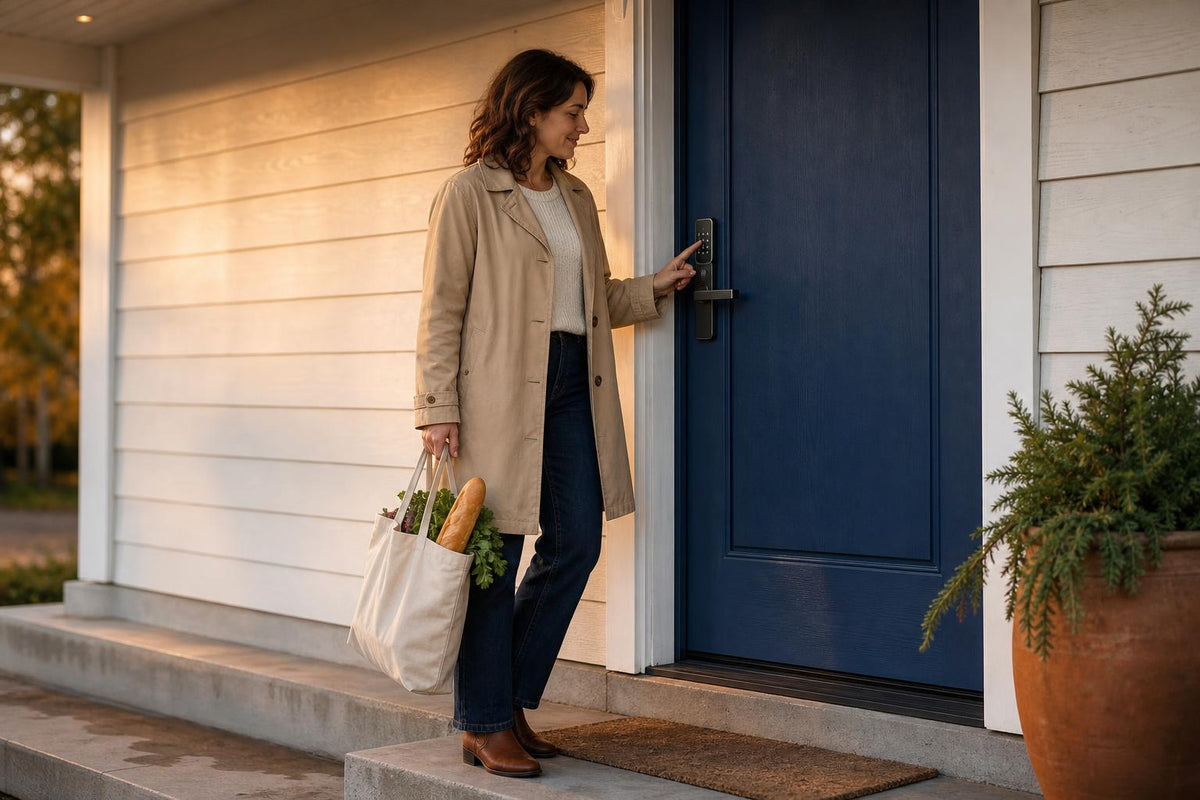
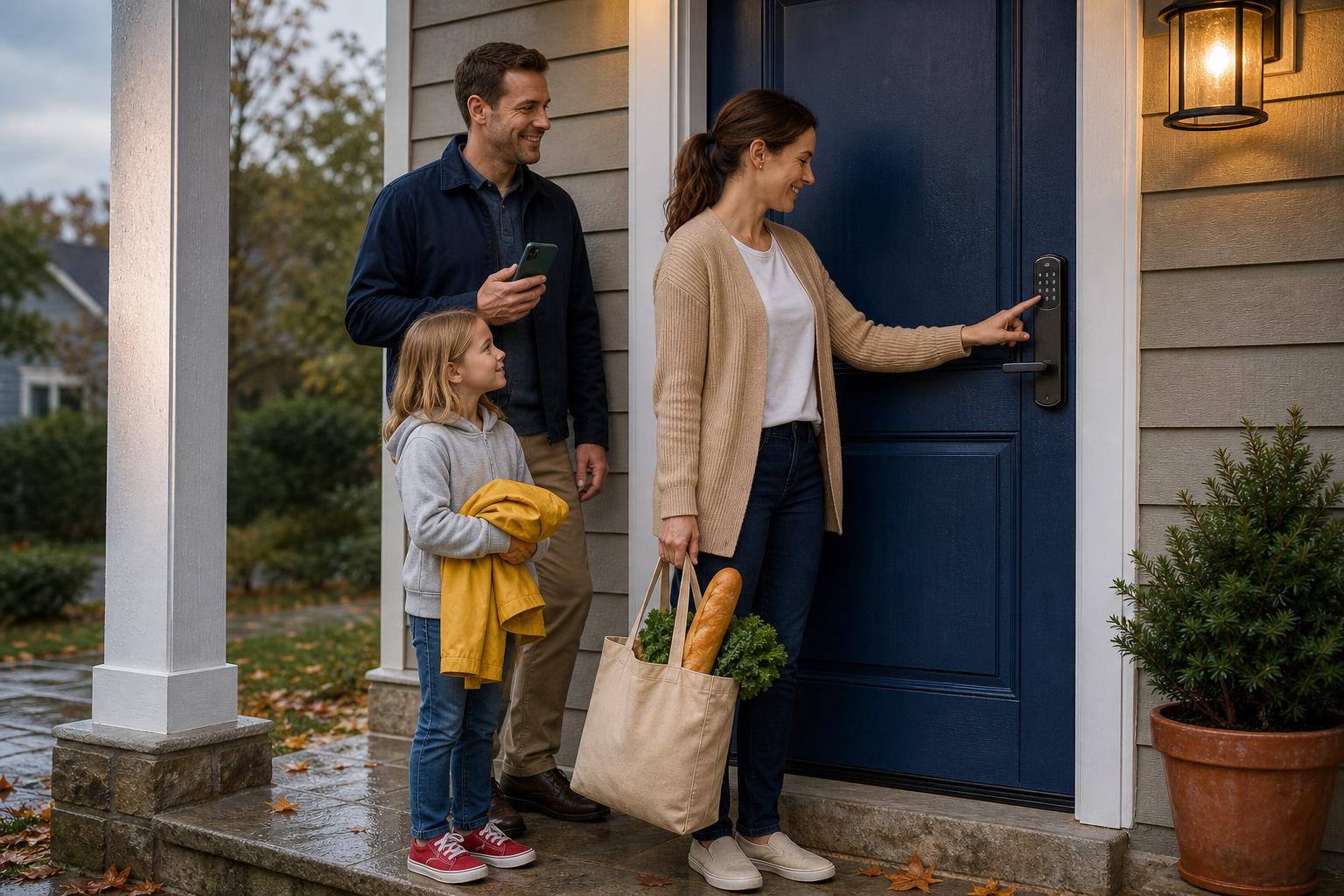
For a busy family, mornings can be chaotic. Between getting kids ready for school and grabbing your own work bag, it's easy to forget the final step of locking the deadbolt. An auto-lock feature takes that task off your plate, so you can drive away confident that your home is secure.
If you're an Airbnb or short-term rental host, you can't always be there to check the door after a guest leaves. An automatic deadbolt ensures the property is locked immediately after checkout, protecting your investment without requiring an extra trip.
For those caring for an elderly parent or a family member with cognitive challenges, an auto-locking door is a critical safety tool. It prevents the door from being left unlocked due to forgetfulness, providing a crucial layer of protection and independence.
Behind the Magic: How Smart Locks Know When and How to Lock
The technology behind automatic locking is designed to be both smart and reliable. Smart locks use a combination of sensors and software to determine the right moment to secure your door, preventing awkward situations like locking before the door is even closed.
These systems work together to ensure the locking process is smooth, accurate, and truly secure. Here’s a breakdown of the most common technologies that make it happen.
Timer-Based Locking: The Simple and Reliable Default
The most common method for auto-locking is a simple timer. Through the lock's mobile app, you can set it to engage the deadbolt after a specific period, typically ranging from 30 seconds to several minutes after the door has been unlocked or closed. Brands like Eufy, Kwikset, and August all offer this straightforward and effective feature.
Sensor-Driven Accuracy: Understanding "DoorSense" Technology
Timer-based systems are great, but what if the door is still slightly ajar? This is where door sensors come in. Technologies like Yale's DoorSense use a small magnetic sensor mounted on the door frame to know if the door is fully shut.
This completely solves the "false lock" problem. The automatic deadbolt will only engage once the sensor confirms the door is in the closed position. This sensor-driven accuracy is key to a truly dependable door auto locking system.
Geofencing and Scheduled Locking: The Smartest Options
For even more advanced automation, some smart locks offer geofencing and scheduling. Geofencing uses your phone's GPS to automatically lock the door when you leave a designated area around your home. Scheduled locking lets you set specific times, like every night at 10 PM, for the lock to check its status and lock if necessary.
Choosing Your Auto-Lock Solution: Smart Locks vs. Traditional Closers
When you want to figure out how to lock your door automatically, you’ll find two main paths: smart locks and traditional door closers. While both can help, they serve very different purposes. A smart lock automates the locking action, while a door closer simply automates the closing action.
As noted by tech publications like CNET, a smart lock is a comprehensive digital solution offering remote control, access codes, and intelligent auto-lock settings. In contrast, a traditional automatic door closer is a mechanical device that just pulls the door shut. For complete, hands-off security, a smart lock is the superior choice. Many modern options, like retrofit smart locks, offer easy installation and powerful features. Explore the range of SAWHERO Smart Locks to see how simple upgrading can be.
Decision Matrix: Finding the Right Automatic Locking System
Making the right choice depends on your specific needs, whether you're a homeowner, a renter, or a DIY enthusiast. This table breaks down the key differences between the most common solutions.
| Feature | Full Replacement Smart Lock (e.g., Schlage Encode) | Retrofit Smart Lock (e.g., August, SAWHERO) | Traditional Automatic Door Closer |
|---|---|---|---|
| Core Function | Auto-locking, remote control, codes/fingerprints | Adds auto-locking and app control to your existing lock | Automatically closes the door (does not lock it) |
| Installation Difficulty | Medium (requires removing the old lock) | Low (installs in minutes, no key change) | Medium (requires drilling) |
| Best For | Homeowners, users seeking an all-in-one experience | Renters, DIY users, those wanting to keep their keys | Situations where the door must always be closed |
| Smart Features | High (Wi-Fi, App, Voice Assistants) | High (Bluetooth, App, optional gateway for remote access) | None |
| Cost | Medium to High | Medium | Low |
Step-by-Step: Configuring Your Smart Lock's Auto-Lock Settings
Setting up your smart lock's automatic locking feature is usually a quick process done right from your cell phone. Brands like SAWHERO are designed with a low usage barrier in mind, so you don't need to be a tech expert to get started. The steps are generally similar across most major brands.
Once configured, you can fine-tune the settings to match your daily routine perfectly. And if you ever run into issues, a few simple troubleshooting steps can usually resolve them. For detailed, model-specific questions, our Help Center is always available.
A General Setup Guide
While the exact menu names might vary slightly, here is the basic process for enabling auto-lock on your new smart lock:
- Download your lock's companion app from the app store and create an account. Follow the on-screen instructions to pair the lock with your phone via Bluetooth.
- Once paired, navigate to the main device page for your lock and look for a "Settings" or "Lock Settings" icon (often a gear symbol).
- Inside the settings menu, find and enable the "Auto-Lock" feature. It’s usually a simple toggle switch.
- Set your desired auto-lock delay time. It's a good idea to start with 1 minute to give yourself enough time to get in and out without being locked out.
- If your lock includes a door sensor, the app will guide you through a quick calibration process to ensure it knows when the door is properly closed.
Quick Troubleshooting Tips
Running into a snag? Here are a few common issues and their solutions for troubleshooting an automatic door lock:
- Auto-lock isn't working at all? First, check the lock's battery level in the app. Also, ensure your phone's Bluetooth is on and that the app has the necessary permissions in your phone's settings.
- The door locks while it's still open? This is almost always a door sensor issue. Go back into the app settings and run the calibration process for the sensor again.
- The battery seems to be draining too fast? Constant searching for a weak Wi-Fi signal is a major battery drain. If your lock uses Wi-Fi, make sure it has a strong connection. Locks that use lower-power protocols like Z-Wave or Thread often have better battery life.
FAQ: Your Automatic Door Lock Questions Answered
You've got questions, and we've got answers. Here are some of the most common queries we see about automatic door locks.
Do all smart locks have an auto-lock feature?
Most modern smart locks are equipped with this feature, but it's always best to check the product specifications. It's a standard feature on all SAWHERO models.
How accurate is the auto-lock feature?
The accuracy is very high on models with door sensors (like DoorSense), as they prevent locking until the door is fully closed. Timer-only models are reliable but can't detect if the door is ajar.
Can I use an auto-locking smart lock if I'm a renter?
Absolutely. Retrofit smart locks are perfect for renters because they install over your existing deadbolt without changing the original keys.
What happens if the battery dies?
Most smart locks provide low-battery warnings via the app and on the device itself. Many also have a backup option, like a physical keyhole or a terminal to temporarily power it with a 9V battery or USB.
Will auto-lock drain my smart lock's battery faster?
It uses a small amount of power for the motor and sensor. However, connectivity type (Wi-Fi vs. Bluetooth/Z-Wave) has a much larger impact on battery life.
Can I temporarily disable auto-lock?
Yes, all smart lock apps allow you to easily toggle the auto-lock feature on and off for situations where you need the door to remain unlocked.
Achieve Ultimate Peace of Mind Today
Learning how to lock your door automatically is about more than just installing a new gadget—it's about investing in a calmer, more secure life. By eliminating the nagging worry of an unlocked door, you free up mental energy for the things that truly matter.
An automatic smart lock enhances your security, reduces daily anxiety, and provides constant protection for your family and property. It's a simple change that delivers a powerful sense of assurance every time you leave the house.
Ready to say goodbye to "did I lock the door?" anxiety for good? Explore the SAWHERO A1 Smart Fingerprint Door Lock and find the perfect fit for your home.