NFC Digital Keys vs. Biometric Fingerprints: Which Is the Future of 2026 Smart Locks?
When it comes to smart lock technology in 2026, the big question is clear: what's better, the tap-and-go ease of NFC digital keys or the futuristic security of biometric fingerprints? For years, it seemed like a head-to-head competition, forcing homeowners to choose between convenience and advanced protection.
But the future isn't about picking a winner. The most advanced and user-friendly smart locks of 2026 don't force you to choose; they offer a powerful combination of both. The trend is clear: multi-modal biometric technology is leading the charge for high-end security, while NFC has become the indispensable tool for everyday convenience.
We'll break down how these two powerful technologies work together to solve different problems for different people. We'll explore the synergy that defines the next generation of home access and give you a clear framework for choosing a lock that's truly built for the future.

The 2026 Trend: Why It's About Synergy, Not Supremacy
The smart lock market is rapidly moving past single-function devices. While keypads still hold a significant share, the most dramatic growth is in biometric authentication technologies. The global smart lock market is projected to grow from $21.2 billion in 2025 to $23.4 billion in 2026, driven by this demand for smarter, more versatile access. (Source: GMInsights)
Top-tier brands like Yale, Aqara, and SwitchBot are no longer betting on a single horse. Their flagship products are hybrid systems, integrating multiple unlocking methods to cater to every possible scenario and user preference. This multi-modal approach ensures that you're never left fumbling for a key, a phone, or even a code.
The glue holding this ecosystem together is the Matter-over-Thread protocol. This universal standard allows new smart locks to connect seamlessly with major platforms like Apple Home and Google Home without needing a brand-specific hub. This lowers the barrier to entry and creates a truly integrated smart home experience where all your devices simply work together.
The Rise of Multi-Modal Biometrics as a Security Powerhouse
Forget the glitchy fingerprint sensors of the past. The latest in home security goes far beyond a simple thumbprint. At events like CES 2026, we saw locks like the ULTRALOQ Bolt Sense and SwitchBot Lock Vision Pro that feature 3D facial recognition and even palm vein scanning.
These advanced methods are a massive leap in security. Unlike a 2D photo or a copied fingerprint, 3D facial mapping and the unique vascular patterns in your palm are incredibly difficult to replicate. This directly addresses the core concern many users have about the integrity of biometric systems, offering a level of security that traditional keys could never match.
NFC's Role as the Champion of Everyday Convenience
While biometrics handle the heavy lifting for security, NFC technology has perfected the art of effortless entry. Through integrations like Apple Home Key, NFC provides a "tap-and-go" experience that is unmatched in speed. You don't even need to wake your device or open an app.
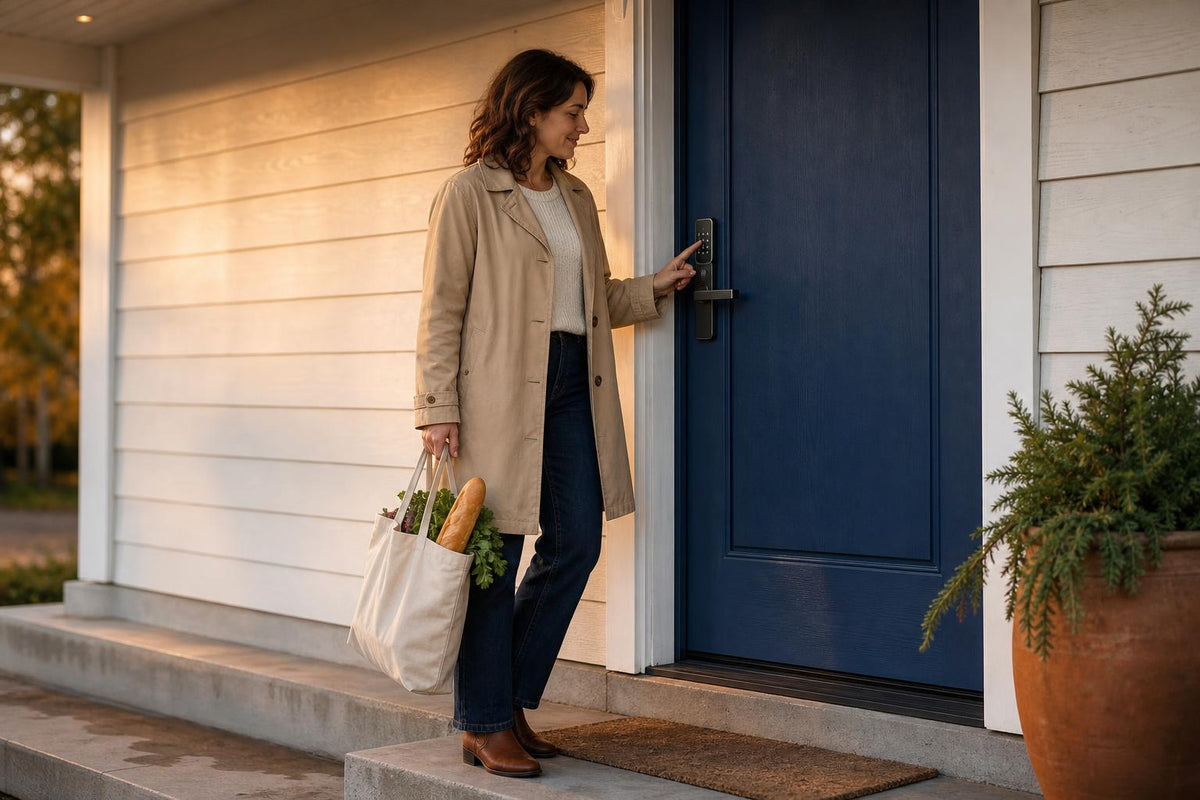
Locks such as the Aqara U400 and Yale Assure Lock 2 Plus showcase this perfectly. Simply tapping your iPhone or Apple Watch on the lock grants instant access. This is the ultimate solution for those moments when you're carrying groceries, juggling kids, or just want to get inside as quickly as possible. Even our own latest smart fingerprint door lock integrates multiple convenient access methods to fit your lifestyle.
Deep Dive: Unpacking Biometric and NFC Technologies in 2026
To truly understand why a hybrid approach is the future, it helps to look under the hood. Both biometric and NFC technologies have matured significantly, addressing past weaknesses in reliability and security. This technical evolution is what makes the 2026 class of smart locks so dependable.
How Modern Biometric Sensors Overcome Past Failures
If you've ever been frustrated by a fingerprint sensor that failed with wet or cold hands, you'll appreciate the new technology. High-end locks in 2026 use semiconductor sensors, which use electrical currents to map the unique ridges of your finger. This is far more accurate and reliable than older optical sensors that simply took a 2D picture.
Worried about privacy? Your data is secure. All your biometric data, whether it's a fingerprint or a facial scan, is protected with strong encryption like AES-128. Crucially, this data is stored locally on the lock itself, not in the cloud, making it virtually impossible for anyone to steal.
The Security Layers of NFC and Digital Keys
The security of NFC might seem counterintuitive given its wireless nature, but it's remarkably robust. Its primary defense is its extremely short communication range, typically less than 4 centimeters. This physical proximity makes it incredibly difficult for a hacker to intercept the signal during an unlock attempt.
On top of that, all data transmitted between your device (like a phone or key card) and the lock is heavily encrypted. This ensures that even in the unlikely event the signal were to be captured, the data would be useless to an attacker. This layered security makes NFC a trustworthy method for daily access.
Decision Matrix: NFC vs. Biometrics for Your Specific Needs
So, which technology shines brightest in which situation? While the best solution is a lock that has both, this decision matrix helps you understand the unique strengths of each. Use this table to weigh what matters most in your daily life.

| Feature | Biometrics (Fingerprint, Face, Palm) | NFC Digital Keys (Phone, Watch, Card) | The Takeaway |
|---|---|---|---|
| Peak Security | ⭐⭐⭐⭐⭐ (Especially multi-modal, like face + vein) | ⭐⭐⭐⭐ (Encrypted + short-range) | For high-security needs, advanced biometrics have a slight edge. |
| Unlocking Speed | ⭐⭐⭐⭐ (Sub-second recognition) | ⭐⭐⭐⭐⭐ (Tap-to-go, no device wake needed) | NFC is the undisputed speed king for "in-and-out" moments. |
| Guest Access | ⭐⭐⭐ (Requires on-site enrollment or app) | ⭐⭐⭐⭐⭐ (Can remotely generate temporary digital keys) | Remote management and temporary access are where NFC/app solutions dominate. |
| Reliability | ⭐⭐⭐⭐ (Semiconductor sensors are vastly improved but can fail in extreme conditions) | ⭐⭐⭐⭐ (Nearly 100% successful as long as the device has power) | Both are highly reliable in 2026, but NFC is unaffected by finger condition. |
| Device-Free | ⭐⭐⭐⭐⭐ (You are the key) | ⭐⭐ (Must carry a phone, watch, or card) | Biometrics offer a true "key-free" and "device-free" experience. |
| Family Use | ⭐⭐⭐⭐⭐ (Easy for kids and elders; no app training needed) | ⭐⭐⭐⭐ (Great for tech-savvy members, but requires everyone to have a device) | Biometrics are often more user-friendly for all age groups in a household. |
Ultimately, the table shows that there's no single "best" technology for every task. The fastest way to get in the door (NFC) isn't the same as the most device-independent way (biometrics). A hybrid lock gives you the flexibility to use the best tool for the job every single time.
Real-World Scenarios: How a Hybrid Lock Solves Everything
Let's move from theory to practice. Seeing how a hybrid smart lock performs in real life is the best way to understand its value. By choosing the right smart lock for your home, you can solve a multitude of everyday challenges.
The Busy Family Home
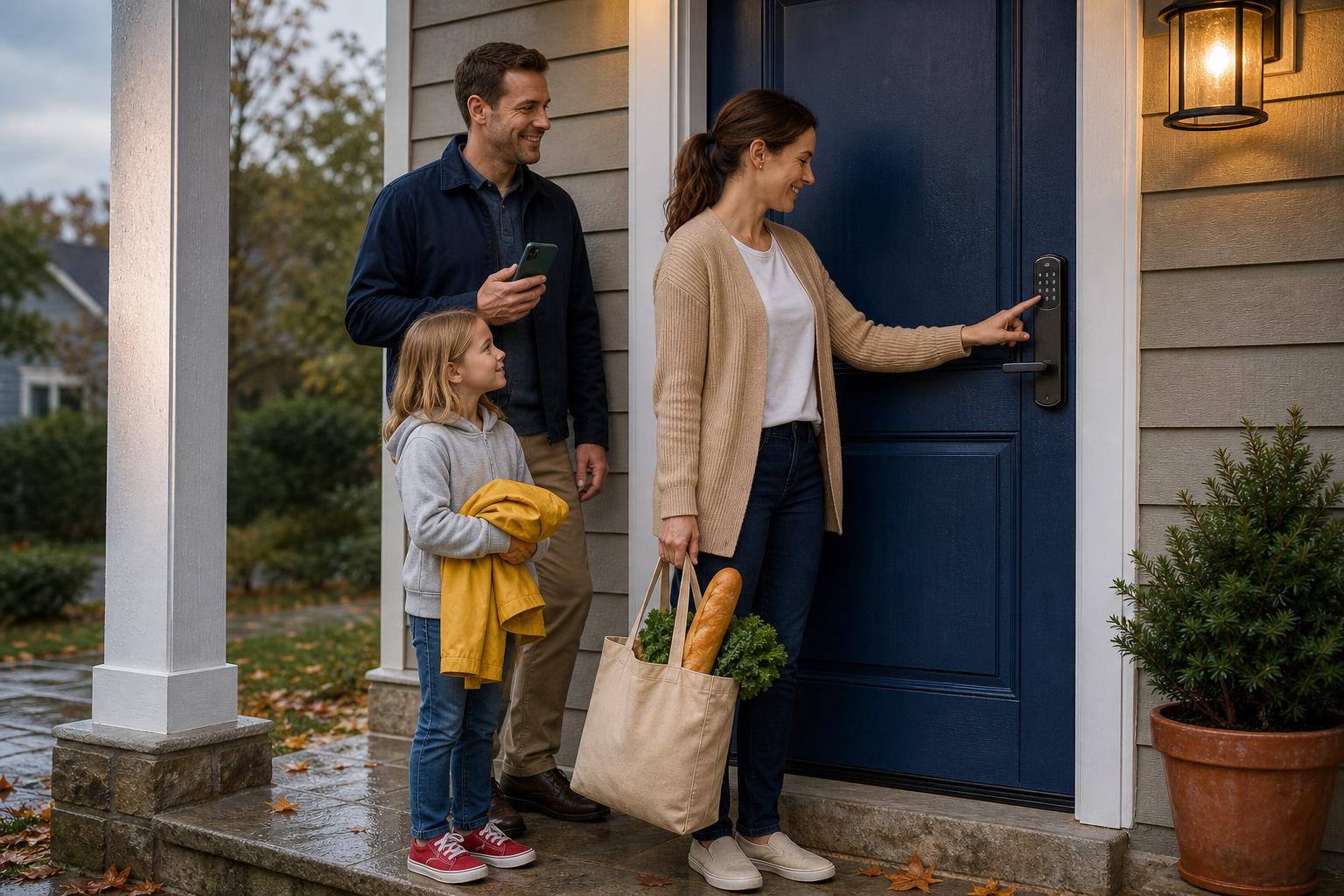
Picture this: a parent arrives home with arms full of groceries and a tired toddler. Instead of digging for keys, they simply look at the lock, and 3D facial recognition opens the door instantly. Later, their older child comes home from school and gets in easily with their fingerprint. When the weekly house cleaner arrives, they use a temporary digital key on their phone that was sent to them earlier, and their access automatically expires at the end of their shift.
The Airbnb/Rental Property Host
For a rental host, a hybrid lock is a game-changer. They can remotely generate an NFC-enabled digital key that is only active for the duration of a guest's stay. When the guest checks out, their access is automatically revoked without any need to re-key the lock. For their own maintenance visits, the host can use their fingerprint for quick and secure access, while a complete log in the app shows who entered and when.

The Tech-Savvy Urban Professional
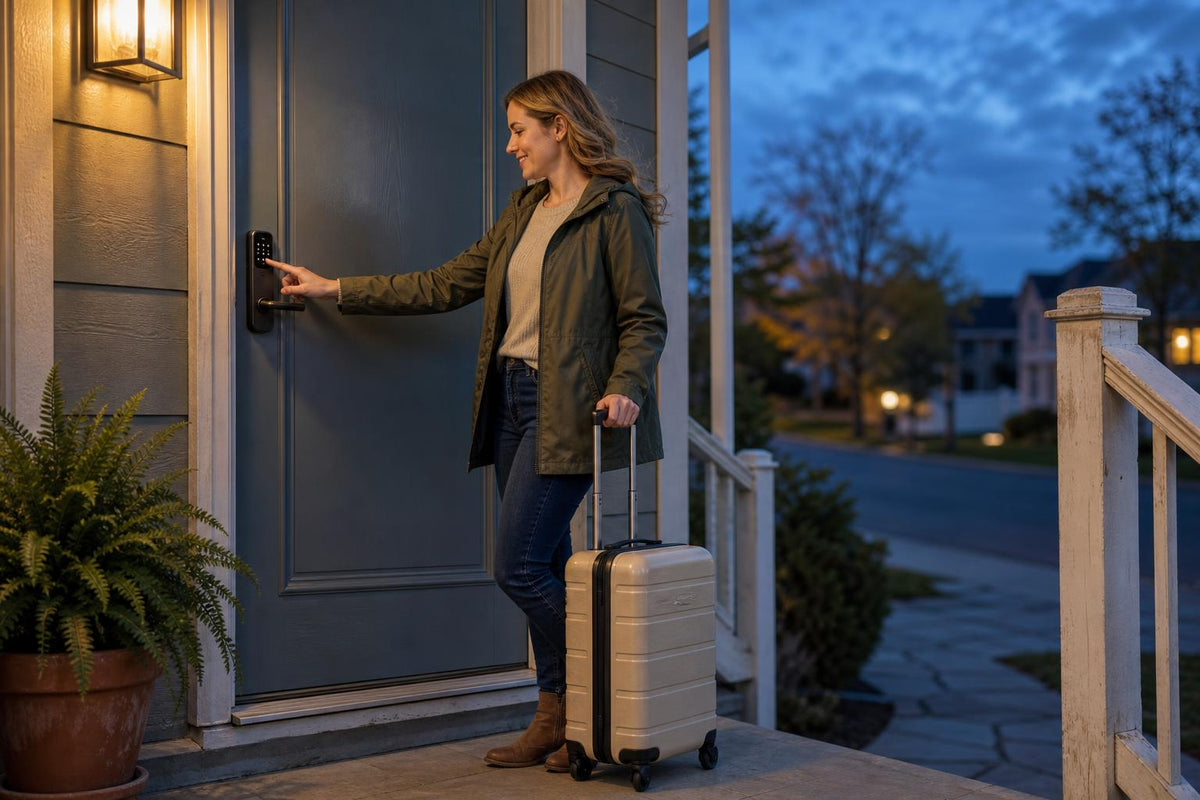
An urban professional wants seamless integration into their active lifestyle. When they go for a morning run, they leave their phone and wallet behind, locking and unlocking the door with just their fingerprint. Heading to work, they habitually tap their Apple Watch on the lock for the quickest exit. If a friend stops by unexpectedly while they're stuck in a meeting, they can grant them entry remotely through the app with a single tap.
FAQ: Answering Your Top Questions About 2026 Smart Lock Tech
We've gathered some of the most common questions about the latest smart lock technology to give you clear, straightforward answers.
-
Which is more secure, an advanced biometric lock or an NFC lock?
Both are highly secure. However, multi-modal biometrics like 3D facial recognition or palm vein scanning are theoretically harder to spoof, giving them a higher security ceiling.
-
How reliable are fingerprint sensors in 2026? Do they still fail with wet hands?
High-end 2026 locks using semiconductor sensors have drastically improved recognition rates for wet, dry, or worn fingerprints. While no sensor is 100% perfect in extreme conditions, their reliability is far superior to older models.
-
What happens if my phone battery dies? Can I still use my NFC digital key?
Many iPhones that support Apple Home Key have a power reserve feature that allows NFC keys to work for several hours after the battery dies. Your best bet, however, is a hybrid lock with biometric or keypad options as a backup.
-
Do I need a specific smart home hub for these new locks?
Not always. An increasing number of new locks support Matter-over-Thread, allowing them to connect directly to your smart home ecosystem (like an Apple HomePod or Google Nest hub) without a separate, brand-specific gateway.
-
Can someone steal my fingerprint or face data from the lock?
This is extremely unlikely. All biometric data is heavily encrypted (e.g., AES-128) and stored securely on the lock's local hardware. It is never uploaded to the cloud, which strongly protects user privacy.
-
How hard is it to set up an NFC key card?
It's very easy. The process usually takes just a few taps within the lock's companion app. For detailed instructions, you can check out our setup and help center guides.
Conclusion: The Future Isn't a Choice, It's a Combination
Returning to our original question: in the NFC digital keys vs. biometric fingerprint debate, who wins in 2026? The answer is clear: the user wins when they don't have to choose. The future of smart locks is not a battle of technologies but their intelligent and seamless combination.
Biometrics offer the ultimate in device-free security, turning your unique physical traits into an un-losable key. At the same time, NFC provides the pinnacle of speed and convenience for those everyday moments when you just want to get inside. Each shines in different scenarios.
When you're shopping for your next smart lock, look beyond a single feature. The smartest investment is a hybrid lock that offers multiple, reliable ways to get in. That's the key to a truly secure and convenient home, today and into the future.