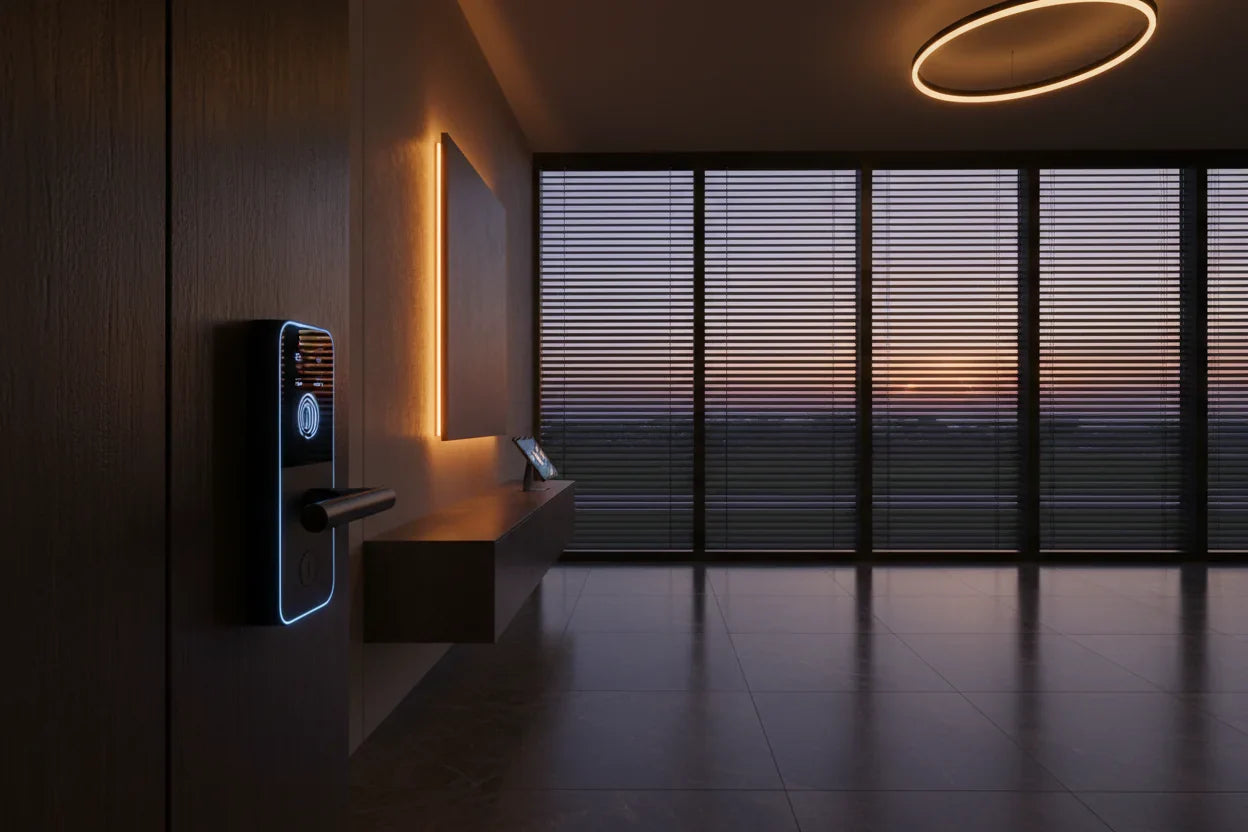
Why Your Current Smart Lock's Encryption Could Be Obsolete Sooner Than You Think
Quantum computing might sound like science fiction, but its ability to break modern encryption is a very real, near-future problem. Most digital security today, including what protects your smart lock, relies on encryption standards like RSA and ECC. These methods are built on mathematical problems so complex that current computers would take millennia to solve them.
However, a sufficiently powerful quantum computer could crack them in hours. This shift fundamentally changes the security landscape, especially for devices we expect to last for years. Understanding this threat is the first step to truly future-proofing your security.
Understanding the "Harvest Now, Decrypt Later" Threat
The most immediate danger isn't that a hacker will use a quantum computer to unlock your door tomorrow. It's a more insidious strategy known as "Harvest Now, Decrypt Later" (HNDL). Attackers are already collecting and storing encrypted data from networks worldwide.
They can't break the encryption today, but they're betting on the future. Once a capable quantum computer is available, they can go back and unlock this trove of stored data. While this might seem abstract, for a smart lock, it could mean captured login credentials or access logs, creating significant future vulnerabilities.
Is This a Realistic Threat or Just Hype?
It’s easy to dismiss quantum threats as distant, but leading cybersecurity experts are taking it seriously. The U.S. National Institute of Standards and Technology (NIST) has been working for years to standardize quantum-resistant algorithms. They suggest organizations should prepare for a transition beginning around 2030.
Some experts predict a quantum computer capable of breaking current encryption could emerge within the next 10 to 20 years. Current smart locks typically use robust encryption standards that are secure today, but the clock is ticking on their long-term viability against this new class of threat.
The Ticking Time Bomb: Why Post-Quantum Cryptography for Smart Locks Security is a Critical Concern
The quantum threat is especially critical for long-lifespan IoT devices, and smart locks are a prime example. Unlike a smartphone you might replace every few years, a smart lock is an investment you expect to protect your home for a decade or more.
This long replacement cycle creates a unique and dangerous window of vulnerability. A lock installed today will likely still be on your door when quantum computing becomes a practical reality, making post-quantum cryptography for smart locks security a critical conversation for homeowners today.
The 'Install and Forget' Security Risk of Long-Lifespan Devices
Many smart home gadgets, particularly smart locks, are installed and then largely forgotten about from a hardware perspective. Industry data shows these devices often have an operational lifespan of 10 to 20 years. This means a lock you buy today with 2024-era encryption will be facing a 2035-era threat landscape.
The problem is that many of these devices lack the hardware capacity to be upgraded to the much more demanding PQC algorithms via a simple firmware update. Once a quantum computer can break its encryption, it could become a permanent, unpatchable security hole in your home.
Beyond Data Theft: When a Hack Unlocks Your Physical Front Door
For a smart lock, a security breach is not just about stolen data; it’s about physical access to your home. If the cryptographic keys that verify your identity to the lock are compromised, an attacker could potentially forge a valid digital signal to unlock your door.
This is a serious concern for current smart home protocols like Zigbee, Z-Wave, and Matter, which were not originally designed with post-quantum security in mind. This raises valid concerns about hardware becoming obsolete and leaving homeowners exposed.
How the Industry is Racing to Build Quantum-Resistant Locks
The good news is that the security industry isn't waiting for the threat to materialize. A massive, coordinated effort is underway to develop and standardize the next generation of encryption, with a clear focus on securing IoT devices like smart locks.
The Standardization Front: NIST's Role in a Quantum-Safe Future
NIST is leading the global charge to standardize PQC algorithms. After a multi-year competition involving cryptographers from around the world, NIST has published its first set of official PQC standards. These include algorithms like CRYSTALS-Kyber for establishing secure connections and CRYSTALS-Dilithium for digital signatures.
These new standards provide a clear, trusted roadmap for manufacturers to begin building quantum-resistant products. This work ensures that future security isn't a wild west of competing, unverified algorithms.
Building Blocks of Trust: PQC-Ready Chips and Protocols
The transition is already happening at the hardware level. Semiconductor giants like STMicroelectronics and Infineon are producing PQC-ready microcontrollers and security chips. For instance, STMicroelectronics offers a PQC software library for its popular STM32 microcontrollers, which power countless IoT devices.
Simultaneously, standards bodies are upgrading smart home protocols. The Connectivity Standards Alliance (CSA) is already exploring PQC for its new Aliro standard, which is specifically designed for smart locks and access control. This means future devices will have quantum resistance built in from the ground up.
Comparing Your Options: PQC vs. Traditional Smart Lock Security
Understanding the difference between today's security and a quantum-ready future helps clarify why this transition is so important. Here’s a breakdown of how a future PQC-enabled smart lock will differ from the one on your door today.
| Feature | Traditional Smart Lock (RSA/ECC) | Future PQC-Enabled Smart Lock | Implications for Users |
|---|---|---|---|
| Encryption Algorithm | RSA-2048 / ECC-256 | ML-KEM (Kyber), ML-DSA (Dilithium) | Long-term Security: PQC is designed to resist attacks from future quantum computers. |
| Key & Signature Size | Smaller | Significantly Larger | Performance: PQC may require more processing power, potentially impacting battery life and response time. |
| Future-Proofing | Vulnerable to future quantum attacks | Quantum-Resistant by design | Investment Protection: A PQC-enabled lock is a longer-term investment that won't become obsolete from quantum threats. |
| Current Availability | Standard in all current smart locks | In development; not yet in mainstream consumer products | Purchasing Decision: Look for "crypto-agility" and robust firmware update capabilities in current products. |
| Hardware Requirements | Lower memory and processing power | Higher memory and processing power | Cost: Early PQC devices might be more expensive due to more powerful hardware. |
What This Means for You Today: A Practical Guide to Future-Proof Hacking Protection
While you can't buy a PQC-enabled smart lock off the shelf today, that doesn't mean you're helpless. Making smart choices now can significantly improve your security posture and prepare you for a smooth transition in the future.
Prioritize "Crypto-Agility": The Key to a Smooth Transition
The most important feature to look for in a new smart lock today is "crypto-agility." This term simply means the device is designed to allow its cryptographic algorithms to be updated or replaced easily through software.
When shopping, choose brands with a proven track record of providing regular and reliable firmware updates. This practice demonstrates a commitment to security and increases the likelihood that the hardware is robust enough to handle future security patches. If you ever have questions, a well-supported brand will have a comprehensive Help Center to guide you.
Don't Neglect the Basics: The Weakest Link is Still Key
Let's be real: a quantum computer is not the most immediate threat to your home security. Many users rightly point out that physical vulnerabilities, like a weak door frame, or bad habits, like using "123456" as a passcode, are far more likely to be exploited.
Even in a post-quantum world, the fundamentals of security will matter most. This includes using strong, unique passwords, enabling two-factor authentication where possible, and keeping your device's software up to date. These habits protect you from the overwhelming majority of threats you face today and tomorrow.
FAQ: Your Top Questions on Post-Quantum Cryptography for Smart Locks
-
What exactly is Post-Quantum Cryptography (PQC)?
Post-Quantum Cryptography is a new generation of encryption algorithms designed to be secure against attack by both classical and quantum computers. Unlike RSA and ECC, which rely on math problems quantum computers can solve, PQC is built on different, harder problems.
-
Will my current smart lock stop working when quantum computers arrive?
No, it won't suddenly stop working. However, its encryption could be broken, rendering it insecure against a sophisticated attacker. The more immediate risk is from "Harvest Now, Decrypt Later" attacks, where encrypted data is stored now to be broken in the future.
-
Are any smart lock brands already using PQC?
As of late 2024, no major consumer smart lock brands explicitly advertise using PQC in their products. The transition is currently focused on the chip, hardware, and protocol levels, which will enable the next generation of consumer devices.
-
When should I start worrying about buying a PQC-enabled smart lock?
You don't need to panic, but you should be mindful. With the transition expected around 2030, any smart lock you purchase in the near future should come from a brand that prioritizes firmware updates (crypto-agility) to ensure it can be patched as the PQC transition unfolds.
-
Are PQC algorithms slower or will they drain my lock's battery faster?
PQC algorithms can require more processing power and memory, which could impact performance. However, chipmakers are designing new, optimized hardware to handle these loads efficiently, aiming to minimize any noticeable effect on battery life and speed in IoT devices.
-
Is PQC more important than other security features like auto-lock or anti-peep passwords?
They solve different problems. Features like auto-lock and virtual passwords defend against immediate, everyday risks like leaving a door unlocked or someone peeking at your code. Effective post-quantum cryptography for smart locks security is about providing foundational, long-term protection against a powerful future threat.
Secure Your Home for Today and Tomorrow
The era of quantum computing will bring incredible advancements, but it also requires a fundamental upgrade to our digital defenses. While the transition to PQC is a marathon, not a sprint, the groundwork is already being laid for a more secure future.
For now, the best strategy is to focus on strong security fundamentals and choose products from forward-thinking brands committed to long-term support. By prioritizing features like robust encryption and crypto-agility, you can ensure your home remains a sanctuary in an ever-evolving digital world. Explore the SAWHERO lineup to see how today's leading technology can secure your peace of mind.