Smart Lock Battery in Cold Weather – Optimize Performance in Freezing Temps
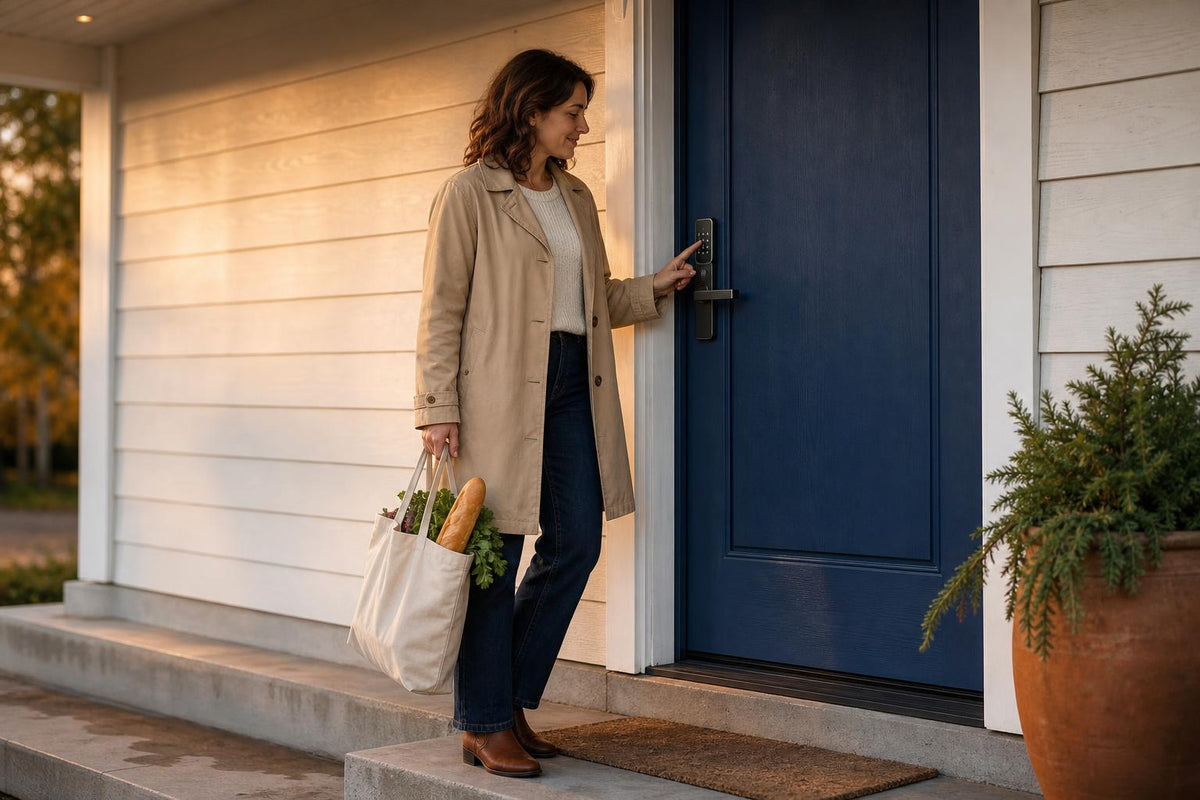
Imagine this: It's the end of a long day, a blizzard is howling, and you're finally at your front door, fumbling with groceries. You reach for your smart lock, but nothing happens. The keypad is dead, the app won't connect, and your key is buried somewhere deep in your bag. The culprit? The freezing temperature has drained your smart lock battery.
This isn't just an inconvenience; it's a winter nightmare. But it doesn't have to be your reality. This guide breaks down why smart lock batteries fail in the cold and provides a clear plan to prevent and solve these frustrating issues. We'll get you ready to face the freeze with confidence.
Why Your Smart Lock Suddenly Dies When It Gets Cold
It’s a frustratingly common problem. Your smart lock worked perfectly all year, but the first deep freeze turns it into an expensive paperweight. This isn't a defect in your lock; it's a predictable result of how batteries react to the cold.
The Science Behind the Winter Power Drain
The core issue lies within the batteries themselves. Cold temperatures slow down the internal chemical reactions that generate power. This slowdown reduces the battery's voltage and overall capacity, making it struggle to deliver the burst of energy needed to operate a motor.
The type of battery you use makes a huge difference. At 0°F (-18°C), standard alkaline batteries can lose up to 50% of their capacity, according to industry tests. In contrast, lithium batteries are built to perform in extreme cold, remaining effective in temperatures as low as -40°F (-40°C).
Beyond the Battery: Hidden Cold-Weather Culprits

Sometimes, the battery isn't the only thing to blame. Cold weather can also affect the physical mechanics of your door. Your door and its frame can contract in the cold, causing slight misalignment. This forces the deadbolt's motor to work much harder to lock and unlock, leading to significant battery drain.
Additionally, the lubricant inside the lock mechanism can thicken in freezing weather, adding even more resistance. If your lock has to fight against friction and a misaligned door, it will burn through batteries at an alarming rate. Ensuring you know how to install your smart lock correctly is the first step in preventing these issues.
Not All Smart Locks Are Winter-Ready: A Brand Performance Comparison
When it comes to surviving the winter, not all smart locks are created equal. Many popular models have official operating temperatures that make them unsuitable for regions with harsh winters. Understanding these limitations is key to choosing a lock that won't leave you out in the cold.
Decoding Official Specs: Operating Temperatures and IP Ratings
Always check the manufacturer's technical specifications before you buy. For instance, some August and Yale smart locks have a minimum operating temperature of 32°F (0°C), making them a risky choice for freezing climates. In contrast, brands like Level state a more robust range, down to -4°F (-20°C).
Also, look for an IP (Ingress Protection) rating. An IP rating like IP54, found on the SAWHERO lock, indicates resistance to dust and splashing water. In winter, this translates to protection against blowing snow and melting ice, which is crucial for the longevity of the lock's electronic components.

Decision Matrix: Comparing Smart Locks for Cold Climates
To make it easier, here’s a breakdown of how some popular smart locks stack up for winter use. This can help you choose the best winter smart lock companion for your home.
| Brand/Model | Official Min. Temp | IP Rating | Common User Complaints | Recommended Battery | Winter-Ready Score (1-5) |
|---|---|---|---|---|---|
| August (Various) | 32°F (0°C) | Not Specified | Fails below freezing; rapid battery drain. | Lithium (User Rec.) | ⭐ |
| Yale Assure Lock | 5°F (-15°C) | Not Specified | Battery life drops sharply in cold snaps. | Alkaline | ⭐⭐ |
| Schlage Encode | Not Specified | Not Specified | Low battery warnings after 2 months in cold. | Alkaline (Official) | ⭐⭐⭐ |
| Level Lock+ | -4°F (-20°C) | Not Specified | Shorter battery life (3-6 months) in cold. | Lithium (CR2) | ⭐⭐⭐⭐ |
| Wyze Lock Bolt | -4°F (-20°C) (Keypad) | IPX5 (Keypad) | Motor struggles to retract bolt in deep freeze. | Alkaline | ⭐⭐⭐ |
| SAWHERO SentriKey | -13°F (-25°C) | IP54 | Designed for wide temp ranges. | Lithium (Rec.) | ⭐⭐⭐⭐⭐ |
Your Proactive Winter Plan: 5 Steps to Prepare Your Smart Lock for the Freeze
The best way to deal with a frozen smart lock is to prevent it from happening in the first place. A little preparation before the first snowfall can save you a lot of headaches. Follow these smart lock battery winter tips to get your device ready for the cold.
The Single Most Important Upgrade: Switch to Lithium Batteries
If you only do one thing on this list, make it this one. Switching from standard alkaline to AA lithium batteries is the most effective way to combat freezing weather lock battery problems. Their ability to perform in sub-zero temperatures makes them a worthwhile investment for winter reliability.
While some brands like Schlage officially recommend alkaline batteries for their devices, many users in cold climates report significantly better performance after switching to lithium. It provides the consistent power the motor needs when it's working hardest.

Perform a Pre-Winter Tune-Up: Check Door Alignment and Seals
Before it gets cold, test your lock. Does the deadbolt extend and retract smoothly without any grinding or friction? If not, your door alignment may be off. This extra resistance is a major power drain, so adjusting the strike plate can make a huge impact on battery life.
Also, inspect the weather stripping around your door. Good seals not only save on heating costs but also protect your lock from direct exposure to icy winds and moisture. Following a guide to smart lock maintenance can help you keep everything in top shape.
Consider a Storm Door or Protective Cover
A physical barrier can be a smart lock's best friend in winter. If your home's entrance allows for it, installing a storm door creates a buffer zone that shields the lock from the harshest elements. Even a small, purpose-built cover installed above the lock can help deflect snow and ice.
Locked Out? Emergency Fixes for a Dead Smart Lock Battery
Even with the best preparation, you might find yourself with a dead smart lock. Don't panic. Most manufacturers have built-in backup plans so you're never truly stranded.

Using the Emergency Power-Up Feature
Many smart locks, including models from Schlage and Yale, have a pair of small metal contacts on the exterior. By pressing a standard 9V battery to these terminals, you can give the lock just enough power to enter your code and get inside.
Newer locks are making this even easier. For example, the SAWHERO SentriKey Smart Lock features a modern Type-C emergency power port. You can simply plug in any portable power bank—something many people already carry—to power it up instantly, which is far more convenient than hunting for a 9V battery.
The Ultimate Backup: Your Physical Key
It sounds simple, but it's the most reliable advice: always have a physical key accessible. Technology is fantastic, but a mechanical key is the ultimate failsafe. Keep a spare key in your car, with a trusted neighbor, or in a secure lockbox somewhere on your property. This simple step guarantees you can always get in, no matter what the weather or the battery level is.
FAQ: Answering Your Top Questions About Smart Locks in Winter
You've got questions about your winter smart lock battery, and we've got answers. Here are some of the most common queries we see from users in cold climates.

How often should I really change my smart lock batteries in winter?
It's a great practice to start the season with a fresh set of lithium batteries. After that, check your lock's app for the battery level monthly. If your area frequently drops below freezing, you can expect to change them 2-3 times more often than in warmer months.
Will a smart lock work at -30°F (-34°C)?
Most consumer-grade smart locks are not rated for such extreme temperatures, and their performance will be severely degraded. While some locks are rated to -4°F, like Level, even they will struggle at -30°F. In these conditions, mechanical failure of internal parts becomes as likely as battery failure.
Do Wi-Fi smart locks drain batteries faster in the cold?
Yes, absolutely. Wi-Fi connectivity is already a significant power drain. When you add the strain of cold temperatures on the battery, a Wi-Fi-enabled lock will have a much shorter battery life in winter compared to Bluetooth or Z-Wave models.
Can I use rechargeable batteries in my smart lock during winter?

It's strongly discouraged by most manufacturers, including Schlage. Most rechargeable batteries have a lower voltage than their single-use counterparts and their performance degrades even more dramatically in the cold. Stick with high-quality lithium or alkaline batteries as recommended by your lock's manufacturer.
What does an IP rating mean for a smart lock in winter?
An IP rating, like IP54, measures protection against solids (the first number) and liquids (the second number). For winter, the second number is key. It indicates the lock can resist moisture from melting snow, sleet, and freezing rain, which is essential for protecting the internal electronics from damage.
My lock is frozen shut. Is it a battery issue?
Not always. If there's been freezing rain or heavy frost, ice may have physically seized the deadbolt or the area around it. Before blaming the battery, try gently warming the lock with a hairdryer on a low setting to see if you can melt any ice that's causing a physical obstruction.
Be Winter-Ready: Keep Your Home Accessible and Secure
Cold weather poses a real challenge to smart lock batteries, but it’s a challenge you can overcome. By being proactive, you can ensure your smart home convenience doesn't turn into a winter catastrophe. The formula for success is simple: choose the right lock, use the right batteries, and have a backup plan.
Remember to swap in lithium batteries before the first freeze, check your door's alignment, and always know where your physical key is. With these steps, the problem of a dead smart lock in cold weather becomes a manageable task, not an emergency. Stay warm, stay secure, and enjoy the peace of mind that comes from being prepared. Explore our full range of smart home solutions to find the perfect fit for your home.