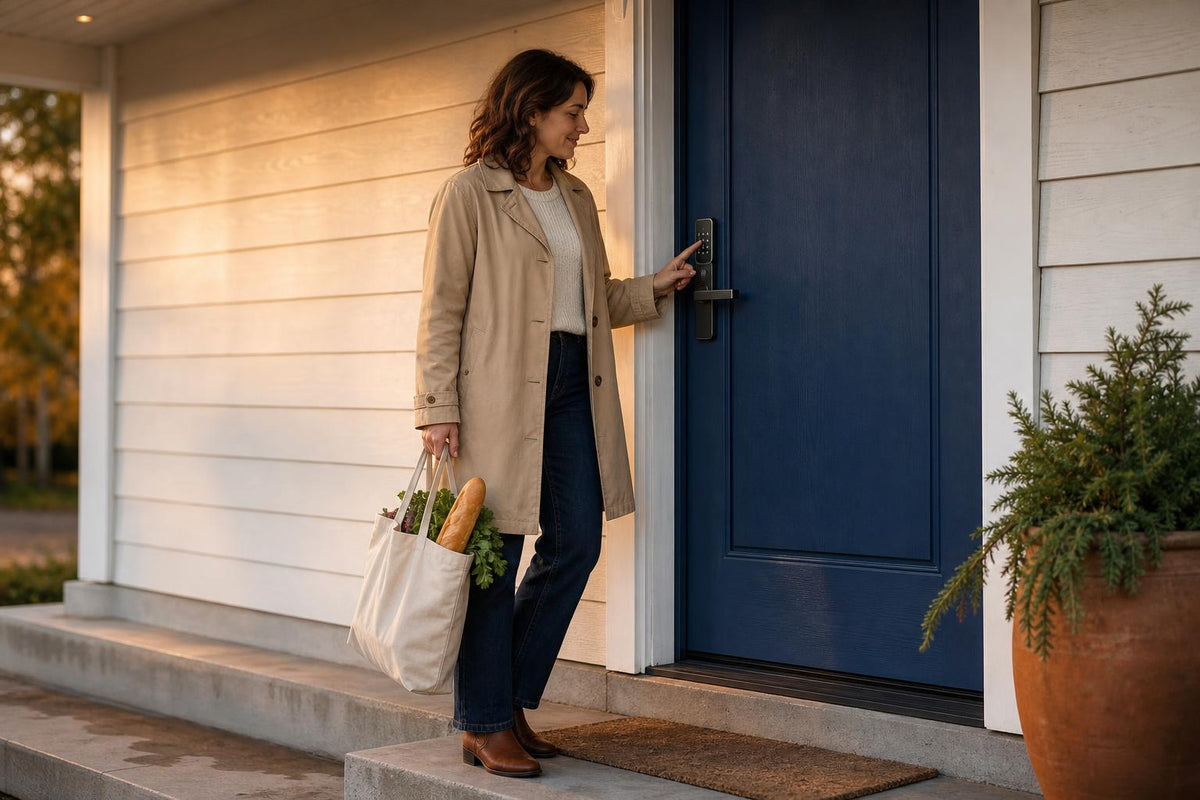
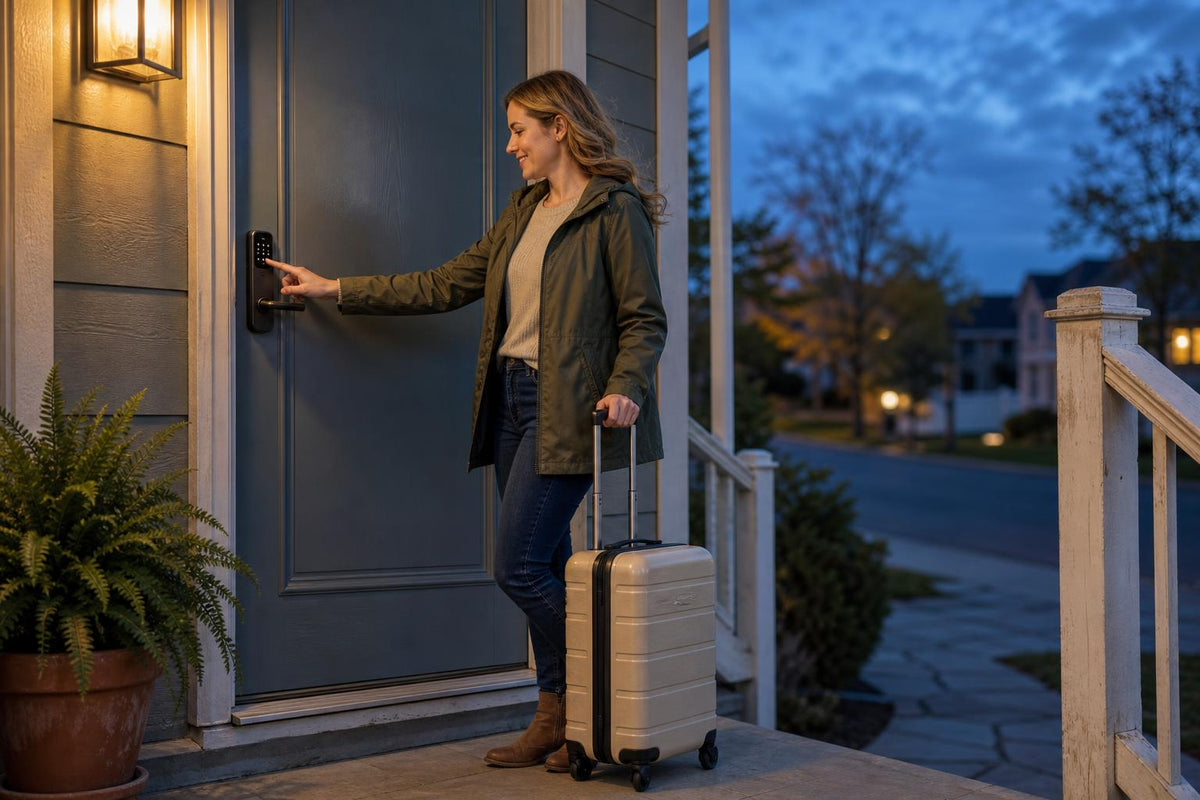
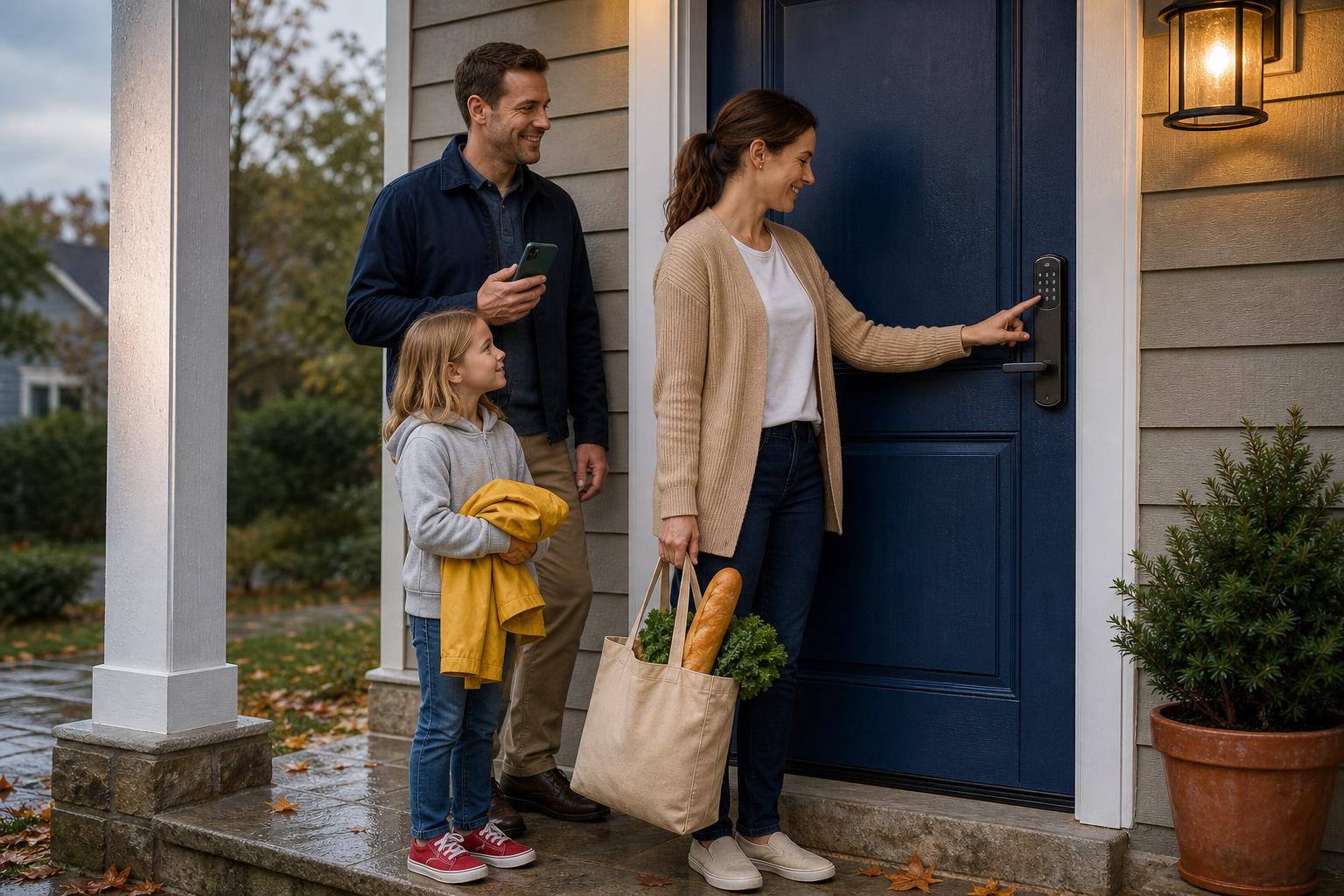
Choosing a smart lock for elderly parents isn't just about new technology; it's about providing them with independence while giving you peace of mind. You want a solution that simplifies their life, not complicates it. This guide cuts through the noise to help you find a smart lock for elderly parents that solves real problems, like fumbling with keys or needing to let a caregiver in when you're not there.
We'll cover the essential features that truly matter for seniors, how to pick the right one based on their specific needs, and answer the common questions that might be holding you back.
Beyond Lost Keys: Why a Smart Lock for Elderly Parents is a Game-Changer
The daily challenges that come with traditional keys can be more than a minor inconvenience for older adults. A smart lock addresses these issues head-on, transforming a point of frustration into an experience of safety and ease. It’s a thoughtful upgrade that supports their desire to age in place comfortably. In fact, smart home adoption is on the rise among seniors, with an AARP survey showing a significant increase in ownership of assistive technology.
Solving the Daily Struggle with Fumbling and Forgetting
For seniors with arthritis, shaky hands, or declining eyesight, manipulating a small key into a lock can be a daily struggle. A keyless lock for seniors removes this physical barrier entirely. No more dropped keys in the dark or difficulty turning a stiff deadbolt.
Furthermore, memory-related issues can lead to forgetting to lock the door, creating a significant security risk. Many smart locks feature an Auto-Lock function that automatically secures the door after a set period, so you never have to wonder if the house is protected.
Granting Instant Access for Caregivers and Emergencies
Consider this common scenario: your parent has a medical appointment, and the home health aide arrives, but you're stuck in traffic across town. With a smart lock, you can unlock the door for them right from your phone. This ability to grant immediate access to trusted individuals—be it caregivers, neighbors, or emergency services—is invaluable.
Reducing Anxiety with Remote Monitoring and Peace of Mind
The emotional benefit of a smart lock is immense. Instead of worrying, you can simply check your phone's app to see that your parent got home safely or that the door is securely locked for the night. These real-time notifications provide a quiet reassurance that helps reduce the constant stress many caregivers feel.
Must-Have Features in a Senior-Friendly Smart Lock
Not all smart locks are created equal, especially when it comes to serving the needs of older adults. The focus should be on simplicity, reliability, and fail-safe options. Here are the features that truly make a difference.
Multiple, Fail-Safe Access Methods Are Non-Negotiable
The best senior friendly smart lock offers several ways to get in, ensuring access is never an issue. Look for a combination of methods, as this flexibility is key. Physical button keypads are often preferred over touchscreens because the tactile feedback is easier for those with unsteady hands.
Fingerprint access is another fantastic, hassle-free option, though it's wise to ensure the model has modern sensors for better reliability with older skin. Most importantly, always choose a lock that includes a physical key override. This traditional backup is the ultimate fail-safe if the battery dies or the electronics fail.
Essential Tools for Caregivers: Remote Access and User Management
A smart lock is as much a tool for you as it is for your parents. The ability to manage remote access for parents is a core function. Through a user-friendly app, you should be able to lock or unlock the door from anywhere.
You can also create temporary PIN codes for visiting nurses or permanent codes for family members, and see an activity log of who entered and when. This turns the lock into a powerful home care coordination tool. For example, the SAWHERO A1 Smart Fingerprint Door Lock combines a highly reliable fingerprint sensor with these app-based controls. Utilizing a keyless entry door lock with an app can significantly simplify your caregiving routine.
How to Choose the Right Smart Lock for Your Parents' Needs
The "best" smart lock depends entirely on your parents' lifestyle, tech comfort level, and physical needs. Instead of just picking the most popular model, use a clear framework to match the lock's features to their real-world situation.
Decision Matrix: Matching Features to Your Parents' Lifestyle
Use this table to find the features that will provide the most benefit. This simple comparison can help you confidently select a smart lock that fits your family perfectly.
| Parents' Situation / Main Concern | Recommended Lock Feature | Why It's Important |
|---|---|---|
| Low comfort with technology | Large physical button keypad + physical key backup | Provides the lowest learning curve, feels familiar, and offers a no-tech backup. |
| Hand mobility issues (e.g., arthritis) | Fingerprint or one-touch access | Requires minimal effort, with no precise turning or pinching motion needed. |
| Memory decline, often forgets to lock door | Auto-Lock feature | Ensures the home is secure automatically, removing the burden of remembering. |
| Needs frequent remote assistance | Built-in Wi-Fi (no separate hub) + robust app | Guarantees stable and reliable remote control for caregivers to manage access anytime. |
| Doesn't want to replace existing door hardware | Retrofit-style smart lock | Installs over the existing deadbolt, keeping the original look and keys. |
| Worried about complex or costly installation | DIY-friendly model with no gateway required | Lowers upfront costs and avoids the hassle of scheduling a professional. |
Overcoming Common Worries: Battery, Installation, and Usability
It's natural to have questions before investing in new smart home technology. Concerns about battery life, installation complexity, and general usability are common. Let's tackle these worries head-on so you can make an informed decision.
What Happens When the Battery Dies?
This is one of the most frequent questions, and manufacturers have built-in multiple safeguards. While battery life varies—Wi-Fi models often last 2-4 months according to tech reviewers at outlets like CNET—the lock will give you plenty of warning before it runs out. You'll typically get notifications on your smartphone app and hear audible beeps from the lock itself.
Even in the worst-case scenario, you're not locked out. Most models include emergency power options, like terminals for a 9V battery or a USB-C port, which provide enough temporary power to enter your code and get inside.
"Is It Hard to Install?" — A Look at DIY-Friendly Options
Let's be real: hiring a professional installer can be expensive. That's why many modern smart locks are designed for easy, DIY installation. If you can handle a screwdriver, you can typically install one in under an hour.
These locks are made to fit standard American doors, so no special drilling or wiring is needed. For step-by-step instructions, you can always visit the SAWHERO Help Center for installation guides and video tutorials.
FAQ: Your Questions About Smart Locks for Seniors Answered
Here are quick answers to some of the most common questions families have when considering a smart lock for an elderly loved one.
What is the easiest type of smart lock for a senior to use?
A lock with a large, backlit physical keypad and a traditional key override is often the easiest. It provides clear tactile feedback that touchscreens lack and a familiar backup option that builds confidence.
Can a smart lock work without an internet connection?
Yes. Access methods like the keypad, fingerprint sensor, and physical key work locally and do not require Wi-Fi. However, remote features like unlocking from your phone or receiving notifications do need an internet connection.
Are fingerprint scanners reliable for older adults' skin?
While early models could be inconsistent, modern fingerprint sensors have improved significantly. That said, it's always best to choose a lock that offers multiple ways to get in, just in case a fingerprint scan doesn't work on the first try.
Can we still use our old house key?
It depends. Retrofit models are designed to be installed over your existing deadbolt, so you can absolutely keep using your old keys. Full replacement locks will come with their own new set of physical keys.
How do I give temporary access to a visiting nurse?
This is simple with the smartphone app. You can generate a temporary PIN code that is only active for a specific timeframe, such as every Tuesday from 9 AM to 11 AM. This is both convenient and highly secure.
What happens if the power goes out?
Nothing! Smart locks are powered by batteries, so they are completely unaffected by a power outage. All your access methods—keypad, fingerprint, and the physical key—will continue to work as normal.
A Smarter, Safer Home for Your Parents Starts Today
A smart lock for elderly parents is more than a gadget; it's a bridge that connects their need for independence with your need for reassurance. It empowers them to live more safely and confidently in the home they love, while giving you a simple, effective way to provide support from anywhere.
Making this one small change can remove daily frustrations and reduce worry for the entire family. By choosing a senior friendly smart lock, you're investing in what matters most: their well-being and your shared peace of mind. To see how this technology can fit into your family's life, explore the solutions available on the official SAWHERO website.