Choosing the right lock for your front door used to be simple. Today, the decision in the smart lock vs traditional lock debate involves weighing cutting-edge convenience against time-tested reliability. It’s a choice that impacts your daily routine, your peace of mind, and your home's security.
Are smart locks really as safe as their analog counterparts? Do they justify the higher price tag? We’re diving deep into the security, convenience, and true cost of both options to help you make a decision that’s right for your home and lifestyle in this comprehensive smart lock vs traditional lock comparison.
At a Glance: Smart Lock vs. Traditional Lock Head-to-Head
At a high level, the debate comes down to connectivity and convenience versus simplicity and reliability. Smart locks offer a connected experience with remote access and keyless entry, while traditional locks provide a straightforward, power-independent security solution. This table breaks down the fundamental differences in the smart lock vs traditional lock matchup.
Decision Matrix: Key Differences That Matter
| Feature | Smart Lock | Traditional Lock (Deadbolt) |
|---|---|---|
| Access Methods | Keyless (App, Fingerprint, Code, Voice), with physical key backup. | Physical key only. |
| Remote Access | ✅ Yes (Lock, unlock, and monitor from anywhere via App). | ❌ No (Requires physical presence). |
| Guest Access | ✅ Yes (Create temporary digital keys or codes). | ❌ No (Requires sharing a physical key). |
| Digital Security | Vulnerable to hacking, network exploits. Requires firmware updates. | Not applicable. |
| Physical Security | High-grade models (ANSI Grade 1) are robust. | Proven reliability; vulnerable to picking, bumping, drilling. |
| Power Source | Battery-powered (6-12 months life) with low-battery alerts. | None required. |
| Integration | Connects with Alexa, Google Assistant, Apple HomeKit. | Standalone device. |
| Cost | $200 - $500 | $50 - $150 |
| Installation | DIY friendly (10-20 mins), fits standard doors. See our Installation Guide. | Generally straightforward for DIY. |
The Great Security Debate: Are Smart Locks Really Safe?
This is the number one question for most homeowners. The truth is, both lock types have unique strengths and vulnerabilities. The answer to "are smart locks safe" depends on understanding these trade-offs in the smart lock vs traditional lock discussion and choosing a device that mitigates risks effectively.
Physical Toughness: Brute Force, Picking, and Bumping

When it comes to physical strength, a top-tier smart lock is just as formidable as a high-quality traditional deadbolt. High-end models from brands like SAWHERO are built with hardened materials and achieve an ANSI Grade 1 rating, the highest certification for residential security, meaning they are rigorously tested against forced entry. This puts them on par with the toughest traditional locks.
Meanwhile, traditional locks remain susceptible to physical attacks like lock picking, key bumping, and drilling. The key takeaway is that physical security is determined more by the lock's ANSI grade and build quality than by whether it's "smart" or "traditional."
Digital Threats vs. The Lost Key: A Modern Risk Assessment
Smart locks introduce digital risks like hacking and Wi-Fi vulnerabilities, but they also solve one of the biggest security flaws of traditional locks: the physical key. A lost or stolen key provides an intruder with effortless access, and you may not even realize it's gone. With a smart lock, you can instantly revoke a digital key or change a code.
Reputable smart lock brands combat digital threats with features like 128-bit encryption and regular firmware updates to patch security holes, a standard highlighted by publications like CNET. The smart lock vs traditional lock security question becomes a choice between managing a physical object (a key) and managing digital credentials (passwords and app access).
Lifestyle & Convenience: Which Lock Fits Your Daily Routine?
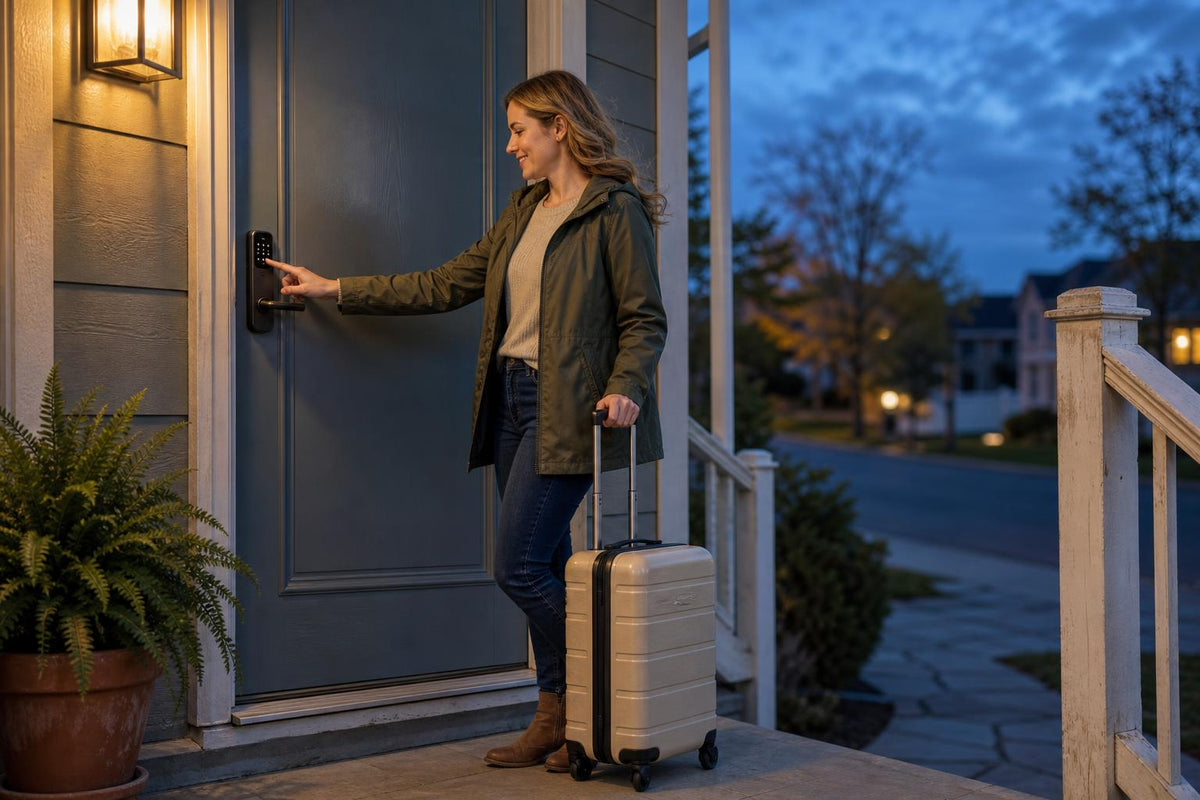
Beyond security, the primary driver for choosing a smart lock is often pure convenience. By eliminating the physical key, these devices can streamline daily routines and provide a new level of control over who can access your home, a key factor in the smart lock vs traditional lock decision.

For the Busy Family & Pet Owner: The Power of Remote Access
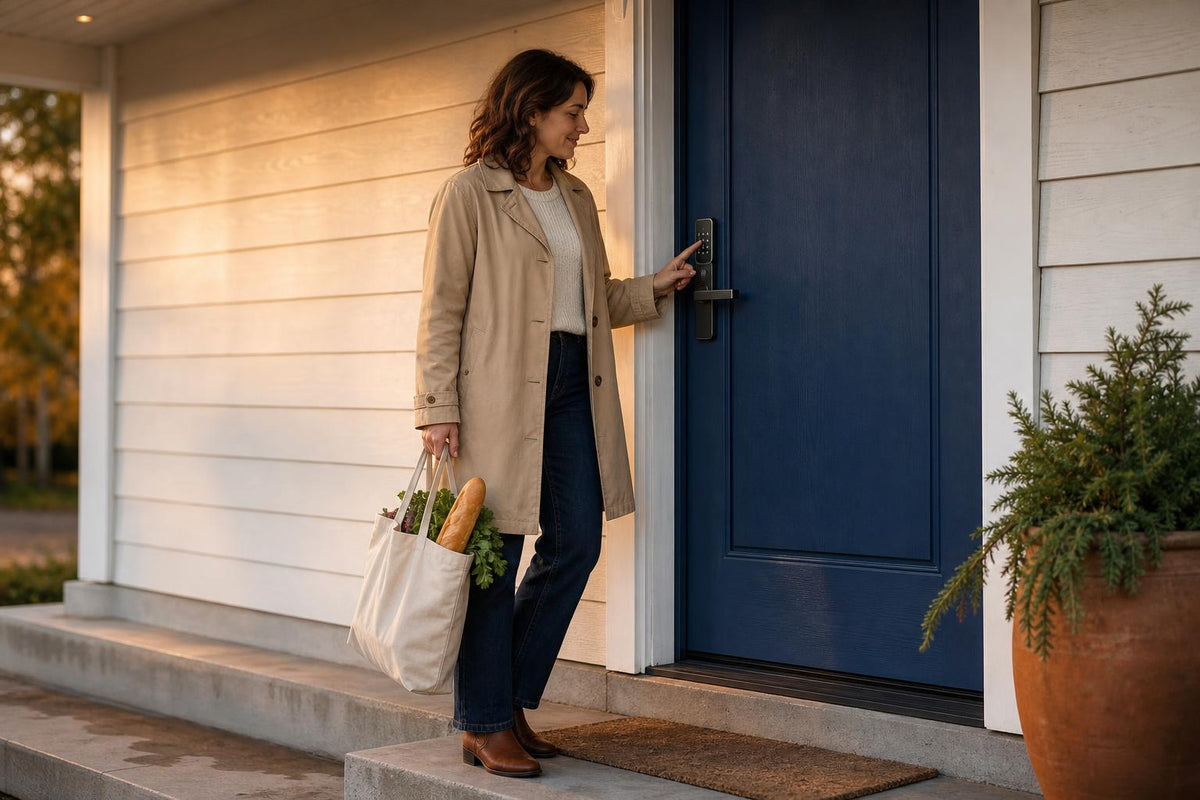
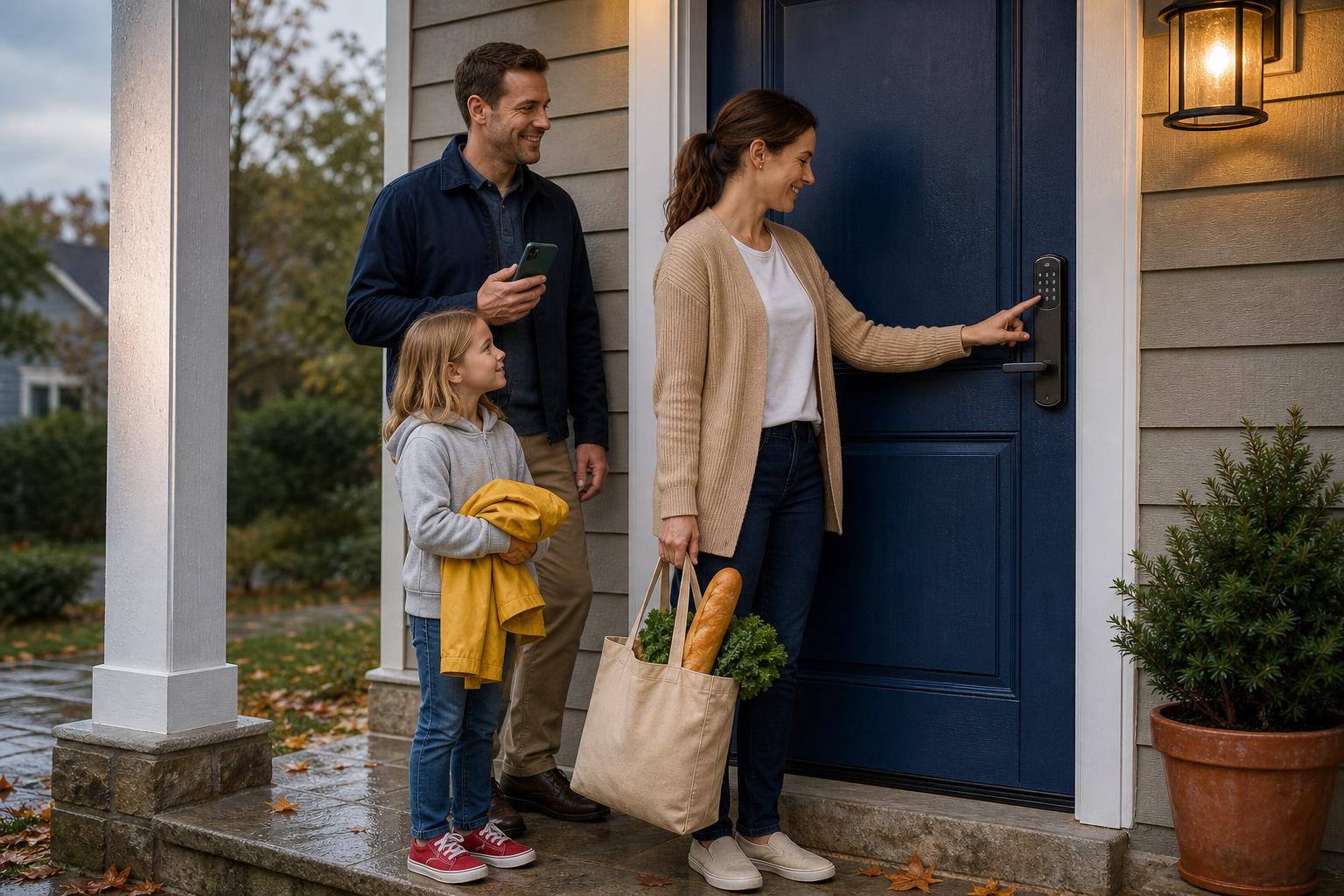
Imagine your kids getting home from school before you're back from work. Instead of giving them a key they might lose, they can use a simple code. You get an instant notification on your phone confirming they're home safe. Or, the dog walker arrives, and you can let them in remotely from your office.
This is the power of remote and temporary access. You can grant time-limited codes to service providers and see a full log of who entered and when, offering a level of control a traditional key could never provide. The SAWHERO line of smart security solutions is designed precisely for these modern-day scenarios.
For the Landlord & Airbnb Host: Streamlining Guest Management
For Airbnb hosts or property managers, smart locks are transformative. You can generate a unique access code for each guest that activates on their check-in day and expires automatically at checkout. There's no need for physical key handoffs or worrying about unreturned keys.
This remote capability saves countless hours and enhances security between bookings. Instantly revoking a previous guest's access from your phone provides peace of mind that is simply impossible with a traditional lock system.
For the Tech Minimalist & Budget-Conscious: The Virtue of Simplicity

On the other side of the smart lock vs traditional lock coin is elegant simplicity. A traditional deadbolt does one job and does it reliably. It doesn't need batteries, a Wi-Fi connection, or software updates. It just works.
For those who prefer to keep their home tech to a minimum or are working with a tighter budget, a high-quality mechanical deadbolt remains an excellent, no-fuss security solution. Its reliability is its greatest strength.
The Real Cost of Ownership: Beyond the Price Tag
Budget is a practical concern that can tip the scales. While smart locks have a higher upfront cost, it's important to consider the long-term value and potential hidden expenses in the smart lock vs traditional lock comparison.
Upfront Investment: Hardware & Installation
A good quality traditional deadbolt typically costs between $50 and $150. In contrast, most smart locks fall in the $200 to $500 range, according to industry sources like Lockin.com. This initial investment gets you the convenience, remote access, and advanced security features we've discussed.
Installation costs can vary. While you can install a traditional lock yourself, hiring a locksmith can cost $100 or more. Many smart locks, like the SAWHERO SentriKey, are specifically designed for easy DIY installation in about 10 minutes with just a screwdriver, saving you that professional fee.

Hidden & Ongoing Expenses: Batteries, Subscriptions, and Add-ons
Smart locks do have ongoing costs. Most require four AA batteries, which need replacing every 6 to 12 months depending on usage. While this is a minor expense, it's something to remember.
Additionally, some smart lock models require a separate Wi-Fi bridge to enable remote access, which is an extra purchase. As noted in reviews by publications like Wirecutter, this can be a hidden cost. Opting for a model with built-in Wi-Fi, like those from SAWHERO, eliminates this extra expense and complexity.
The Verdict: Should You Upgrade to a Smart Lock?
Ultimately, the best choice in the smart lock vs traditional lock debate is a personal one. It depends entirely on your lifestyle, budget, and comfort level with technology. Here’s a simple framework to help you decide.
If your daily life involves managing access for kids, guests, or service providers, the convenience and control of a smart lock are likely a worthy investment. If you prioritize simplicity, low cost, and a solution free from batteries or connectivity, a traditional lock remains a steadfast and reliable choice. This is the core of the smart lock vs traditional lock decision.
For many, the ideal solution is a hybrid: a high-quality smart lock that includes a traditional key override. This gives you the unmatched convenience of smart technology with the proven reliability of a mechanical backup. Ready to find that perfect balance? Explore our smart lock options that offer the best of both worlds.

Frequently Asked Questions (FAQ)
Can smart locks be hacked?
Yes, but reputable brands use strong encryption (like 128-bit) and regular firmware updates to prevent it. For example, the SAWHERO SentriKey uses industry-standard security protocols. Securing your home Wi-Fi is also crucial.
What happens if the power or Wi-Fi goes out?
Most smart locks operate on batteries, so a power outage isn't an issue. If Wi-Fi is down, remote features won't work, but you can still use Bluetooth, the keypad, or a physical key to get in. The lock's core function remains operational.
Do I need a professional to install a smart lock?
Not usually. Most smart locks are designed for easy DIY installation with just a screwdriver, fitting into the footprint of a standard deadbolt. You can check our Help Center for guides.

How long do smart lock batteries last?
Depending on usage, most smart lock batteries (typically 4xAA) last between 6 to 12 months. The app will provide low-battery warnings well in advance, giving you plenty of time to replace them.
Is a smart lock more secure than a high-security deadbolt?
It depends. Physically, a top-tier (ANSI Grade 1) smart lock is as secure as a high-security deadbolt. Digitally, a smart lock adds convenience features and new risk vectors, but also eliminates the risk of lost or stolen keys, which is a major vulnerability for traditional locks.
Is a smart lock worth the extra money?
For many, yes. The convenience of keyless entry, remote access for guests, and activity logs often justifies the cost, especially for busy households or rental properties. Explore SAWHERO's smart security solutions to see if it fits your needs.