Secure Deliveries: Using One-time Access Codes for Couriers in 2026
Package theft is more than just an inconvenience; it's a growing problem that leaves you wondering if your latest purchase will actually make it to your hands. Fortunately, a powerful solution is already available: one-time access codes for secure package delivery. This technology is changing the game, shifting security from a hopeful afterthought to a core part of the delivery process.
In this 2026 guide, we'll break down everything you need to know. We'll explore how different access code systems work, from simple in-person passcodes to fully integrated smart locks. By the end, you'll be able to choose the best option for your home, whether you live in a bustling apartment complex or a quiet suburban house. Let's make sure your next delivery is a secure one with a solution like the SAWHERO SentriKey Smart Lock.
Why Traditional Delivery Fails and How Access Codes Provide a Fix
For decades, the standard delivery process has been simple: a courier leaves a package on your doorstep. While efficient, this model has a critical flaw—it leaves valuable items exposed and vulnerable. This vulnerability creates ongoing frustration for both consumers and retailers.
The Growing Problem of "Porch Pirates" and Failed Deliveries
The term "porch pirate" has become a household name for a reason. With the rise of e-commerce, front porches have turned into treasure troves for thieves. Beyond theft, there's the issue of failed deliveries. If a signature is required and no one is home, it means rescheduled attempts, trips to the post office, and frustrating delays.
Many high-value deliveries from retailers like Amazon now require an extra layer of security for this very reason. The traditional system simply wasn't built for today's volume and value of packages, leaving a gap that criminals are all too happy to exploit.
How One-Time Codes Revolutionize Delivery Security
One-time codes fundamentally change the delivery dynamic. Instead of leaving a package in an unsecured space, the courier is given a temporary, single-use credential to access a secure location—your home, garage, or a lockbox. This proactive approach grants authorized access for a specific purpose and a limited time.
This simple shift from passive drop-offs to authorized access eliminates the window of opportunity for theft. It ensures that your package is not just delivered *to* your address, but *into* your secure space, giving you peace of mind you can't get from a simple delivery confirmation photo.
How One-Time Access Codes for Secure Package Delivery Actually Work
While the concept is straightforward, "one-time access code" can mean a few different things in practice. The technology ranges from a simple human interaction to a fully automated smart home integration. Understanding the differences is key to finding the right fit for your lifestyle.
In-Person OTP: The Human Verification Layer
For high-value items, Amazon often uses an in-person One-Time Password (OTP). On the day of delivery, you receive a unique six-digit code in your email. When the driver arrives, you must verbally provide this code to them. They enter it into their device, which verifies the code and finalizes the delivery.
The main advantage is the high level of security; it confirms you are physically present to receive the item. However, this is also its biggest drawback. If you're not home or can't get to the door, the delivery fails. This makes it a poor solution for people who rely on front desk staff or mailrooms to accept packages.
Smart Lock & In-Home Access: The Automated Entry
Services like Walmart InHome and Amazon Key represent the next level of automation. They use a courier access smart lock to grant temporary entry to your home or garage. Vetted delivery associates receive an encrypted, single-use code that is only valid during your scheduled delivery window. They scan the package, the system verifies their identity and location, and the door unlocks.
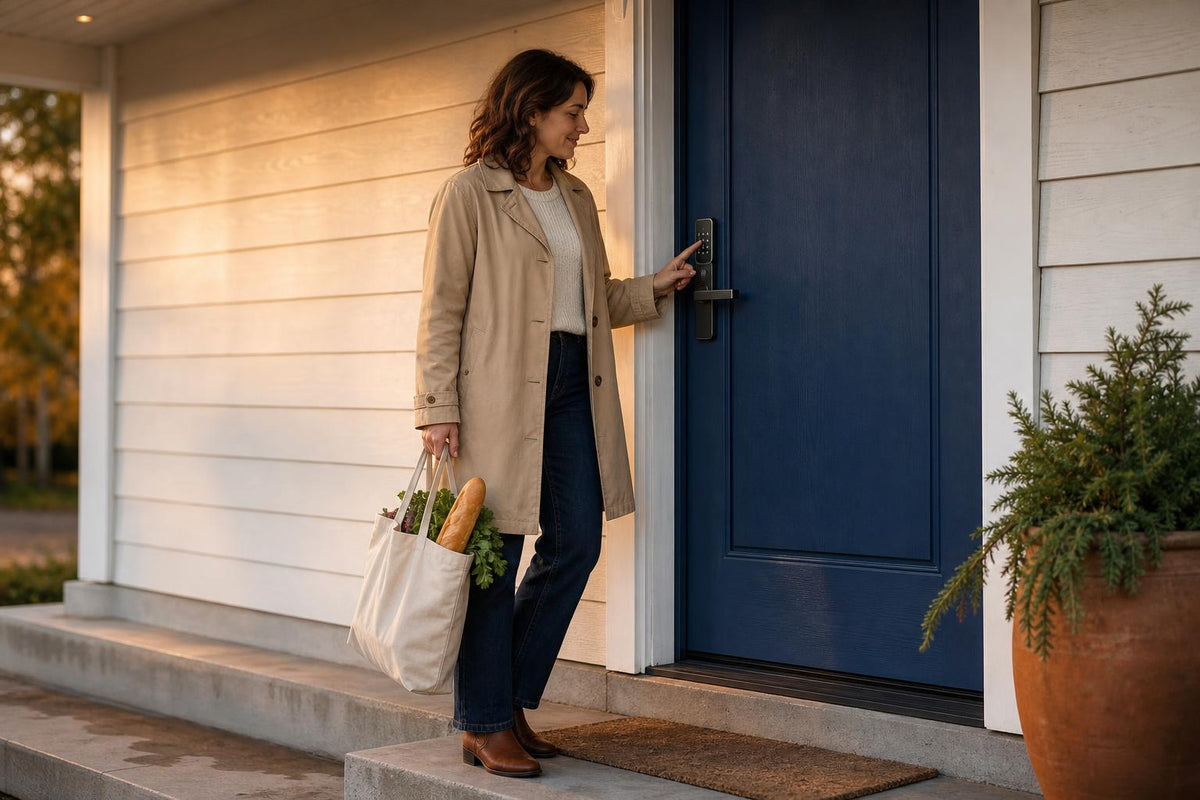
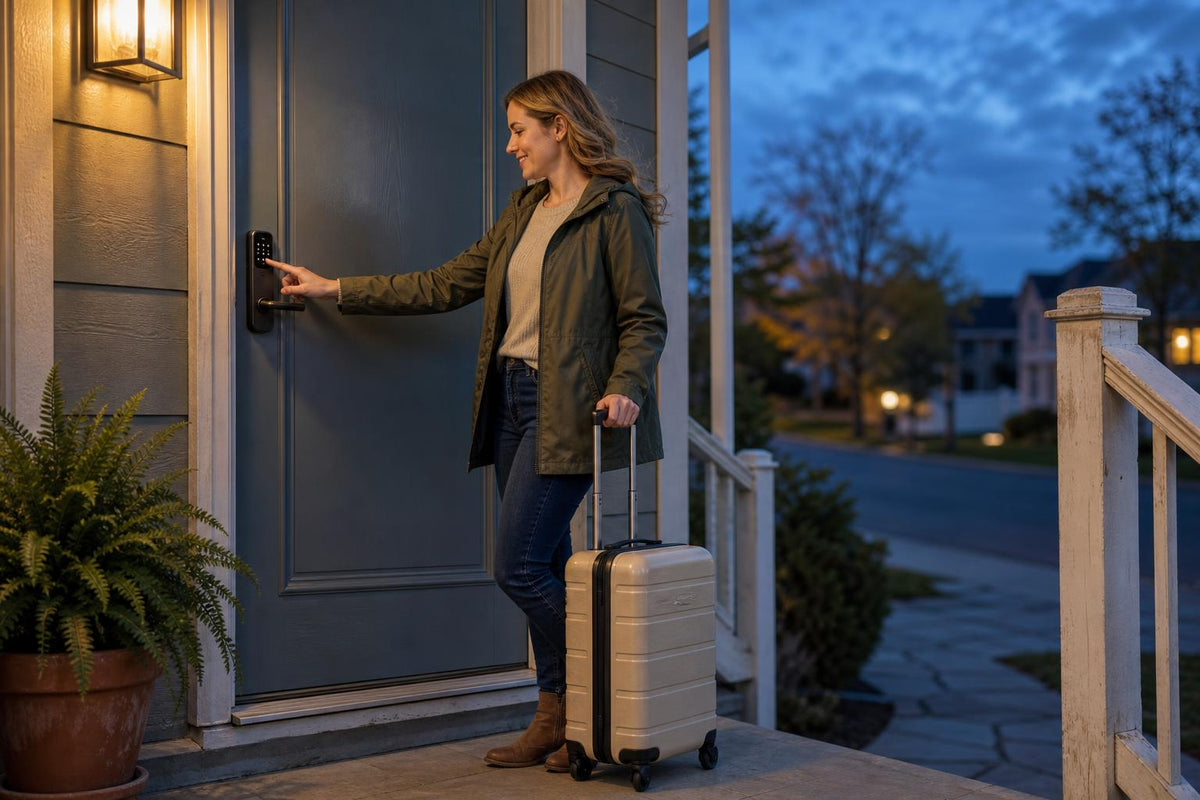
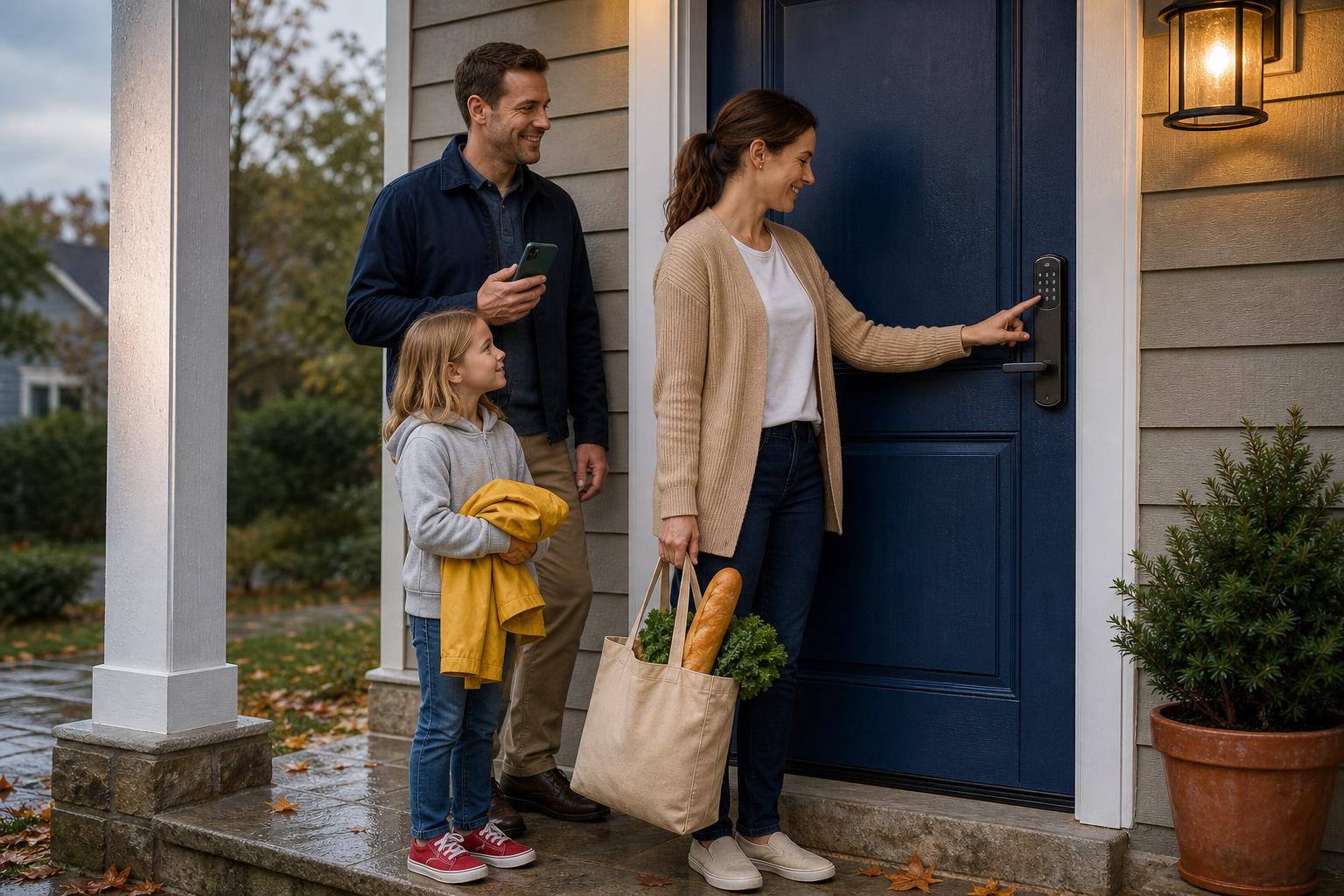
You can achieve this same level of security and convenience with your own smart lock. The SAWHERO SentriKey, for example, allows you to generate temporary access codes directly from your phone. Because it has built-in WiFi, you don't need to buy or install a separate, complicated gateway. It's a seamless way to set up temporary access codes for any courier, not just a specific service.
2026 Secure Delivery Showdown: Which Access Code Method is Best for You?
Choosing the right secure delivery method depends on your living situation, budget, and comfort level. To make it easier, we've broken down the top four models available today. This direct comparison will help you see the pros and cons of each system at a glance.
Comparing the Top 4 Secure Delivery Models
Use this table to find the solution that best matches your needs. After the table, we’ll dive deeper into the nuances of each option.
| Feature | In-Person OTP (Amazon) | In-Home Delivery (Walmart InHome) | Smart Lock Guest Access (SAWHERO) | Smart Package Box (Loxx Boxx) |
|---|---|---|---|---|
| How It Works | Courier needs a 6-digit code provided in-person by the recipient. | Vetted employees get a one-time code for in-home access during a delivery window. | User generates a temporary delivery guest code via a smartphone app for the courier. | Courier uses the package tracking number or a temporary code to open the box. |
| Security | High (requires recipient to be present). | Very High (vetted staff, body cameras, and delivery recordings). | High (user has full control, with a detailed log of every entry). | Medium-High (depends on box material and lock quality). |
| Convenience | Low (you must be home; impractical for apartment mailrooms). | Very High (groceries can be put away automatically). | High (generate codes remotely, no need to be home). | Medium (relies on the courier being willing to use it). |
| Installation Cost | None. | Requires a compatible smart lock. | One-time cost of the smart lock. | Cost of the smart box, plus a potential subscription fee. |
| Best For | High-value items that you must personally receive. | Households subscribed to grocery delivery services. | Apartment residents, single-family homes, and anyone needing flexible access. | Homeowners who prefer no one enters their home. |
| Key Challenge | Fails in most apartment or office delivery scenarios. | High psychological barrier to entry; limited service areas. | Requires the courier to read and follow delivery instructions. | Couriers may ignore the box and still leave packages on the porch. |
As the table shows, each system has clear trade-offs. While Amazon's OTP is secure, its impracticality for apartment dwellers is a common complaint on forums like Reddit. In-home services are incredibly convenient but require a high level of trust. A smart package box is a great middle ground, but as reviews on sites like TechHive point out, its effectiveness hinges on the delivery driver's cooperation. For most people, a versatile smart lock offers the best balance of security, control, and universal applicability.
Real-World Scenarios: Solving Your Biggest Delivery Headaches
Theory is one thing, but how do these solutions perform in the real world? Let's tackle two of the most common and frustrating delivery challenges people face and see how one-time access codes provide a practical solution.
The Apartment Dweller's Dilemma: Bypassing OTP Failures
If you live in an apartment, you know the pain of the "secure delivery OTP apartment" issue. A courier buzzes, drops packages with the front desk or in a mailroom, and moves on. They never see you, so you can't give them the required OTP. The result is a failed delivery notification and a trip to a pickup point.
This is where a smart lock like the SAWHERO SentriKey becomes a lifesaver. You can generate a temporary code specifically for deliveries and put it in the "delivery instructions" field when you check out online. This code can grant access to the main building door or a secure mailroom, ensuring your package gets inside safely without you needing to be there. It solves the OTP problem completely.
For the Suburban Homeowner: In-Garage vs. Smart Lock vs. Box
Homeowners have more options, which can create its own confusion. In-garage delivery (like Amazon Key with myQ) is great for keeping large items out of sight and protected from weather. However, it still grants access to a part of your home. A smart package box offers a completely separate secure space, but you're betting on the driver using it.
A smart front door lock offers the most flexibility. You can grant temporary access for a courier to place a package just inside your door. It's more secure than the porch and less intrusive than full in-home or garage access. You control the code's validity, and the lock's activity log tells you exactly when the door was opened.
Your Questions About One-Time Access Codes, Answered
It's natural to have questions before trusting a new technology with your deliveries. Here are answers to some of the most common queries about using one-time access codes for secure package delivery.
What happens if the courier doesn't use the one-time code correctly?
With an in-person OTP system, an incorrect entry simply leads to a failed delivery. With a smart lock or box, the entry log is your proof. You can see if an attempt was made and use that record when contacting customer service if a package goes missing.
Is it safe to give a delivery driver access to my home?
Services like Walmart InHome mitigate risk by using extensively vetted employees who wear body cameras during delivery. When using your own smart lock, you are in control. You can set the code to expire after just a few minutes and revoke it anytime from your phone, minimizing the access window.
Do smart locks that generate access codes need Wi-Fi?
It depends on the lock. Some require a separate Wi-Fi bridge, which adds cost and complexity. The SAWHERO smart lock features built-in WiFi that activates on-demand, which saves battery life while still giving you full remote control. Other technologies, like those from Codelocks, can generate time-sensitive codes without any Wi-Fi connection at all, using a synchronized algorithm. Check out why SAWHERO's Built-in WiFi is a Game-Changer.
Can I use these systems for all my deliveries (USPS, FedEx, etc.)?
In-home services from Amazon or Walmart are exclusive to their deliveries. However, your personal smart lock or smart package box is a universal solution. You can provide the temporary code or access instructions to any courier (USPS, FedEx, DHL, etc.) in the delivery notes, making it a flexible system for all your online shopping.
How are one-time passcodes generated to be secure?
These systems rely on robust, proven technology. The codes are created using cryptographic algorithms like TOTP (Time-Based One-Time Password) or HOTP (event-based). All communication is typically protected with industry-standard encryption like AES-256, the same level of security used in online banking. As top tech reviewers at PCMag often note, the security of modern smart locks is exceptionally strong.
The Future is Secure: Making the Switch to Code-Based Delivery
Leaving packages exposed on the porch is quickly becoming a thing of the past. As we move further into 2026, one-time access codes for secure package delivery are setting a new standard for safety and convenience. They are the most effective way to close the final, most vulnerable gap in the logistics chain.
The key isn't just finding the most high-tech gadget, but the solution that fits seamlessly into your daily life. For apartment dwellers stuck in an OTP loop and homeowners wanting a balance of security and control, a reliable smart lock provides a universally effective solution.
Ready to take control of your deliveries? Explore the SAWHERO SentriKey Smart Lock and start generating secure delivery guest codes today!