Beyond the Keyhole: How a Smart Lock Solves Everyday Family Challenges
A smart lock for a family home isn't just about ditching keys; it's about solving the small, everyday frustrations that add up. From forgotten keys to unexpected guests, it provides simple solutions that make daily life smoother and more secure.
For the Kids: The End of "I Lost My Key!"
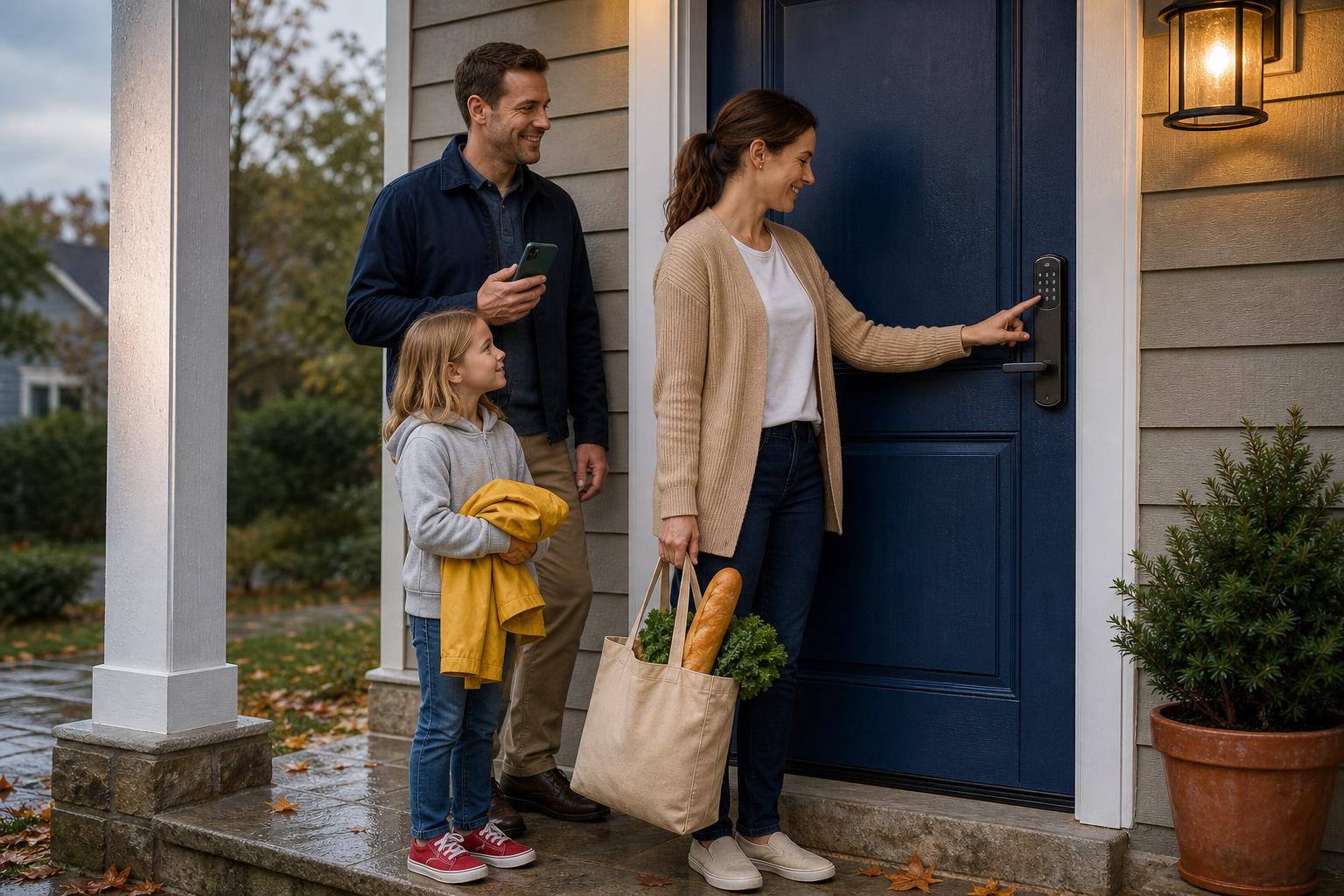
Remember the panic of a child losing their house key? That worry becomes a thing of the past. With features like fingerprint access or a personal PIN code, kids can get inside easily and safely after school without needing a key at all.
You can even receive a notification on your phone the moment they arrive home, giving you peace of mind. As one Reddit user shared, "The kids use their registered fingerprints, and the pet sitter has a code that we enable based on her schedule." It’s a simple change that removes a major source of stress for parents.
For Guests & Sitters: Welcoming Visitors Without Being There
When family, friends, or a babysitter needs to get in, you no longer have to hide a key under the mat. You can create temporary family access codes directly from your app. Brands like August and Yale let you send "virtual keys" valid for a specific timeframe.
This means you can grant one-time access for a repair person, a recurring code for the weekly dog walker, or a weekend pass for grandparents. You maintain full control, and there are no spare keys floating around that could get lost or copied.
For the Parents: Juggling Groceries and Toddlers, Hands-Free
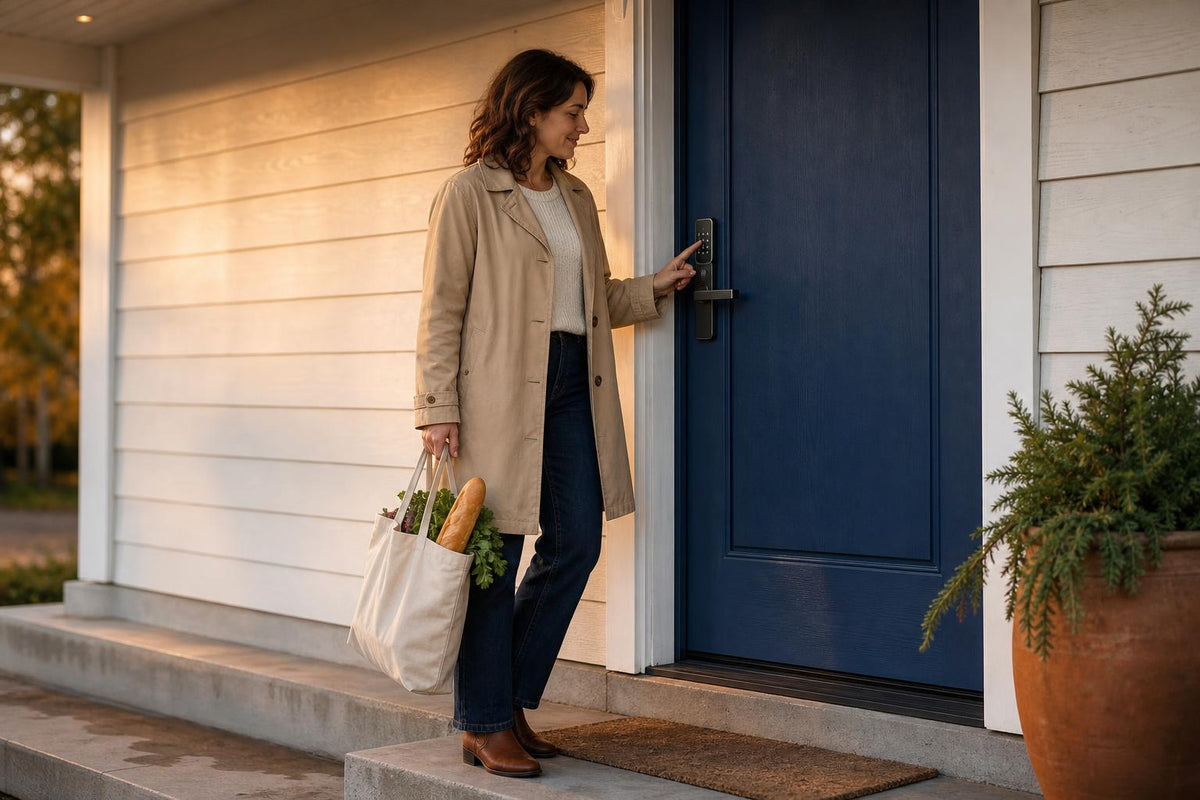
Picture this: you're carrying a toddler in one arm and have three bags of groceries in the other. Fumbling for your keys is the last thing you want to do. This is where features like auto-unlock, which uses geofencing, come in handy.
As you approach your front door, your lock senses your phone and unlocks automatically, a feature praised in models like the Yale Assure Lock 2. It’s a small moment of convenience that feels like a lifesaver on a busy day.
Choosing the Right Smart Lock for Your Family Home: A Feature Showdown
With so many options on the market, picking the right smart lock can feel overwhelming. The key is to focus on what matters most for your family's unique lifestyle. Let's break down the core features to help you decide.
Not All Locks Are Created Equal: Key Features to Compare
When selecting a smart lock for your family, you should weigh four main factors. Consider the primary unlocking methods (fingerprint, keypad, app), the physical and digital security ratings, how easy it is to install, and its expected battery life.
Decision Matrix: Finding Your Family's Perfect Fit
To simplify your choice, this table compares different types of smart locks based on common family needs. Use it to see which style aligns best with your household, whether you have young kids, frequent visitors, or are renting your home.
| Feature | Fingerprint Lock | Keypad Lock | All-in-One Camera Lock | Retrofit Lock |
|---|---|---|---|---|
| Best for... | Families with kids (no codes to remember) | Homes with many visitors, rentals, service staff | Households wanting maximum security and monitoring | Renters or those who want to keep their existing keys |
| Unlock Methods | Fingerprint, App, Key | Keypad Code, App, Key | Fingerprint, Code, App, Video, Key | Uses your original key, App |
| Installation Difficulty | Medium (replaces entire lock) | Medium (replaces entire lock) | Complex (may involve wiring) | Easy (installs over your existing deadbolt) |
| Security | Hardware rating + biometric security | Hardware rating + code management | Hardware + surveillance + alarms | Depends on your original deadbolt |
| Example Products | Eufy S230, SAWHERO A1 | Schlage Encode, Yale Assure | Eufy E330 | August Wi-Fi, Level Lock |
Is a Smart Lock Secure Enough for My Family? Unpacking the Safety Features
It's the first question every parent asks: is this new technology truly safe? The answer lies in understanding that a high-quality smart lock is built with layers of both physical and digital protection to keep your family secure.
Physical Strength: Why ANSI/BHMA Grades Matter
Not all locks are built the same. Look for an ANSI/BHMA grade, which is an independent rating for security and durability. Consumer Reports testing confirms that a Grade 1 rating is the highest certification for residential use, meaning it has withstood rigorous testing against forced entry like kicking, prying, and drilling.
For example, the Schlage Encode Plus boasts a Commercial Grade 1 certification, giving you confidence in its ability to physically protect your home. This rating ensures the deadbolt itself is just as tough, if not tougher, than a traditional lock.
Digital Safeguards: From Encryption to Tamper Alerts
Beyond the physical hardware, digital security is paramount. Leading smart locks use bank-grade AES encryption and two-factor authentication to protect your data from hackers, a feature August Home often highlights. This prevents unauthorized access to your lock's controls.
Modern locks also include active defense features. A scrambled keypad lets you enter extra digits before or after your code to prevent onlookers from guessing it. Plus, built-in alarms can sound if someone tries to tamper with the lock, and you'll get an instant alert on your phone. These layers of defense work together to create a secure home keyless entry system.
Installation & Upkeep: What Every Busy Parent Should Know
The idea of installing and maintaining a new piece of tech can seem daunting for a busy family. The good news is that the best smart locks are designed to be user-friendly from day one, with simple setup and minimal maintenance.
DIY-Friendly Setups That Save You Time and Money
You don't need to be a professional locksmith to install most modern smart locks. Many are designed for easy DIY installation and can be fitted in under 30 minutes using just a standard screwdriver. This saves you the cost and hassle of hiring a professional.
Whether you choose a retrofit model like an August lock that fits over your existing hardware or a full replacement lock, clear instructions are always included. For extra help, you can always find detailed installation guides to walk you through the process step-by-step.
The Truth About Battery Life
Battery life is a common concern, and it varies depending on the lock's features and connectivity. According to industry comparisons, locks using Wi-Fi for direct remote access tend to use more power, lasting around 2-4 months. In contrast, Z-Wave models that connect via a smart home hub are more efficient and can last 11-19 months.
You'll never be caught off guard by a dead battery. All smart locks provide multiple low-battery warnings through the app and often with an indicator light on the lock itself. This gives you plenty of notice to swap out the standard AA batteries.
Frequently Asked Questions About Smart Locks for Families
Are smart locks safe for homes with young children?
Yes, they can actually enhance safety. Features like auto-lock ensure the door is never accidentally left unlocked. Some models even have child safety modes to prevent toddlers from opening the door from the inside and wandering out.
What happens if the smart lock battery dies?
Most locks give you weeks of low-battery warnings. If it does die unexpectedly, you can almost always use a traditional physical key as a backup. Many models also have a small external port to temporarily power the lock with a USB power bank to get inside.
How do I give temporary access to a dog walker?
It's easy. Through the companion app, you can create temporary or scheduled family access codes. You can set the code to work only on certain days and times, and it will automatically expire when you no longer need it.
Can I install a smart lock myself?
Absolutely. The majority of smart locks are specifically designed for DIY installation. They fit standard doors and typically only require a screwdriver. You can have one up and running in less than 30 minutes, saving hundreds in professional fees.
Which is better for a smart lock: Wi-Fi, Bluetooth, or Z-Wave?
It depends on your needs. Wi-Fi offers the convenience of remote access from anywhere but uses more battery. Bluetooth is energy-efficient but only works when you're nearby. Z-Wave is very reliable for an integrated smart home but requires a central hub.
Do smart locks work with Alexa or Google Home?
Yes, most leading models are compatible with smart home assistants. Brands like Yale and Schlage work seamlessly with Alexa, Google Home, and Apple HomeKit, allowing you to lock your door or check its status using simple voice commands.
A Smarter, Safer Welcome for Your Family
Ultimately, the right smart lock for a family home does more than just provide home keyless entry. It offers peace of mind, simplifies your daily routines, and adapts to the ever-changing needs of your family.
From letting your kids in after school to granting secure access for a sitter, it replaces daily worries with effortless control. It’s a small upgrade that makes a big difference in creating a more secure and convenient home. Ready to find the perfect fit for your family?