Why Your Smart Lock Works During a Power Outage
The biggest source of anxiety around a smart lock power outage is the fear of being locked out. Let's clear that up right away: your smart lock is specifically designed to keep working even when your home's electricity goes out.
The secret is its independent power source. Unlike your lights or appliances, your smart lock doesn't draw power from your home’s electrical grid. Instead, it runs on its own internal batteries, typically a set of AA batteries or a rechargeable lithium-ion pack.
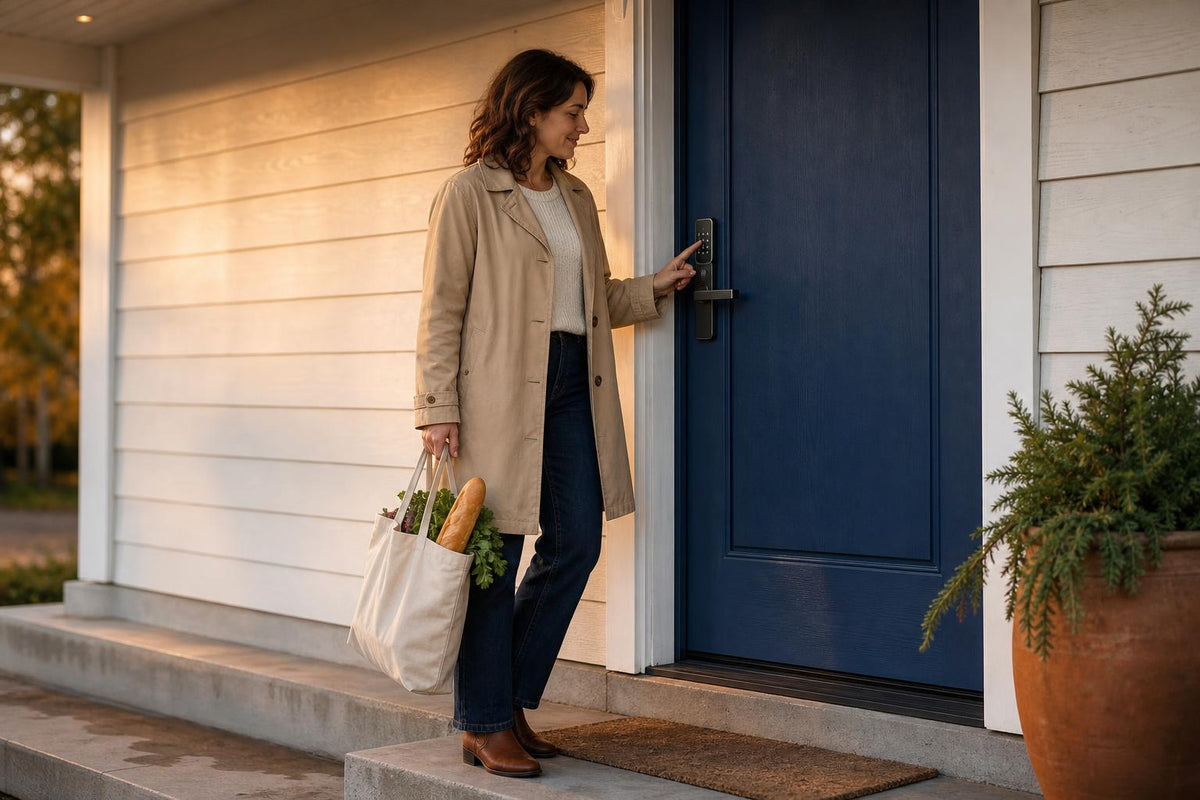
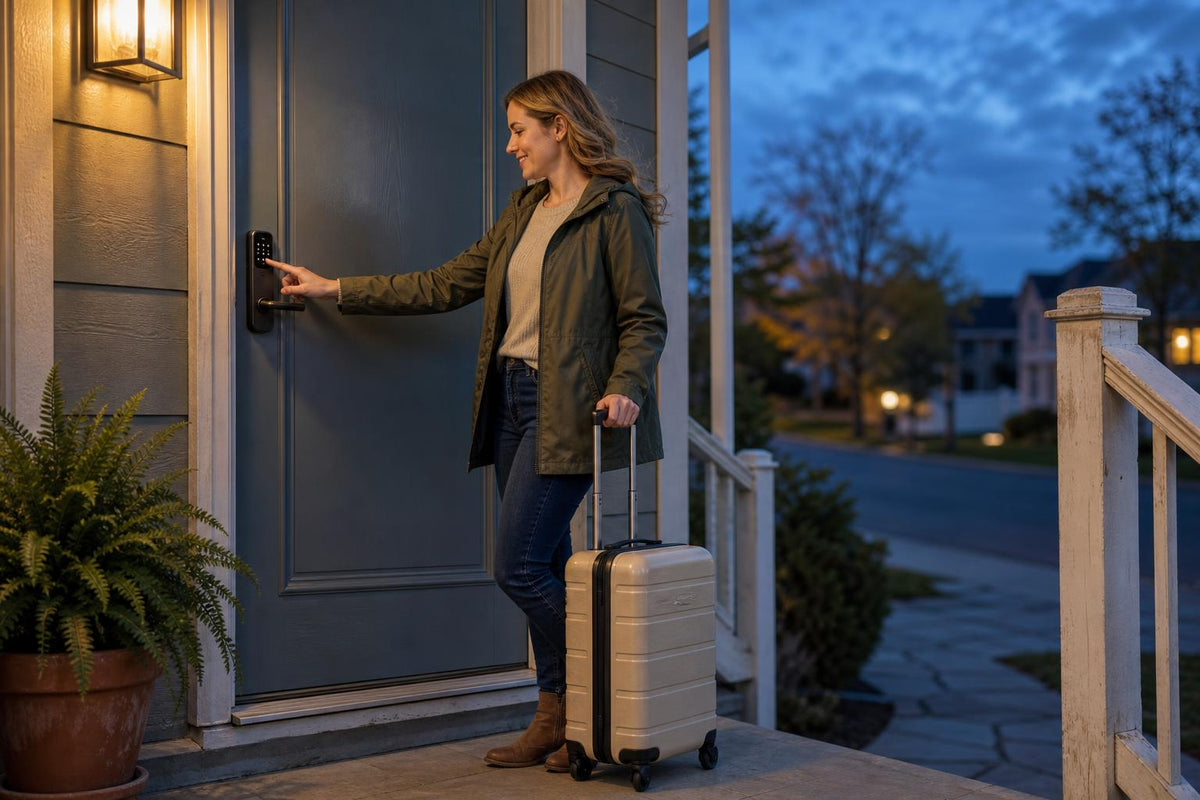
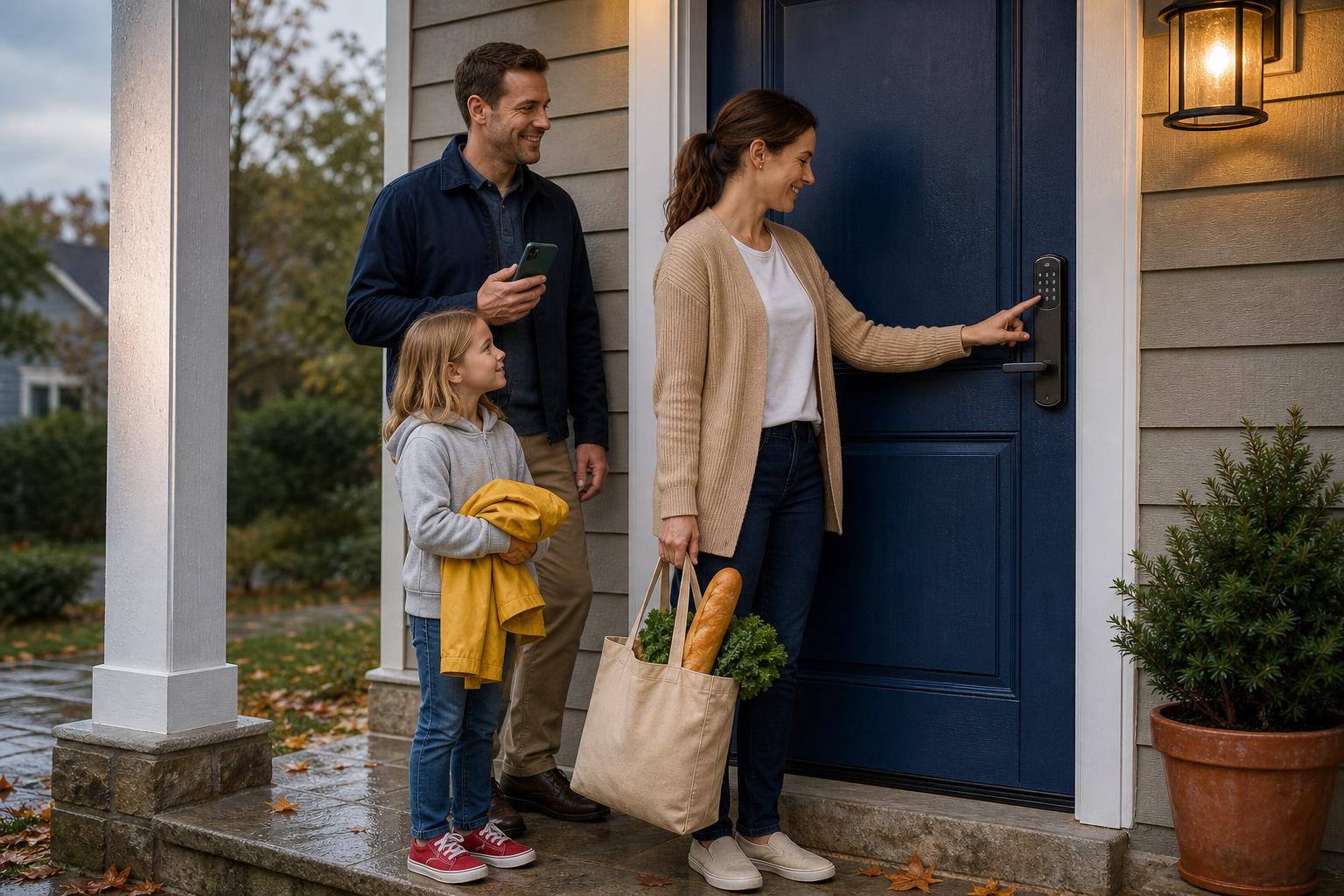
This self-contained design means a neighborhood blackout or a tripped breaker has no direct effect on the lock's ability to function. The core mechanisms that let you in—like the keypad and fingerprint scanner—rely solely on that internal battery power.
On-Device Credential Storage: The Key to Offline Access
So, if the power is out and your Wi-Fi is down, how does the lock know it's you? The answer is local storage. Your access credentials, like PIN codes and fingerprint data, aren't stored in the cloud; they are saved directly in the lock's own memory chip.

When you enter your code or scan your finger, the lock performs the verification process right there on the device. It doesn't need to connect to the internet to confirm your identity. This is why the primary ways of entering your home remain fully operational during an electronic lock no electricity event.
What Stops Working: Wi-Fi Dependent Features
While the essential lock/unlock functions are safe, a power outage will knock out your home's Wi-Fi router. This means any smart feature that relies on an internet connection will temporarily stop working. Think of it as the lock's "offline mode."
These disabled features typically include remote unlocking via a smartphone app, checking the lock's status when you're away from home, or getting real-time notifications about who is coming and going. Generating a new temporary code for a visitor remotely would also be unavailable until power is restored.
Locks like the SAWHERO Smart Lock with Wi-Fi are designed to prioritize local access, ensuring these convenient remote features are simply extras that don't compromise your ability to get inside.
3 Smart Lock Backup Power Options If the Battery Dies

Okay, so a power outage alone won't stop your lock. But what about the ultimate nightmare scenario: a power outage occurs, and at the same time, your smart lock's own batteries die? It's a rare situation, but manufacturers have built-in several layers of failsafes so you're never truly stranded.
Here are the three standard smart lock backup power options designed to get you inside, even when both power sources fail.
The Ultimate Failsafe: The Mechanical Key Override
The most reliable and straightforward backup is the one that needs no power at all: a physical key. Nearly every residential smart lock on the market comes with a traditional keyhole and a set of keys, just like a standard deadbolt.
To maintain a sleek look, this keyhole is often hidden behind a small cover or on the underside of the lock. It’s your most reliable way in, making it the most important backup tool in your arsenal.

Quick Boost: The 9V Battery Emergency Power Trick
What if you don't have your key? Many smart lock models have a clever trick up their sleeve. Look for two small metal contacts on the bottom edge of the exterior lock body. These are emergency power terminals.
By simply pressing a standard 9V battery against these two points, you provide a temporary jolt of electricity to the lock. This is just enough power to wake up the keypad or fingerprint scanner for a few seconds, allowing you to enter your code and unlock the door. It's a brilliant solution when you're in a pinch.
Modern Solution: USB-C/Micro-USB Emergency Port
Newer smart locks are increasingly adopting a more modern solution: a USB emergency power port, usually USB-C or Micro-USB. This port functions similarly to the 9V terminals but uses a power source most of us carry anyway: a portable power bank.
Just connect your power bank to the port with the appropriate cable, and the lock will power on, allowing you to unlock it as usual. The SAWHERO SentriKey, for instance, features a Type-C port for this very reason, adding a layer of convenient, modern backup. For more details on using this, you can visit the SAWHERO Help Center.

Comparing Your Emergency Entry Options: A Quick Guide
Each backup method has its own strengths. Depending on what you have on hand during a lockout, one option might be better than another. Here’s a quick breakdown to help you decide the best course of action in a power failure door lock situation.
| Backup Method | Pros | Cons | Best For... |
|---|---|---|---|
| Mechanical Key | Extremely reliable, no power needed. | Key can be lost or stolen; requires you to carry it. | The most certain, dependable backup if you have the key with you. |
| 9V Battery | Quick and easy, doesn't require carrying a key. | Requires a 9V battery, which isn't always on hand. | A great "in-a-pinch" solution if you can quickly get a 9V battery from a neighbor or car. |
| USB Power Bank | Very common household item, versatile. | Requires a matching cable; not all lock models have this port. | Tech-savvy users who always carry a power bank for their phone. |
Proactive Prep: How to Never Get Locked Out During a Power Failure
The best way to handle a smart lock power outage is to prepare for it before it ever happens. Instead of reacting to a lockout, you can take a few simple, proactive steps to ensure you can always get into your home, no matter the circumstances.
Heed the Low-Battery Warnings

Your smart lock doesn't want to die on you. It's designed to give you plenty of notice before the batteries run out. These warnings come in multiple forms: push notifications to your smartphone app, audible beeps from the lock itself, or a flashing LED light on the keypad.
When you get one of these alerts, don't put it off. Change the batteries as soon as possible. This simple habit is the single most effective way to prevent an emergency lockout.
Create a "Lockout Kit"
Hope for the best but prepare for the worst. Create a small "lockout kit" and store it somewhere safe *outside* of your home. This could be in your car's glove compartment, your desk at work, or with a trusted neighbor.
Your kit should contain one of the physical backup keys that came with your lock. For extra peace of mind, you could also include a fresh 9V battery. This ensures you always have a backup plan within reach.
Know Your Lock's Features

Take five minutes to get familiar with your lock's specific emergency features right after you install it. Don't wait until you're standing in the rain to figure it out. Check your user manual to confirm which backup power options it has.
Does it have a hidden keyhole, 9V terminals, or a USB port? Practice accessing and using it once, so you know exactly what to do in a real emergency. Being familiar with your options will turn a potential panic into a minor inconvenience. If you're looking for a lock with clear, easy-to-use features, you can Explore All SAWHERO Products.
FAQ: Smart Locks and Power Outages
Still have questions? Here are quick answers to some of the most common concerns about smart locks during a power outage.
- Q: Do smart locks work without power?
- A: Yes, they work without household power because they run on their own internal batteries. However, the lock itself does need that battery power to function.
- Q: What happens to a smart lock during a power outage?
- A: The lock's core functions, like the keypad and fingerprint reader, work normally. Remote features that need Wi-Fi (like unlocking with an app from another location) will not work until power is restored to your home.
- Q: Can a smart lock be hacked during a power outage?
- A: It's highly unlikely. A power outage knocks your Wi-Fi offline, which means the lock is not connected to the internet. This isolation from the network makes it inaccessible to remote hacking attempts, keeping its local security intact.
- Q: What is the difference between "fail-safe" and "fail-secure" electronic locks?
- A: "Fail-secure" locks remain locked when they lose power. This is the standard for most residential smart locks for security reasons. "Fail-safe" locks will unlock when power is lost, a feature typically used in commercial buildings for fire safety regulations.
- Q: How long do smart lock batteries typically last?
- A: Depending on usage, most smart locks that use 4 AA batteries will last between 6 to 12 months. For example, our SAWHERO lock is engineered to provide 6-8 months of reliable battery life under normal use.
- Q: Are there smart locks that don't use batteries at all?
- A: Yes, but they are rare. Some niche models use kinetic energy generated by turning the key or power from a smartphone's NFC field to operate. However, the vast majority of consumer smart locks are battery-powered for their reliability and ease of use.
Conclusion: Stay Secure and Prepared, Power or Not
A smart lock power outage shouldn't be a source of stress. Thanks to their battery-powered design and multiple backup options, you can have confidence that your lock will continue to secure your home and, more importantly, let you in when you need it to.
The key takeaway is that preparation is far better than reaction. By paying attention to low-battery warnings and having a physical key or an emergency power source stashed safely, you can eliminate any worry of being locked out. Your smart lock is a reliable partner in home security, through every power flicker and blackout.