Beyond the Beep: Why Standard Smart Locks Aren't Enough
For most people, the reassuring click of a deadbolt or the chime from a smart lock is a clear signal of a secure home. But for the deaf and hard of hearing community, a security system that relies solely on sound falls short. This dependence on auditory feedback is a common blind spot in smart home design, leaving a significant gap in accessibility.
Standard smart locks, while convenient, often fail to provide the clear, unambiguous, and long-distance notifications needed. True peace of mind comes from a clear, visual confirmation that your home is safe, not an easily missed app notification. It's about creating an environment where you can know your door's status at a glance, from anywhere in the house.
The Limits of On-Lock LED Indicators
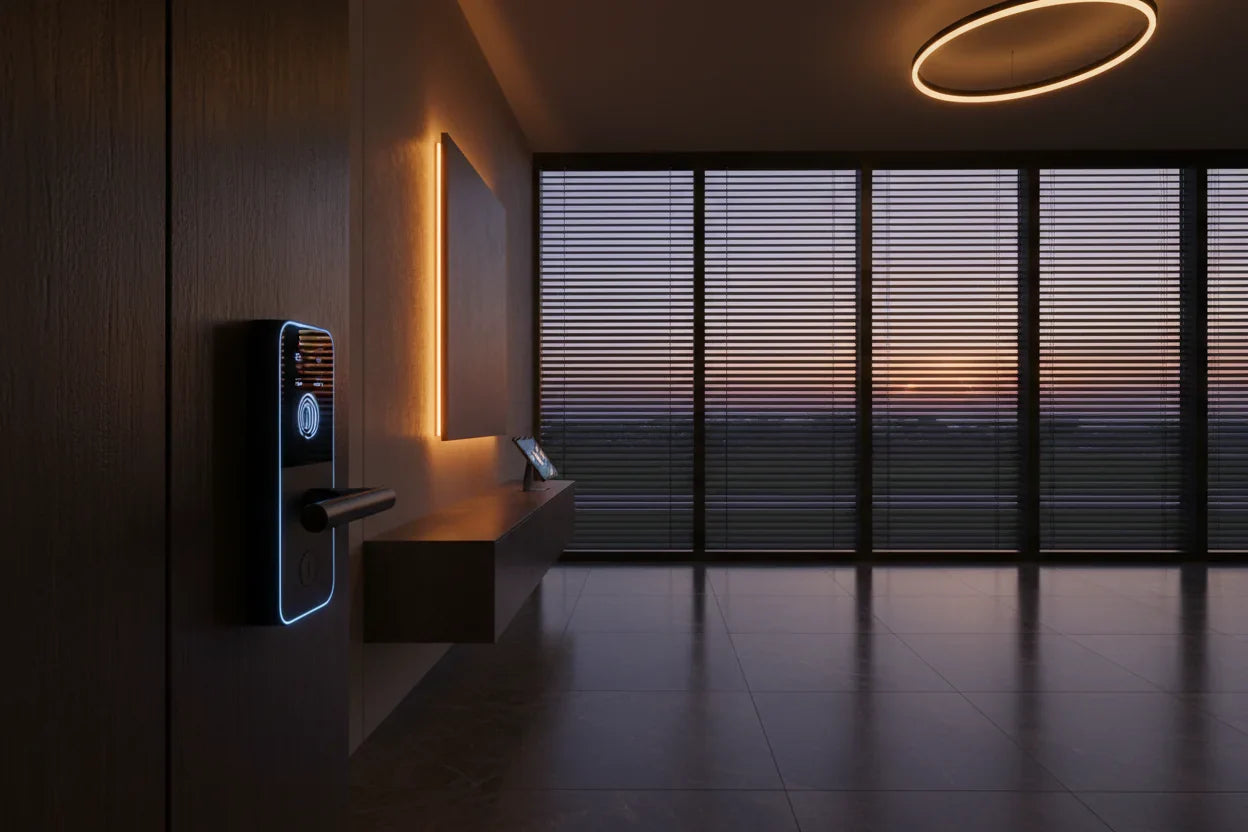
Many popular smart locks from brands like Schlage, Kwikset, and Wyze do include small, on-device LED indicators. These lights are a step in the right direction, providing immediate visual feedback right at the door. Typically, a green light signifies an unlocked status, amber means it's locked, and a flashing red light warns of a low battery. (Source: Schlage.com, Wyze.com)
While helpful when you're standing directly in front of the door, their usefulness ends there. These small indicators are simply not designed to be seen from across the room, let alone from a different floor of the house. They're a status light, not a notification system, making them an insufficient solution for true awareness from a distance.
The True Solution: Building a Visual Alert Ecosystem
The most effective solution is to create a connected visual alert ecosystem. This involves integrating a compatible smart lock with a smart lighting system, such as Philips Hue or LIFX. Instead of relying on a tiny LED, you can program any light in your home to change color or flash in response to your lock's activity.
This approach transforms your existing home lighting into a powerful, silent notification network. The Gallaudet University Technology Access Program has validated this method, highlighting the use of off-the-shelf devices to build customized visual alert systems for smart homes. By connecting these devices, you create a home that communicates with you visually, ensuring you never miss a critical security update.
Building this system is more accessible than ever and provides a reliable way to monitor your home's security. Explore our smart home solutions to see how integrated devices can enhance your daily life.
The Ultimate Setup Guide: Creating Flashing Light Door Notifications
Setting up a dynamic visual alert system is straightforward. This guide will walk you through the essential components and steps to link your smart lock with your smart lights, creating a home that visually communicates its security status. This setup is the key to achieving genuine peace of mind.
Step 1: Gather Your Essential Components
To get started, you'll need three core pieces of technology. Think of them as the building blocks of your new visual notification system.
- A Compatible Smart Lock: This is the brain of the operation. Look for models known for their strong integration capabilities, such as the Yale Assure Lock 2 or Schlage Encode.
- A Smart Home Hub/Bridge: This device acts as the central translator, allowing your lock and lights to talk to each other. The Philips Hue Bridge and Samsung SmartThings Hub are popular and reliable choices.
- Smart Light Bulbs: These are your visual messengers. Philips Hue and LIFX bulbs are excellent options that offer a wide range of colors and easy integration.
Each component plays a crucial role. The lock detects the action (locked/unlocked), the hub processes it, and the light bulb displays the visual alert you've created.
Step 2: Connect Your Devices Using Native Apps
The simplest way to create alerts is through direct, native integrations. For example, Yale has an official partnership with Philips Hue that makes this process incredibly easy. You can link your accounts directly within the Yale Access app's "Works With" section.
Once connected, you can set up simple but powerful automations. You could create a "Welcome Home" scene where your living room light turns a welcoming green and flashes twice the moment your SAWHERO smart lock is unlocked. This provides an instant, clear confirmation that the door has been opened.
Step 3: Unlock Advanced Customization with IFTTT & Alexa Routines
For more specific control and to connect brands that lack direct partnerships, services like IFTTT (If This Then That) and Amazon Alexa Routines are your best friends. These platforms act as powerful intermediaries that let you create custom rules, or "recipes," for almost any smart device.
For instance, with IFTTT, you can create a rule that says, "IF my Schlage Encode lock is unlocked, THEN flash my LIFX lights in the bedroom blue." Similarly, an Alexa Routine can be set up so that when your August Smart Lock is unlocked, your Amazon Echo device announces "The front door is unlocked" and a connected smart plug turns on a lamp. This level of customization lets you tailor the alerts perfectly to your lifestyle.
2026's Top 3 Deaf-Friendly Smart Lock Recommendations
While many smart locks are on the market, only a few excel at the deep integration required for a reliable visual alert system. We've selected the top three models based on their compatibility, ease of setup, and robust performance within a smart home ecosystem.
Yale Assure Lock 2: Best for Seamless Philips Hue Integration
The Yale Assure Lock 2 is a top contender thanks to its official, native integration with Philips Hue. This direct partnership, as highlighted by Yale and Philips Hue, means you can connect the lock and lights in just a few taps within their apps, without needing a third-party service. (Source: philips-hue.com, yalehome.com)
This makes it the ideal choice for anyone who wants a powerful, "it just works" solution. The reliability of the direct connection ensures your visual alerts are fast and consistent every single time.
Schlage Encode Plus: The Versatility Powerhouse
If you value customization and want a lock that can grow with your smart home, the Schlage Encode Plus is an outstanding choice. While it doesn't have the same native Hue integration as Yale, its strength lies in its broad compatibility with platforms like IFTTT, Amazon Alexa, and Google Assistant.
This versatility allows you to create highly specific and complex visual alert rules. As confirmed by major tech reviewers at CNET and Forbes, its rock-solid performance and compatibility make it a reliable hub for your custom-built alert system.
August Wi-Fi Smart Lock: Top Choice for App Accessibility
August has long been praised for its user-friendly design, and the Wi-Fi Smart Lock is no exception. Its app is frequently recommended on accessibility forums like AppleVis for its excellent compatibility with screen readers, making it a fantastic choice for users with multiple accessibility needs.
Beyond app design, it integrates smoothly with Amazon Alexa, allowing for the easy creation of visual notification routines. You can effortlessly set up a rule where unlocking the August lock triggers a specific lamp or light strip to turn on, providing a clear and simple visual cue. For more information on integrations, you can always check our help center for detailed guides.
Decision Matrix: Comparing Smart Locks for Hearing Impaired Users
Choosing the right lock depends on your existing smart home setup and technical comfort level. This table breaks down the key features of our recommended locks to help you make a quick, informed decision.
| Feature | Yale Assure Lock 2 | Schlage Encode Plus | August Wi-Fi Smart Lock | SAWHERO SentriKey |
|---|---|---|---|---|
| Primary Integration | Philips Hue (Native) | IFTTT, Alexa, Google | Alexa, Google, HomeKit | WiFi Built-in (No Hub Needed) |
| Visual Alert Setup | Easiest (Direct Link) | Moderate (Requires IFTTT/Alexa) | Easy (Via Alexa Routines) | Easy (Via Alexa/Google Home) |
| On-Lock LED | Keypad Backlight | ✓ (Status Indicator) | DoorSense™ Indicator | ✓ (Status Indicator) |
| App Accessibility | Good | Good | Excellent (Screen Reader Friendly) | Excellent |
| Best For | Simplicity Seekers | Tech-Savvy Customizers | Apple Users & Renters | Budget-Conscious DIY Users |
Frequently Asked Questions (FAQ)
Q1: Can a smart lock flash a light by itself without smart bulbs?
A: Generally, no. While most smart locks have small on-device LEDs to show their immediate status (locked, unlocked, low battery), they aren't bright enough for room-wide alerts. For a true flashing light notification, you must integrate the lock with a smart lighting system like Philips Hue.
Q2: Do I need a smart home hub for this to work?
A: Often, yes. A dedicated hub like the Philips Hue Bridge or Samsung SmartThings hub is the traditional way to connect your lock and lights. However, some newer locks like our SAWHERO model feature built-in WiFi, allowing them to connect directly to the internet and integrate with smart lights through cloud platforms like Alexa or Google Home, eliminating the need for a brand-specific hub.
Q3: What color should I use for lock notifications?
A: Consistency is key. A common and intuitive practice is using green for "unlocked" to signify access, amber or yellow for "locked" to show it's secure, and a flashing red for an urgent warning like a "low battery" or a "jammed bolt" error.
Q4: Are these setups expensive?
A: There is an initial investment for the lock, a hub (if required), and at least one smart bulb. However, the beauty of these systems is their scalability. You can start small with just one smart bulb in a key area like your living room and expand the system over time as your budget allows.
Q5: Can I get visual alerts for a doorbell ring too?
A: Absolutely! The same principles and platforms (IFTTT, Alexa Routines) apply. You can easily create a rule for a compatible smart doorbell to trigger flashing lights, creating a unified visual alert system for both your door's status and visitors.
Q6: Which smart lock apps are most accessible for visually impaired users too?
A: User feedback on accessibility forums like AppleVis consistently praises brands like August and Lockly. Their apps are well-regarded for their compatibility with screen readers, making them a solid choice for users who may have both hearing and visual impairments.
Conclusion: Build Your Own Peace of Mind
The best smart lock for someone who is deaf or hard of hearing isn't just a piece of hardware; it's the central component of a thoughtful, integrated system. The key is to shift focus from the lock itself to its ability to communicate with other devices in your home. By creating a network of smart locks for hearing impaired with visual alerts, you're not just adding convenience, you're building a new layer of security and independence.
This system provides constant, ambient awareness, giving you the confidence that your home is secure at a single glance. If you're ready to build your own visual alert system, explore the SAWHERO SentriKey. Its built-in WiFi simplifies the setup process, making it easier than ever to connect to your smart lights and achieve true peace of mind.