No-Hub WiFi Smart Door Lock: What It Means and Who It’s For
Upgrading to a smart lock can feel overwhelming, with talk of hubs, bridges, and complex setups. But what if you could get all the benefits of keyless entry and remote access without the extra hardware? That's the promise of a WiFi smart door lock with no hub.
Simply put, these locks connect directly to your home's WiFi network, just like your phone or laptop. This direct connection streamlines the installation process and simplifies your smart home from day one. In this guide, we'll break down what a no-hub WiFi lock is, its pros and cons, and who benefits most from this straightforward approach to home access.
What Is a WiFi Smart Door Lock with No Hub, Really?
A smart lock with no hub has built-in WiFi, allowing it to communicate with the internet on its own. This is different from many traditional smart locks that use low-power protocols like Z-Wave or Zigbee. Those systems require a separate hub or bridge to translate their signals and connect them to your WiFi router.
By building the WiFi radio directly into the lock, manufacturers eliminate that middleman. This not only reduces the number of devices you need to buy and manage but also simplifies the entire setup process. The result is a cleaner, more direct line of communication between your lock and your smartphone.
The Key Advantage: Simplifying Your Smart Home Setup
The main appeal of a direct WiFi smart lock is simplicity. Instead of pairing a lock to a hub and then pairing the hub to your network, you just connect the lock to your WiFi through an app. As many users find, eliminating this extra hardware leads to "an easier setup process and have one less device to maintain." (Source: legalinjuryguide.org)
This approach is perfect for anyone starting their smart home journey or those who prefer a minimalist tech setup. You get powerful features without the clutter or complexity of a multi-device ecosystem.
How Direct WiFi Connection Enables True Remote Access
Because the lock is always connected to the internet, you can control and monitor it from anywhere in the world with your phone. You can lock or unlock the door for a family member, grant temporary access to a service provider, or check if you remembered to lock up after leaving home.
This contrasts sharply with Bluetooth-only locks, which require you to be within close range (typically 30-50 feet) to communicate with them. With direct WiFi, your control is no longer limited by proximity. You can learn more about these capabilities in our guide to smart door lock app control features.
The Trade-Offs: What to Consider Before You Buy
While hubless WiFi locks offer fantastic convenience, it's important to understand the trade-offs. Being transparent about these factors helps you make a choice that truly fits your lifestyle and home.
Battery Life: The Power Demands of Constant Connectivity
Maintaining a constant WiFi connection requires more energy than lower-power options like Bluetooth. As a result, direct WiFi locks "tend to consume more power...Expect to change the batteries every few months." (Source: legalinjuryguide.org) This can vary widely based on how often the lock is used and the strength of your WiFi signal.
To address this, innovative locks like the SAWHERO A1 use a power-saving mode. The WiFi activates only when a visitor presses the built-in doorbell button, balancing the need for remote access with longer battery life.
WiFi Reliability and Security Concerns
Your lock's remote features are dependent on a stable home WiFi network. If your internet goes down, you won't be able to control the lock from the app remotely. However, you can always still use the physical keypad, fingerprint sensor, or a backup mechanical key to get inside.
As with any internet-connected device, security is paramount. Reputable brands use encryption to protect data. You should always secure your home WiFi network with a strong password and follow our smart lock security tips to keep your access safe.
Direct WiFi vs. Bluetooth vs. Hub-Based Locks: A Clear Comparison
Choosing the right smart lock technology can feel confusing. Each type has distinct advantages depending on your priorities, from remote access to battery life. This table breaks down the key differences to help you decide.
Decision Matrix: Which Smart Lock Type Fits Your Needs?
| Feature | Direct WiFi Smart Lock (No Hub) | Bluetooth Smart Lock | Hub-Based Smart Lock (Zigbee/Z-Wave) |
|---|---|---|---|
| Remote Access | ✅ Yes, from anywhere | ❌ No (requires a bridge) | ✅ Yes, via hub |
| Setup Simplicity | High (fewer devices) | High (direct phone pairing) | Medium (hub setup required) |
| Battery Life | Moderate | Excellent | Good to Excellent |
| Initial Cost | Moderate | Low to Moderate | Moderate to High (lock + hub) |
| Internet Dependency | High (for remote features) | Low (works without internet) | High (hub needs internet) |
| Best For | Convenience, remote management | Budget-conscious users, renters | Extensive smart home ecosystems |
Who Is a No-Hub WiFi Smart Lock Actually For?
A smart lock with built-in WiFi isn't just a gadget; it's a practical tool that solves real-world problems for specific types of users. Let's look at a few scenarios where this technology truly shines.
For Busy Families and On-the-Go Homeowners
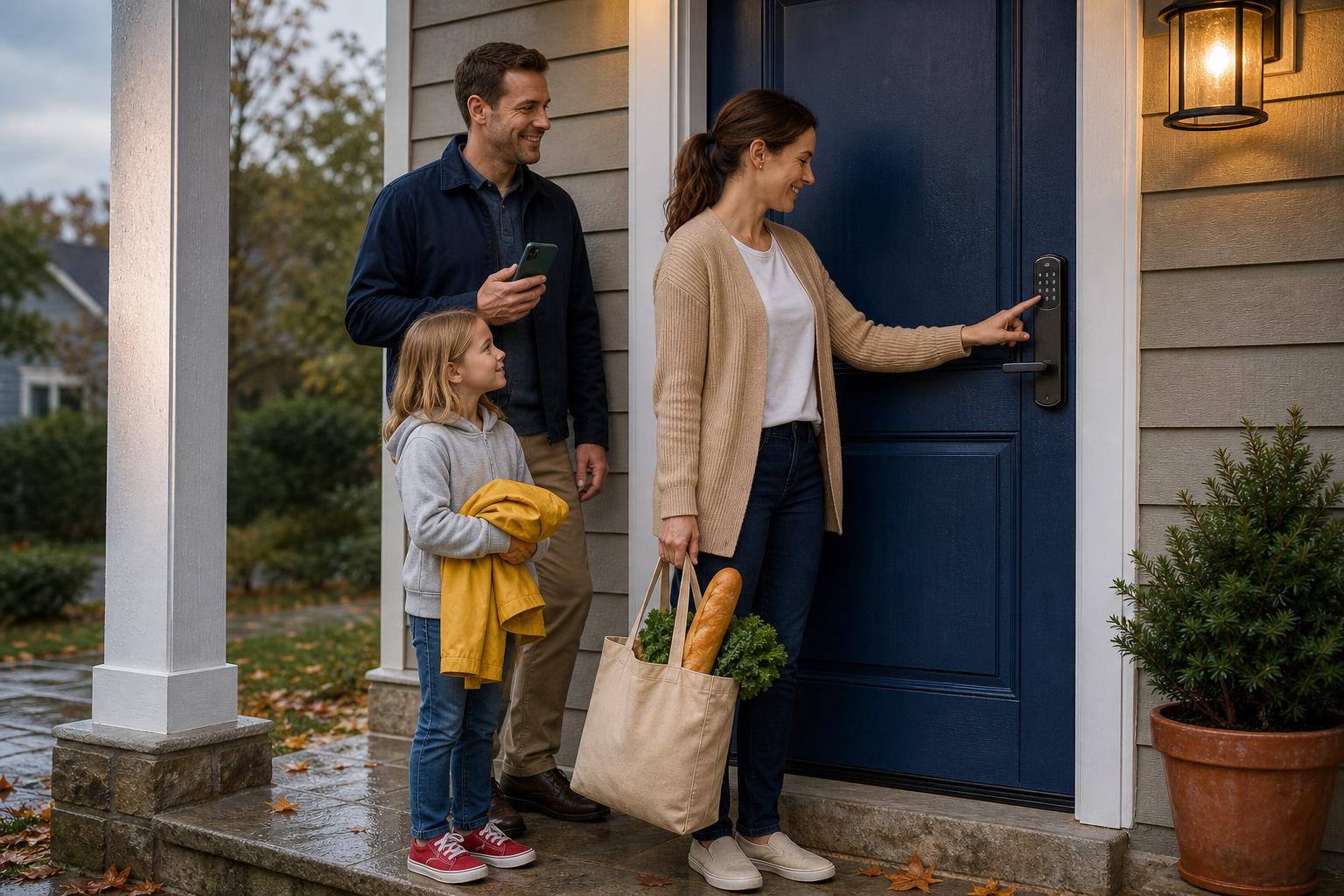
Imagine your kids getting home from school while you're still at work. With a no-hub WiFi lock, they can enter using a fingerprint or a simple code—no more worries about lost keys. You get a notification on your phone that they're home safe.
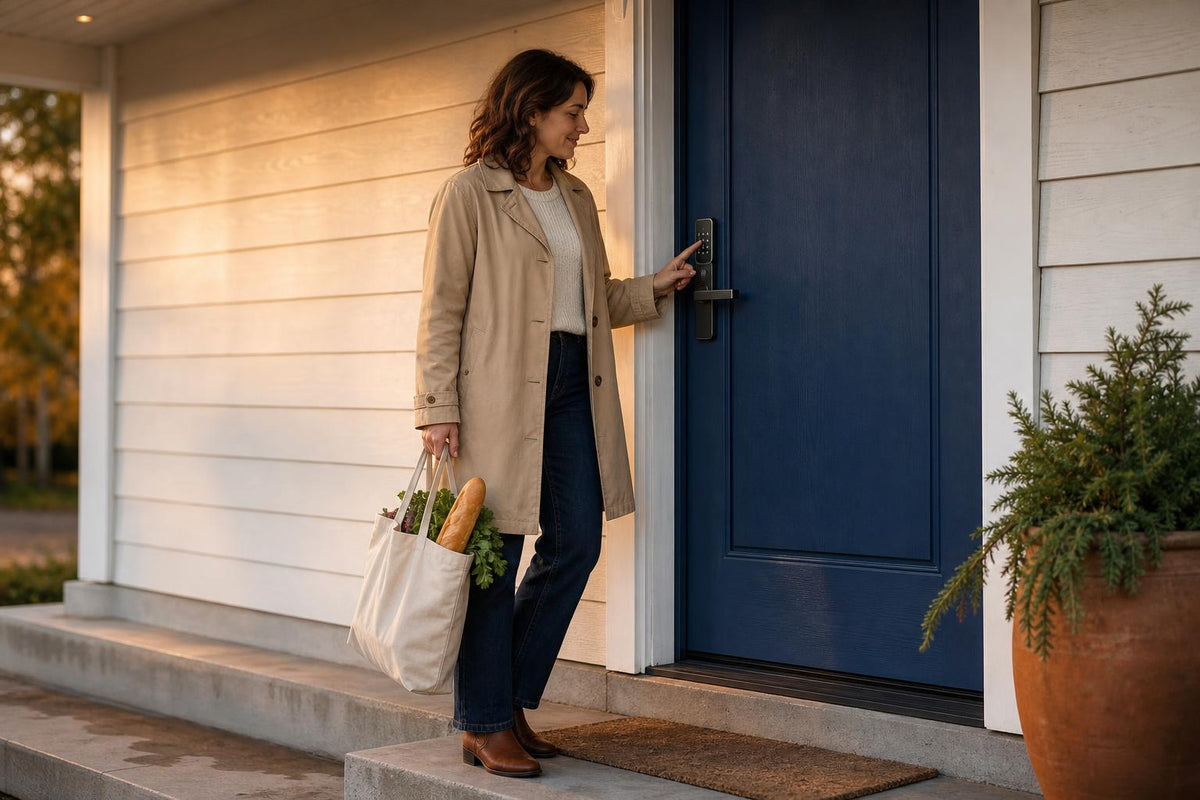
Plus, features like auto-lock provide peace of mind, ensuring the door is always secure behind you, even when you're rushing out with your hands full.
For Airbnb Hosts and Rental Property Managers
Managing access for guests is one of the biggest challenges for rental hosts. A WiFi smart lock is a game-changer. You can generate a unique, temporary access code for each guest and send it to them remotely before they arrive.
There's no need for in-person key handoffs, and the access log shows you exactly when guests or cleaning crews check in and out. It's a seamless experience that guests love and makes your job easier. For more tips, check out our complete guide to smart locks for Airbnb.
For First-Time Smart Home Users
If you're curious about smart home technology but don't want to invest in a complex, expensive ecosystem, a no-hub lock is the perfect entry point. It's a single device that offers immediate, tangible benefits without requiring any other smart gadgets to function.
A model like the SAWHERO A1 is a great example. It combines built-in WiFi, multiple ways to unlock (fingerprint, code, app, key), and a simple app, offering a low-barrier solution to smart access. Its DIY-friendly installation means you can upgrade your door in minutes.
How to Choose the Right WiFi Smart Door Lock with No Hub
Once you've decided a no-hub WiFi lock is for you, a few key details will help you pick the perfect model. Paying attention to these factors ensures a smooth installation and a great long-term experience.
Check Your Door Compatibility First
This is the most critical step. Before you buy, measure your door's thickness, the backset (the distance from the edge of the door to the center of the lock hole), and the bore hole diameter. Most smart locks are designed for standard U.S. doors, but confirming these measurements will prevent installation headaches.
Evaluate Unlocking Methods and Backup Options
Look for a lock that offers multiple ways to get in. Fingerprint access is fast and convenient, while a keypad is great for guests. Most importantly, ensure the lock includes backup options for when technology fails, like a physical key and a Type-C emergency power port for dead batteries.
Consider the App Experience and Integration
The mobile app is how you'll interact with your lock every day. Check app store reviews to see what real users think about its ease of use, reliability, and features like user management and activity logs. If you use voice assistants, check for compatibility with platforms like Alexa or Google Assistant for hands-free control.
Embrace Simplicity Without Sacrificing Control
A no-hub WiFi smart door lock offers the best of both worlds: powerful remote control and a refreshingly simple setup. By connecting directly to your home network, it removes unnecessary complexity and cost, making it an ideal choice for busy families, rental hosts, and anyone new to smart home tech.
It provides a practical way to manage access, enhance peace of mind, and finally ditch your house keys for good. Ready to simplify your home access? Explore the SAWHERO A1 Smart Fingerprint Door Lock and see how easy keyless entry can be.
Frequently Asked Questions
What happens if my WiFi goes down?
Your remote access features will be temporarily unavailable, but you can still unlock the door using the keypad, your fingerprint, or the physical backup key. The lock's core function is not dependent on an active internet connection.
Do all no-hub smart locks drain batteries quickly?
While direct WiFi can use more power, many modern locks have power-saving modes. For example, some activate WiFi only when the doorbell is pressed, significantly extending battery life. Always check the manufacturer's battery life estimates under normal use conditions.
Can I install a WiFi smart lock myself?
Yes, most are designed for DIY installation and typically only require a Phillips screwdriver. However, it's crucial to check your door’s dimensions before purchasing to ensure compatibility and a smooth setup.
Are WiFi smart locks secure?
Reputable brands use strong encryption (like AES 128-bit) to protect your data transmissions. To enhance security, always use a strong, unique password for your lock's app, enable two-factor authentication if available, and secure your home WiFi network.
Is a no-hub lock better than a Bluetooth one?
It depends on your needs. If you need to grant access or check your lock's status while you're away from home, a no-hub WiFi lock is better. If you only need keyless entry when you're nearby and prioritize maximum battery life, Bluetooth is a great option.
Do I need a subscription for a WiFi smart lock?
Most core features like remote locking/unlocking and user codes are free. Some brands may offer optional subscriptions for advanced features like extended video storage if the lock has a camera. It's always best to check the product details before buying.