The Core Difference: When Locks Need a Hub and When They Don't
Let's get straight to it. The need for a hub boils down to how a smart lock communicates. Think of a hub as a translator connecting your lock to your home's Wi-Fi router. This creates two clear categories: those that need a hub and those that don't.
Locks using low-power protocols like Z-Wave, Zigbee, or Bluetooth often need this "translator" for remote control. In contrast, models with Wi-Fi built right in can talk directly to your router, skipping the middleman entirely. Grasping this distinction is crucial for picking the right option for your home.
Standalone Freedom: Locks with Built-in WiFi
A lock with built-in Wi-Fi is the simplest way to upgrade your door. It connects directly to your home's wireless network, just like your laptop or phone. This means you can control and monitor it from anywhere using an app, without any extra hardware. This direct-to-router setup is the core benefit of a smart lock with built-in WiFi.
This approach is all about convenience. Brands like Schlage Encode and August Wi-Fi Smart Lock have made this a popular choice because the setup is straightforward. Our goal is to simplify home access, which is why models like the SAWHERO A1 Smart Fingerprint Door Lock are designed to be hub-free.
The Ecosystem Approach: Why Some Locks Rely on a Smart Home Gateway
So why would anyone choose a lock that needs a hub? The answer lies in battery life and creating a powerful smart home ecosystem. Protocols like Z-Wave and Zigbee use significantly less power than Wi-Fi, meaning your lock's batteries can last much longer.
These locks also operate on a "mesh network," where each device can relay signals to others, creating a more stable network in larger homes. As noted by reviewers at TechGearLab, some hub-based models provide excellent value by integrating with systems like Samsung SmartThings or a Ring alarm, allowing all your devices to work together.
Hub vs. No-Hub: A Side-by-Side Comparison for Your Home
Choosing between a hub or no-hub system might feel technical, but it really comes down to what you value most: plug-and-play simplicity or long-term ecosystem integration. Each path has clear trade-offs in terms of setup, battery life, and how it fits with other smart devices.
Let's break it down. A direct Wi-Fi lock offers the quickest path to remote control. A lock requiring a hub demands an extra setup step but can reward you with superior battery performance. Review sites like CNET consistently point out this trade-off: Wi-Fi is easy but power-hungry, while hub-based systems are more efficient.
Decision Matrix: Choosing Your Lock Connection
To make it even clearer, here’s a direct comparison of the most common lock technologies. Use this table to find the best fit for your home and lifestyle.
| Feature | Direct Wi-Fi (No Hub) | Z-Wave / Zigbee (Hub Required) | Bluetooth + Bridge (Hub Required for Remote) |
|---|---|---|---|
| Installation Simplicity | ⭐⭐⭐⭐⭐ (Easiest) | ⭐⭐⭐ (Requires pairing with a hub) | ⭐⭐⭐⭐ (Lock is simple, bridge is an extra step) |
| Remote Access | ✅ (Out of the box) | ✅ (Enabled by the hub) | ✅ (Enabled by the bridge) |
| Battery Life | ⭐⭐⭐ (Higher power consumption) | ⭐⭐⭐⭐⭐ (Extremely low power consumption) | ⭐⭐⭐⭐ (Low power for local use) |
| Smart Home Integration | Good (Via apps and cloud services) | Excellent (Native protocol integration) | Fair (Depends on the bridge's capabilities) |
| Best For | Homeowners, renters, and anyone seeking convenience | Smart home enthusiasts and large homes | Budget-conscious users who don't always need remote access |
Who Should Choose a No-Hub Lock? Real-World Scenarios
Technical specs are one thing, but how does a no-hub lock work in real life? The beauty of a direct Wi-Fi model is that it solves everyday problems for everyday people, without requiring you to become a tech expert. It's designed for convenience from day one.
For the Busy Homeowner or Renter
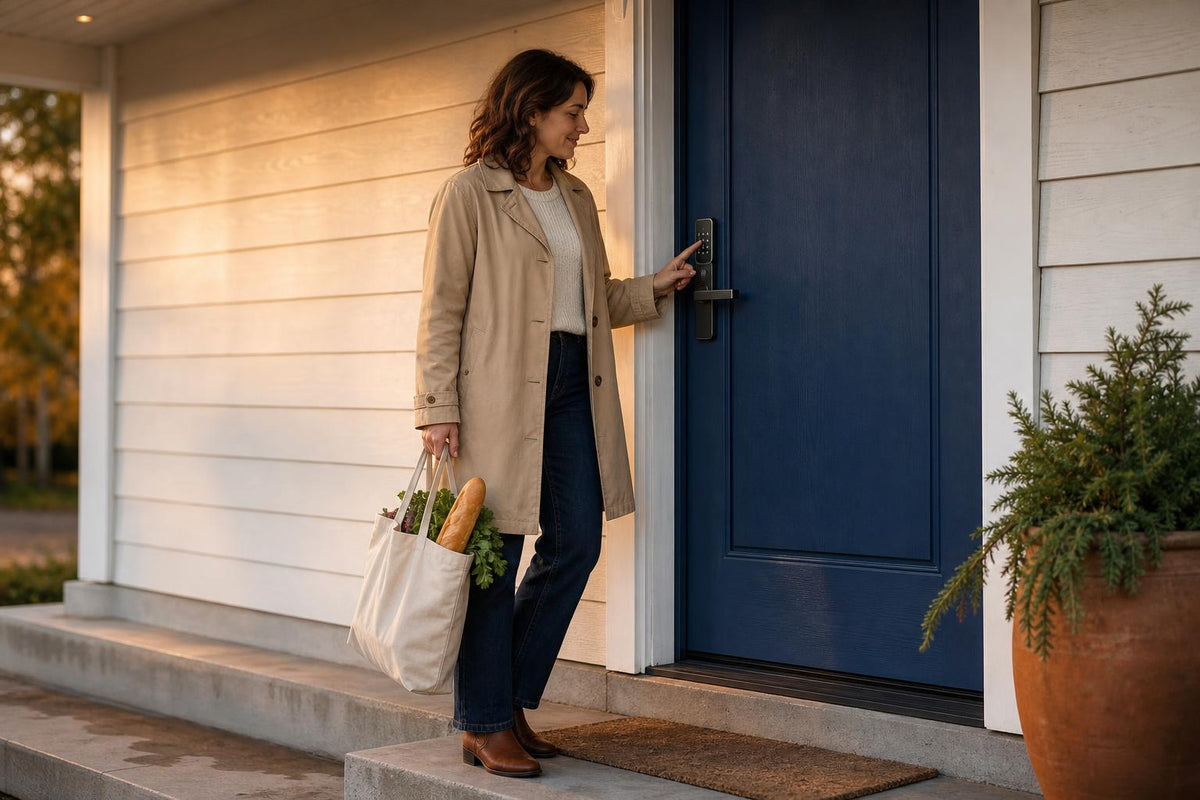
Imagine you've just moved into a new apartment. You want to upgrade security immediately but don't have the time for a complex system. A no-hub Wi-Fi lock is your answer. You can install it yourself in minutes with just a screwdriver, following our step-by-step installation guide.
There are no extra boxes to plug in and no complicated pairing procedures. It just works. This "install and forget" simplicity is perfect for anyone who wants enhanced security and convenience without the hassle.
For the Airbnb Host or Property Manager
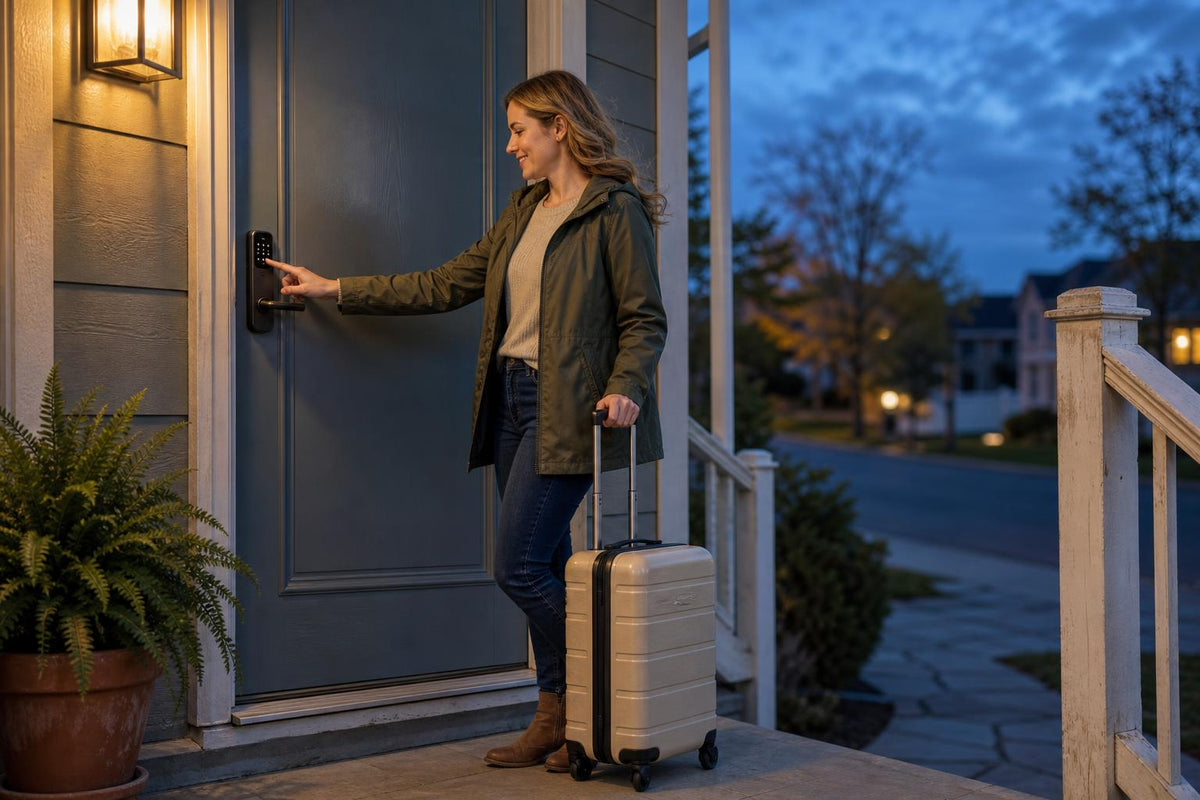
Here's the deal for property managers: juggling keys is a nightmare. A no-hub lock completely eliminates this problem. From your phone, you can generate a unique, temporary access code for each guest that activates when they check in and expires when they check out.
You can see exactly when the door was opened, giving you peace of mind and a full audit trail. For managing multiple properties, this is a game-changer. You can control locks across different locations from a single app, saving immense time and improving the guest experience.
For the Everyday Family: Security and Simplicity First
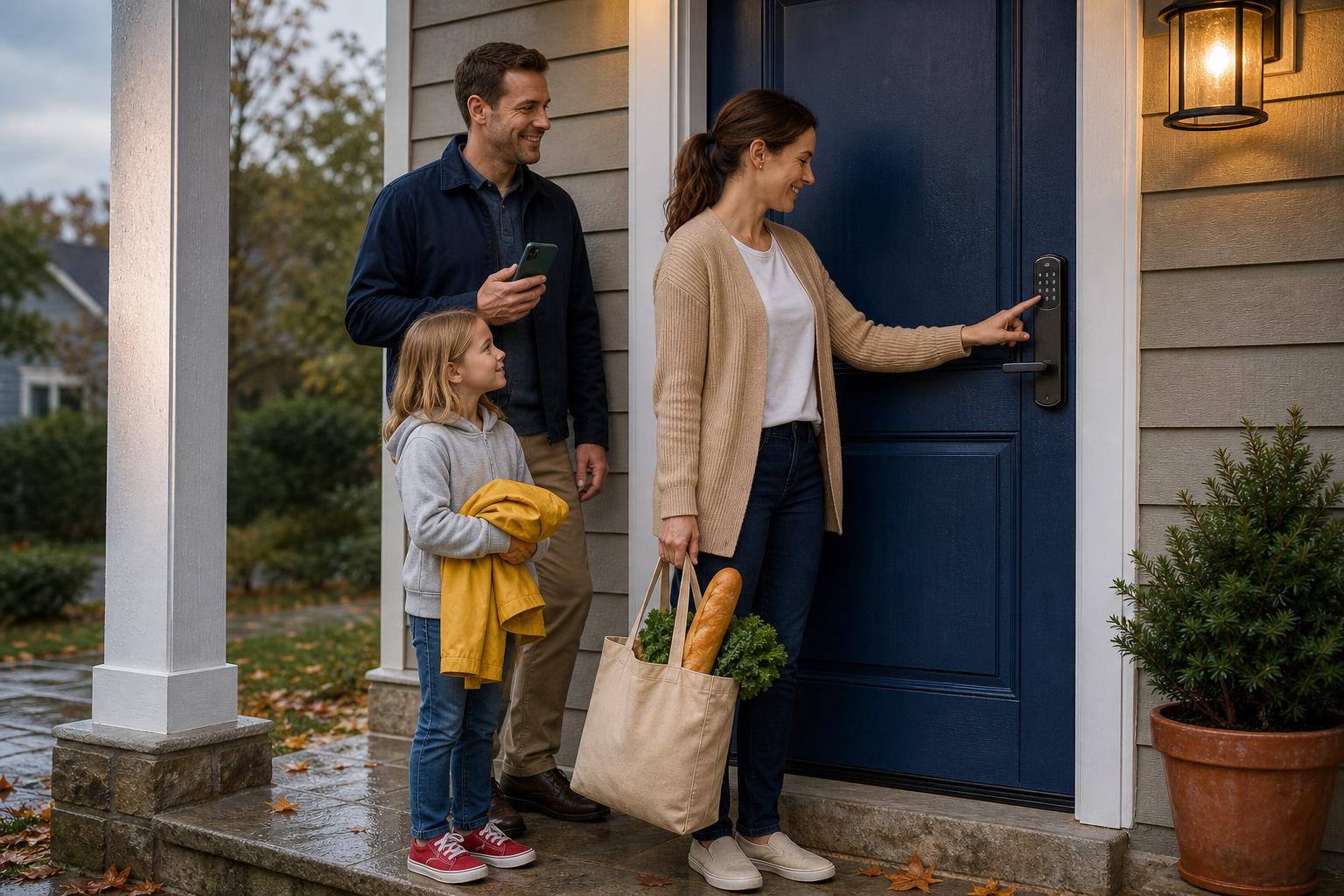
Look, most families aren't trying to build a futuristic smart home. They just want peace of mind. A simple Wi-Fi lock provides exactly that. You can get an alert on your phone when your kids get home from school, and you can double-check that the door is locked after you've already left for work.
It's about removing those small, daily worries. There's no need to manage a complicated hub or ecosystem. You get the core benefits of remote security in a package that anyone in the family can use easily.
Answering Your Top Questions About Smart Lock Hubs
It's normal to have a few more questions before making a decision. The world of smart lock connectivity can have some confusing terms. Here are straightforward answers to some of the most common questions we hear.
Can a Bluetooth-enabled lock work without a hub?
Yes, but only for local control. A pure Bluetooth lock lets you use your phone as a key when you're standing near the door (typically within 30-50 feet). To lock or unlock it from work, you'll need a small Wi-Fi bridge. In fact, according to 2024 market data from Precedence Research, Bluetooth-enabled locks held the largest market share, showing many users start with local control.
Do Wi-Fi-enabled locks drain batteries faster?
Generally, yes. Wi-Fi connections are more power-intensive than low-energy protocols like Z-Wave. However, modern Wi-Fi locks are engineered with power-saving modes and can still last for many months on a single set of batteries.
What if my Wi-Fi goes down?
Your lock doesn't become a paperweight. Wi-Fi locks still work perfectly with their physical key or keypad. Most also have Bluetooth as a backup, so you can still use your phone to unlock the door when you're nearby. You just lose remote control until your internet is back. You can learn more about backup options in our Help Center.
Is a Z-Wave or Zigbee hub better for a large home?
They are an excellent choice for that scenario. These protocols create a mesh network, where each smart device can relay the signal to the next. This makes them extremely reliable over long distances or in homes with thick walls where a Wi-Fi signal might struggle.
Can I use Amazon Alexa as a hub for my lock?
Sometimes. Certain Amazon Echo devices, like the Echo Plus and newer Echo Show models, have a Zigbee hub built-in. This allows them to connect directly with compatible Zigbee locks, so you wouldn't need to buy a separate hub from the lock manufacturer.
Are no-hub locks less secure?
Not inherently. A lock's security is determined by its encryption standards, not its connection method. Look for models that use strong encryption like AES-128 or AES-256, whether they connect via Wi-Fi, Z-Wave, or Bluetooth. Security is about the quality of the software and hardware.
Final Verdict: Should Your Next Lock Be Hub-Free?
Bottom line: for the vast majority of people, a lock with built-in Wi-Fi is the best choice. It delivers the core promise of keyless entry—remote access and enhanced security—in the simplest, most user-friendly package.
It removes the complexity and extra cost of a separate hub, making it the ideal starting point for homeowners, renters, and property managers. While smart home enthusiasts might benefit from a hub-based system, the hub-free model offers the perfect balance of powerful features and effortless setup.
If you're ready to upgrade your home's security with a solution that's both powerful and easy to manage, exploring a no-hub model is the logical next step. Discover how a direct-to-Wi-Fi lock can simplify your life by checking out SAWHERO’s line of hub-free smart locks.